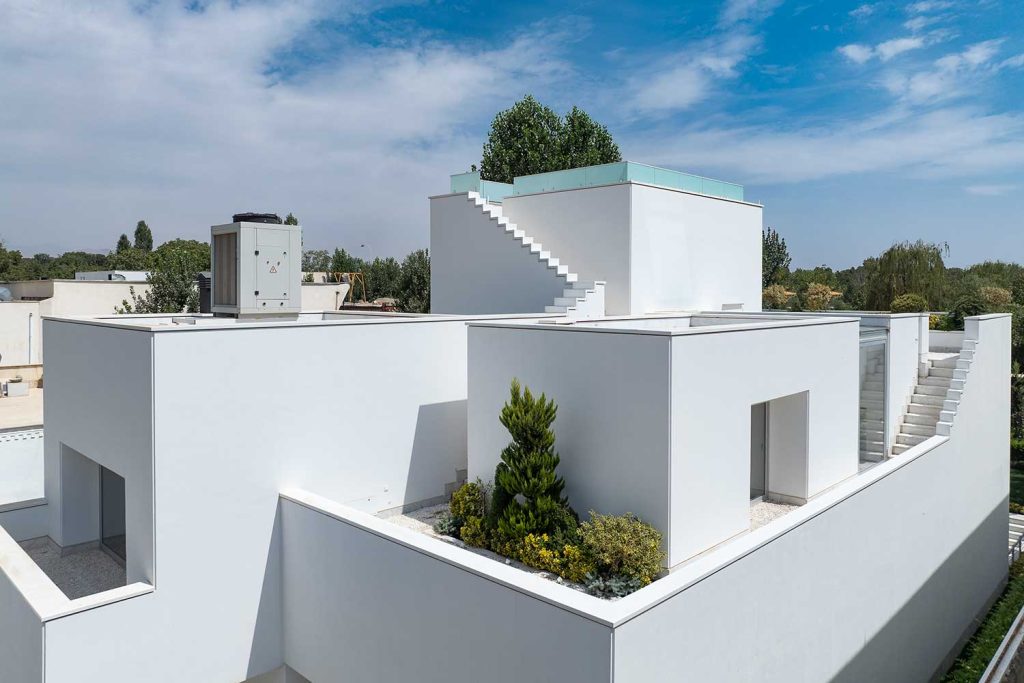
 خانهی سفید اثر مازیار صارمی، فینالیست و راه یافته به مرحلهی دفاع از آثار ششمین دوسالانهی معماری ایران بخش ویلایی، 1403
 هنرمعماری و شرکت رویا طرح داخلی برگزار میکند، رویداد اولیــن دورهی هتــل دیزایــن
حفر برای نور (ویلای قنات) اثر محمد رحیمیزاده
چهارمین شب معماران، فینالیست و راه یافته به مرحلهی دفاع از آثار ششمین دوسالانهی معماری ایران بخش کانسپت، 1403
Digging for light / Mohammad Rahimizadeh
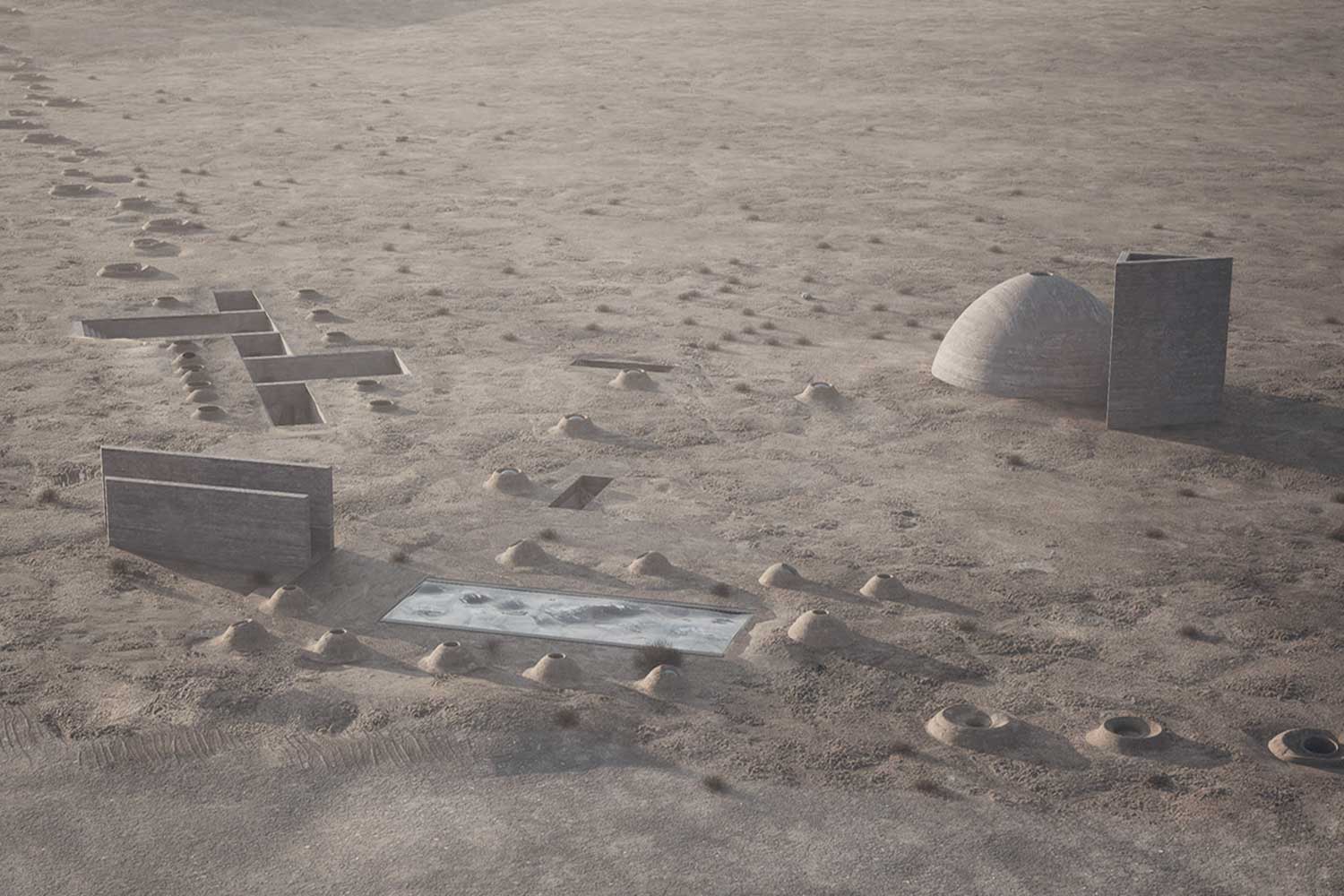
حفر برای نور (ویلای قنات)
شاید بالاخره زمان آن فرا رسیده است که بتوانیم حداقل در یک مکان چراغ ها را خاموش کنیم تا ببینیم که فضا بدون آن ها چه شکل و شمایلی دارد.
در ستایش سایهها اثر جونیچیرو تانیزاکی
ایدهی طراحی ویلای قنات از کتاب “در ستایش سایهها” الهام گرفته شد. تصویری که تانیزاکی از گذشته ای رمانتیک و بدون نور خیره کننده ارایه می دهد و همچنین زیبایی که او در بازی مداوم نور، سایه و تاریکی در فضا و با ظرافت اشیا تصویر میکند، چنان قدرتی دارد که حسرت زندگی در چنین محیطی را ایجاد میکند.
شروع این پروسه با تعیین مرزبندی آغاز شد. زیرا که در تعریف پروژه در اصطلاح ما با یک کاغذ سفید مواجه بودیم. برای رهایی از این موقعیت اولویت را بر انتخاب سایت مناسب قرار دادیم؛ جایی که نور، سایه و تاریکی طیف گستردهای را برای ما فراهم کنند. کویر مرکزی ایران برای این امر گزینه مناسبی بود. چرا که شدت نور و سایه در کویر کیفیت های مورد نیاز را فراهم کرده و همچنین در تاریکی مطلق، آسمان شب، جهان تازه ای را ارایه میدهد. از طرف دیگر ما برای محدود کردن گزینهها، به جستجو در نواحی اطراف شهر یزد پرداختیم.
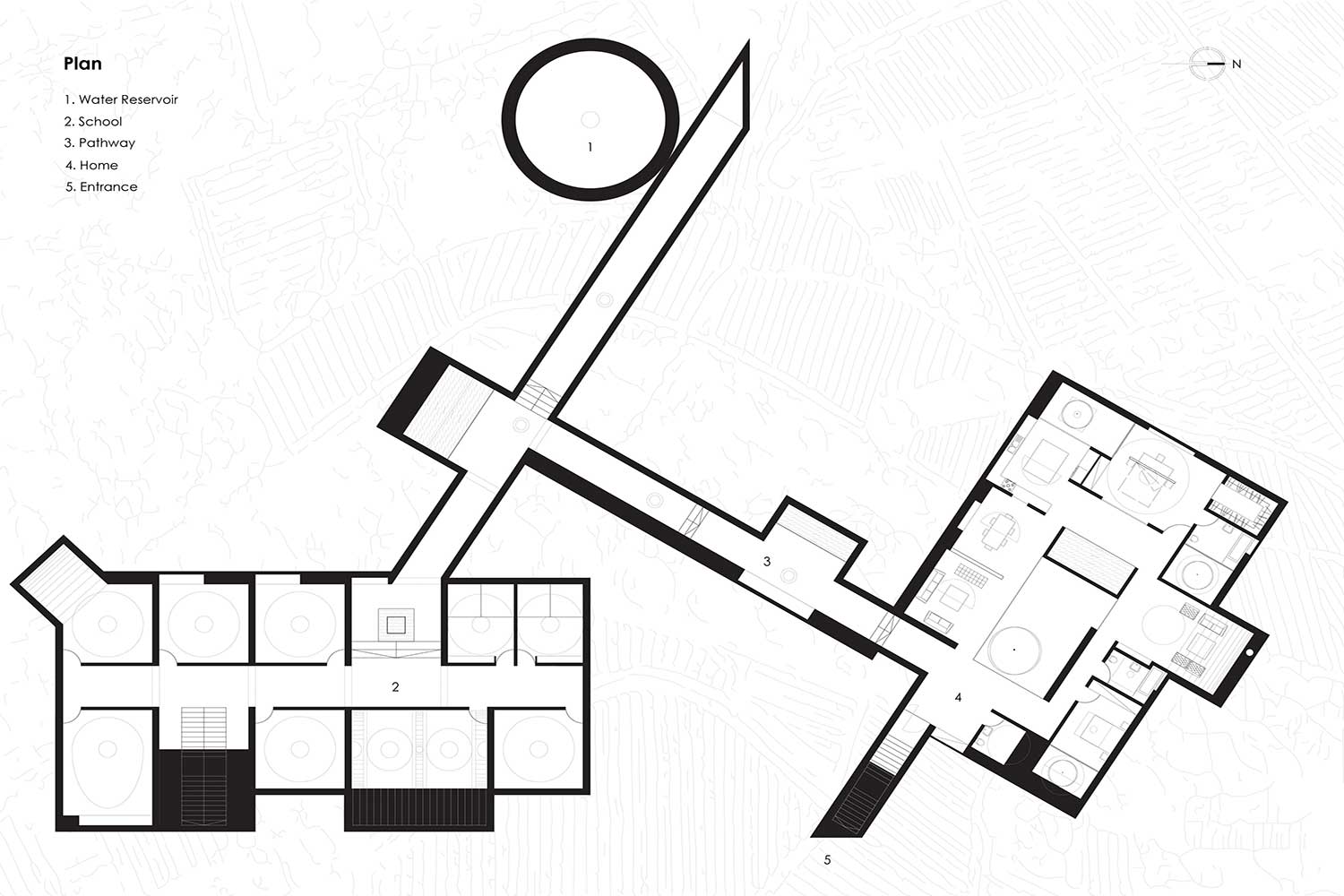
با این همه هدف ما ساخت یک خانه در میان یک فضای خالی و به دور از تمدن نبود. میخواستیم با قرار دادن این بنا هدیهای را به محیط اطراف (طبیعت، محیط مصنوع و حتی مردم) پیشکش کنیم. بنابراین روستای ارنان را انتخاب کردیم. ارنان در نزدیکی کوهی قرار گرفته که سنگوارههای آن گواه از زندگی دوازده هزار ساله انسان در این مکان دارد. همچنین دریاچه فصلی، تعداد زیادی قنات خشک شده و قلعه متعلق به دوره قاجار از دیگر عناصر شاخص ارنان میباشند. به علاوه ارنان در نزدیکی تعداد زیادی روستا قرار دارد که فاقد امکانات مناسب بهداشتی، آموزشی، پزشکی و اجتماعی هستند. در جهت بهبود شرایط کل منطقه علاوه بر خانه، ما دو فضای آموزشی و آب انبار را برای استفاده عموم به برنامه فیزیکی اضافه کردیم.
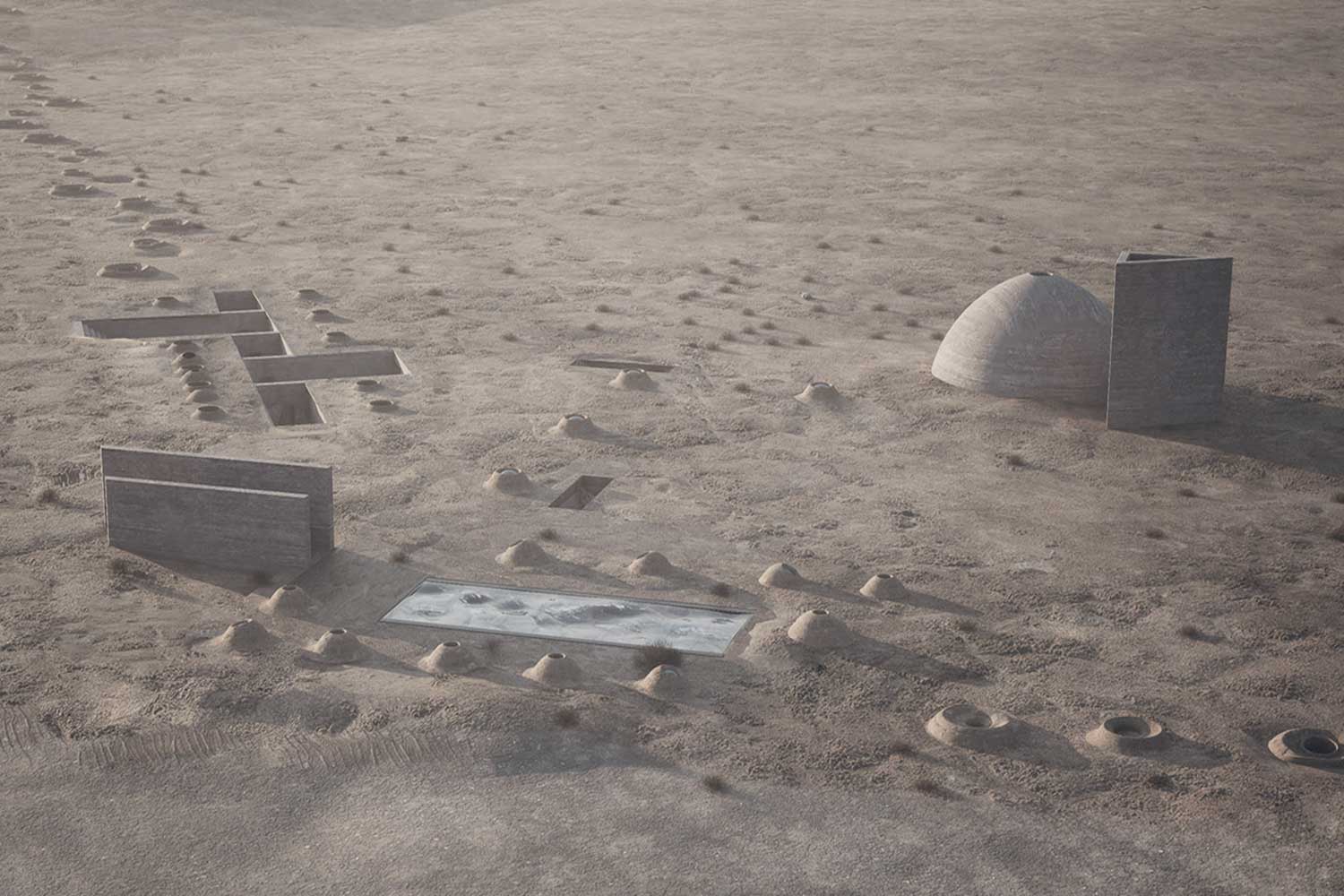
یکی از مهمترین ویژگیهای سایت وجود تعداد قابل توجهی قنات بود. قنات به صورت خلاصه، کانال حفر شده برای انتقال آب از سفرههای آب زیرزمینی به سطح زمین با استفاده از شیب زمین میباشند. چاههای دسترسی به کانال از روی سطح زمین نشان از وجود قنات در لایه زیرین دارند. قناتها، لنداسکیپ، خاک، تکنیکهای سنتی ساخت و همچنین مرجعهای تاریخی به مرور ایدههای معماری ما را شکل دادند.
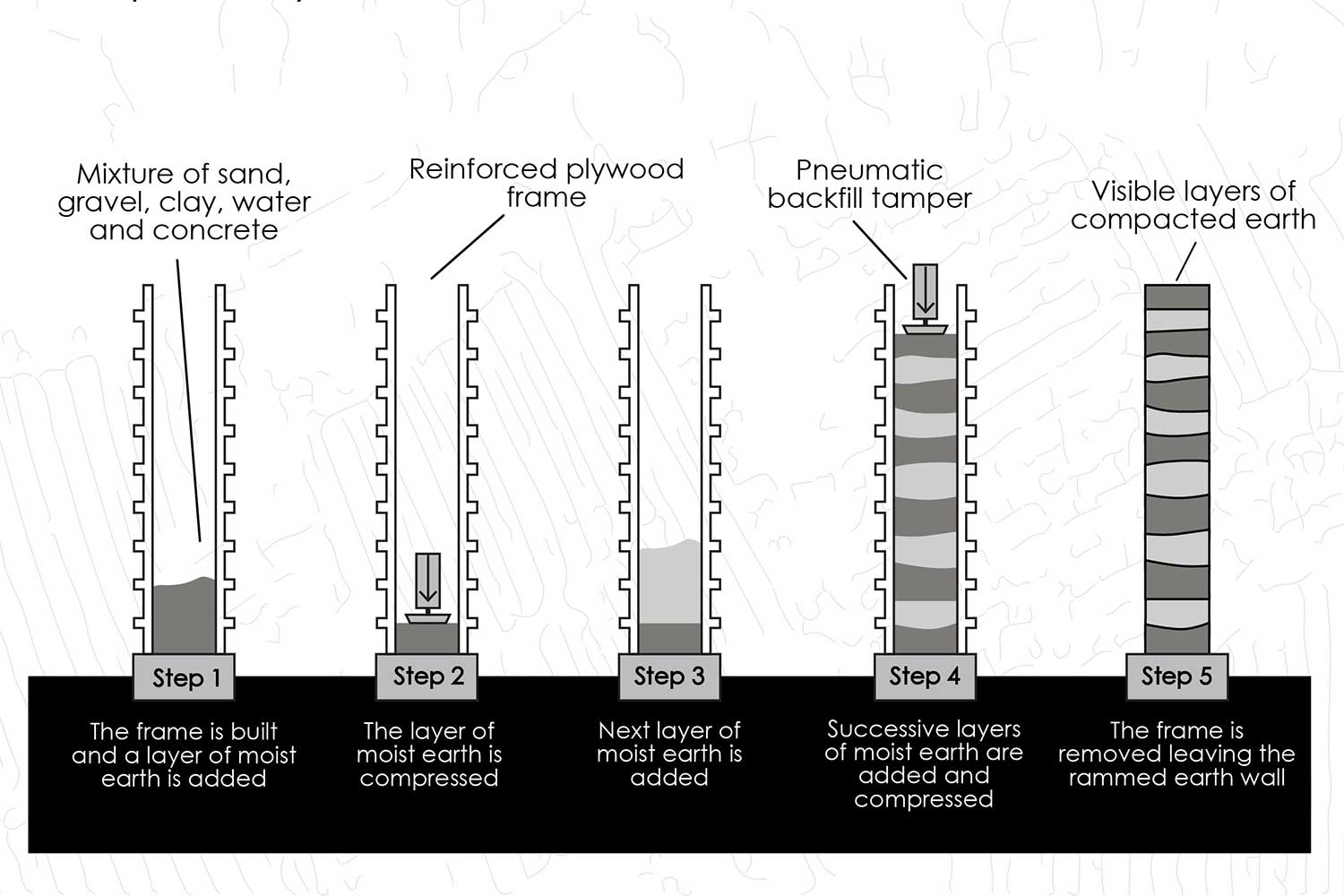
جهت چرخش خانه، منطبق بر جهت قلعه تاریخی ارنان بوده و به مانند بقیه عناصر تشکیل دهنده ترکیب بندی، برای به حداقل رساندن اتلاف انرژی، داخل زمین قرار گرفته است. با استفاده از این تکنیک و بهره گرفتن از مصالح موجود در سایت (خاک کوبیده) علاوه بر اقتصادی بودن، نیاز به استفاده از سرمایش و گرمایش مصنوعی به حداقل میزان خود میرسد. خاک کوبیده ظرفیت گرمایی بالایی دارد ولی در اینجا مصالح نه صرفا به جهت ملزومات تکنیکی، بلکه برای ما تجربه لمس معماری و روایت گری در فضا را فراهم میآورد.
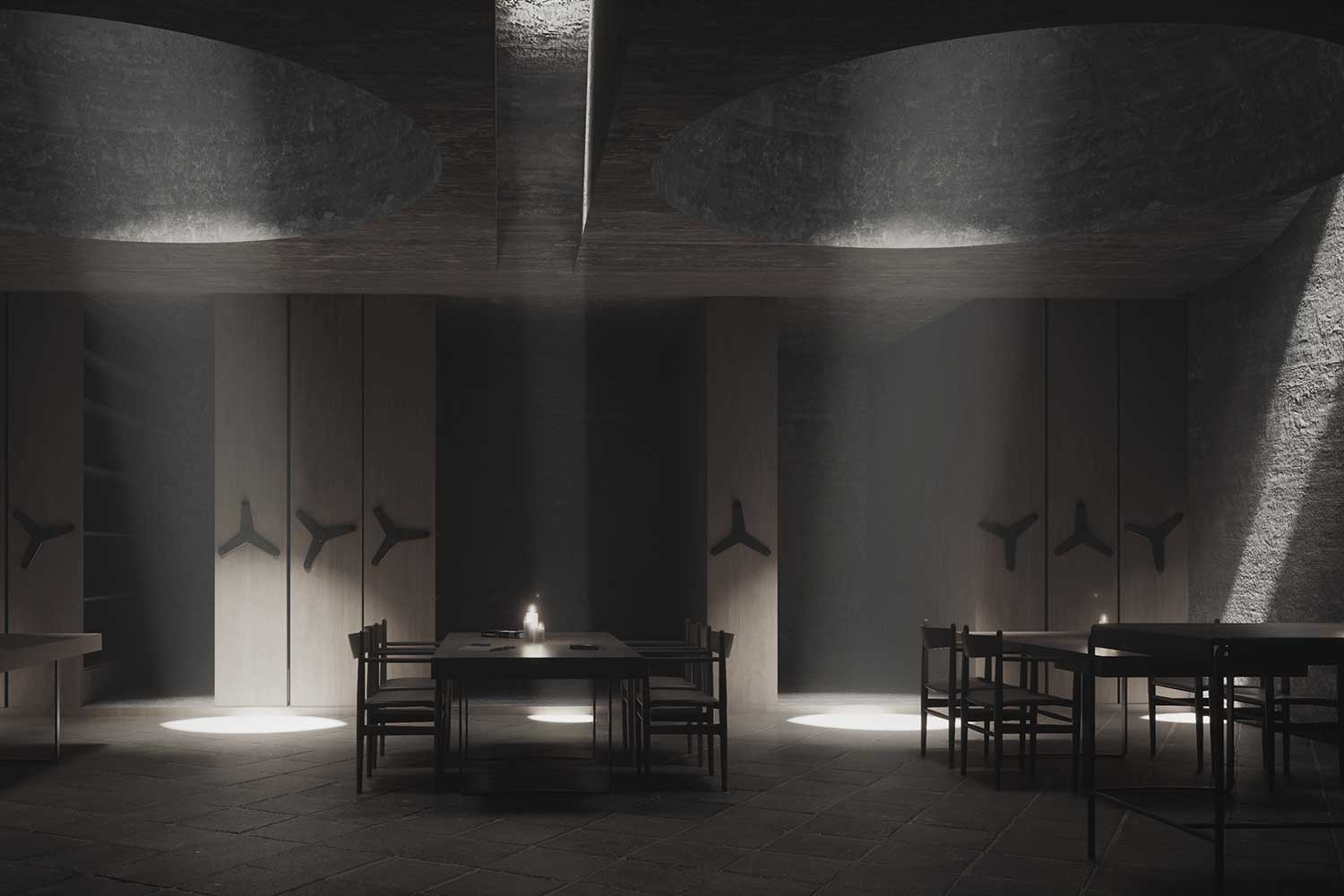
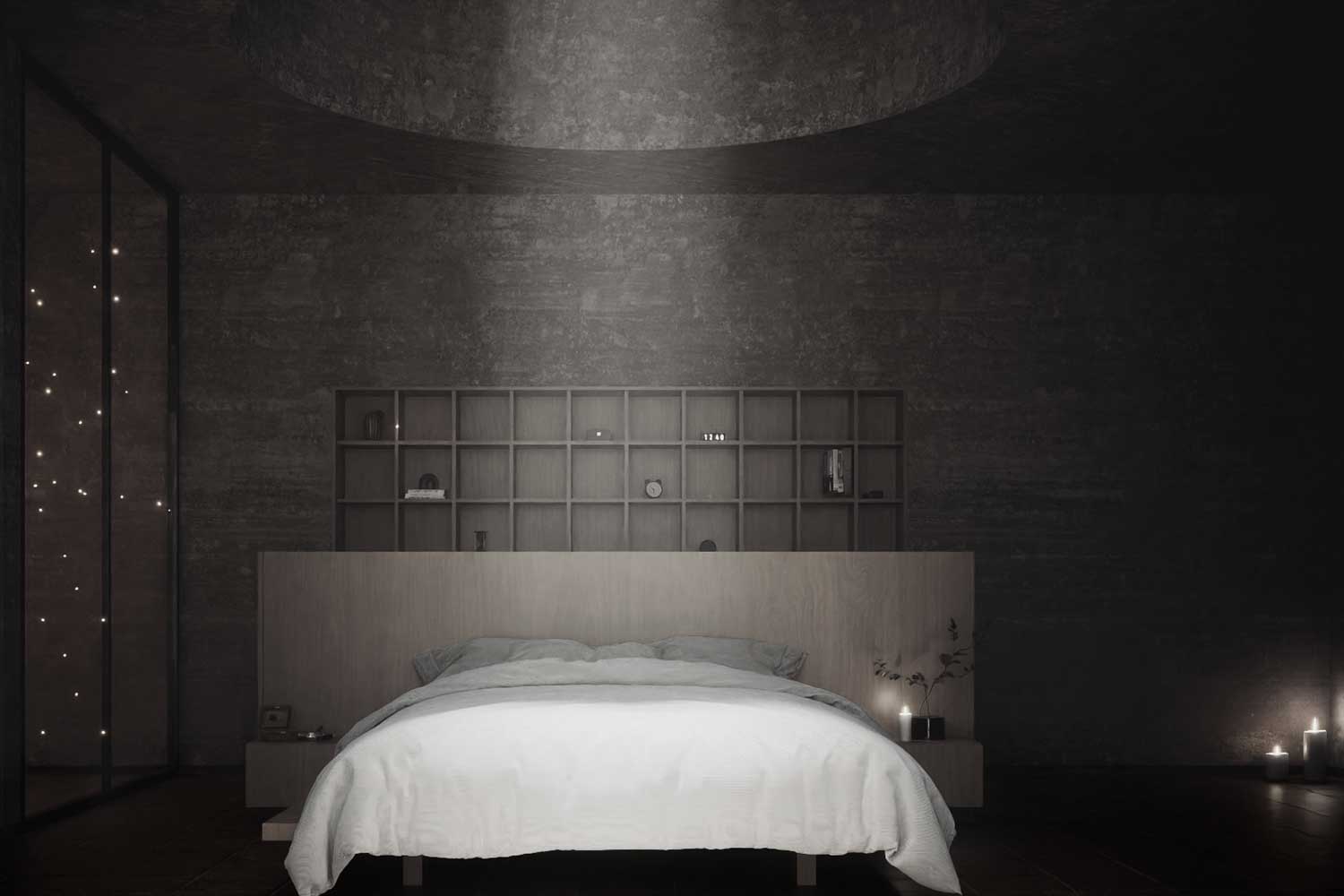
فضاها در بخش مسکونی توسط نور مستقیم و یا غیرمستقیم روشن میشوند. نور مستقیم از طریق گنبدها و یا فضای استخر وارد مجموعه میگردد. ابعاد و اندازه این گنبدها و همچنین مقطع ورودی نور در آنها متغیر بوده در هر لحظه از روز اتمسفر متفاوتی را در داخل ایجاد میکنند. لایه نازک آب در استخر که همواره به علت باد در حرکت است سایه و نوری رازآلود را به حیاط زیرین منتقل میکند.
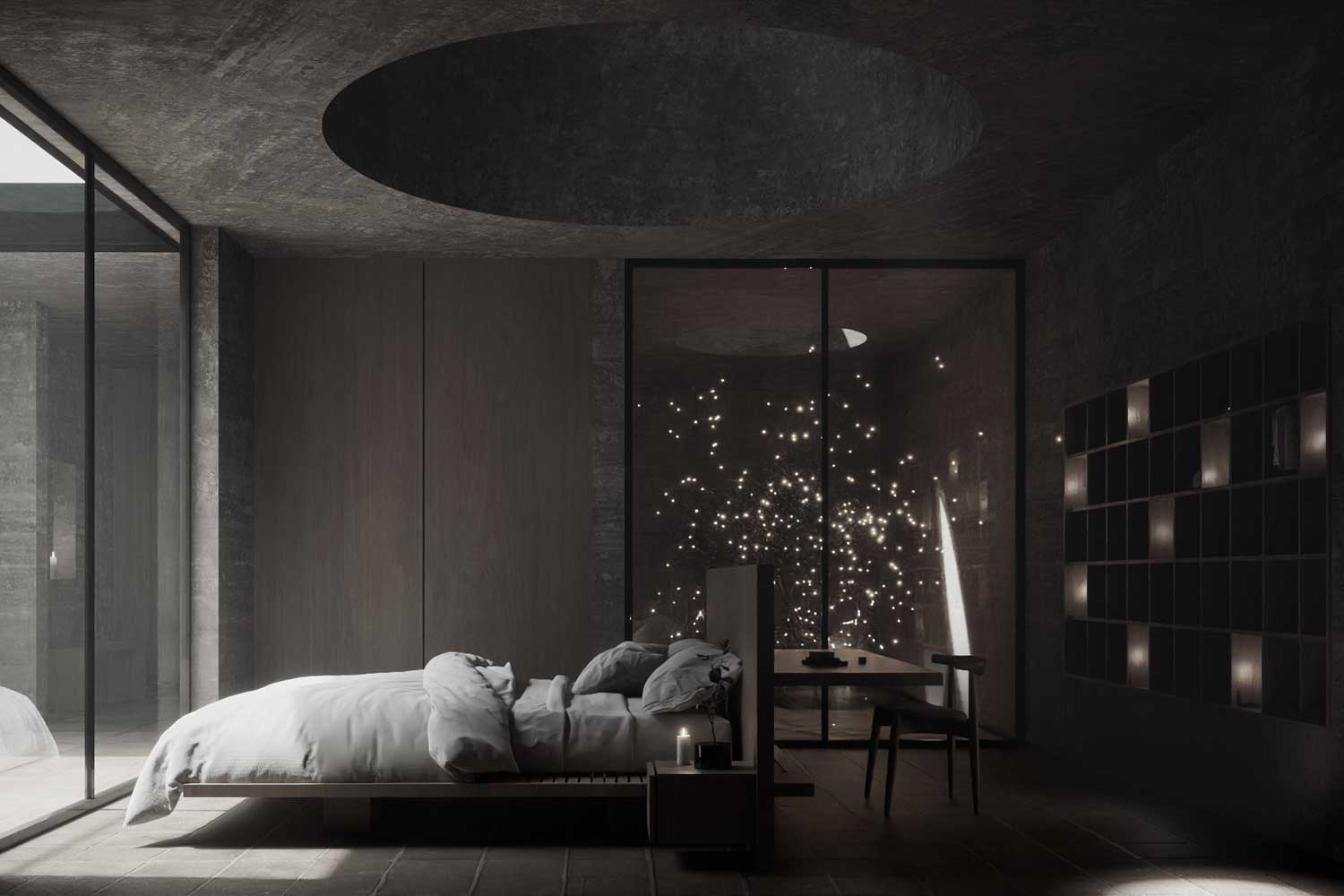
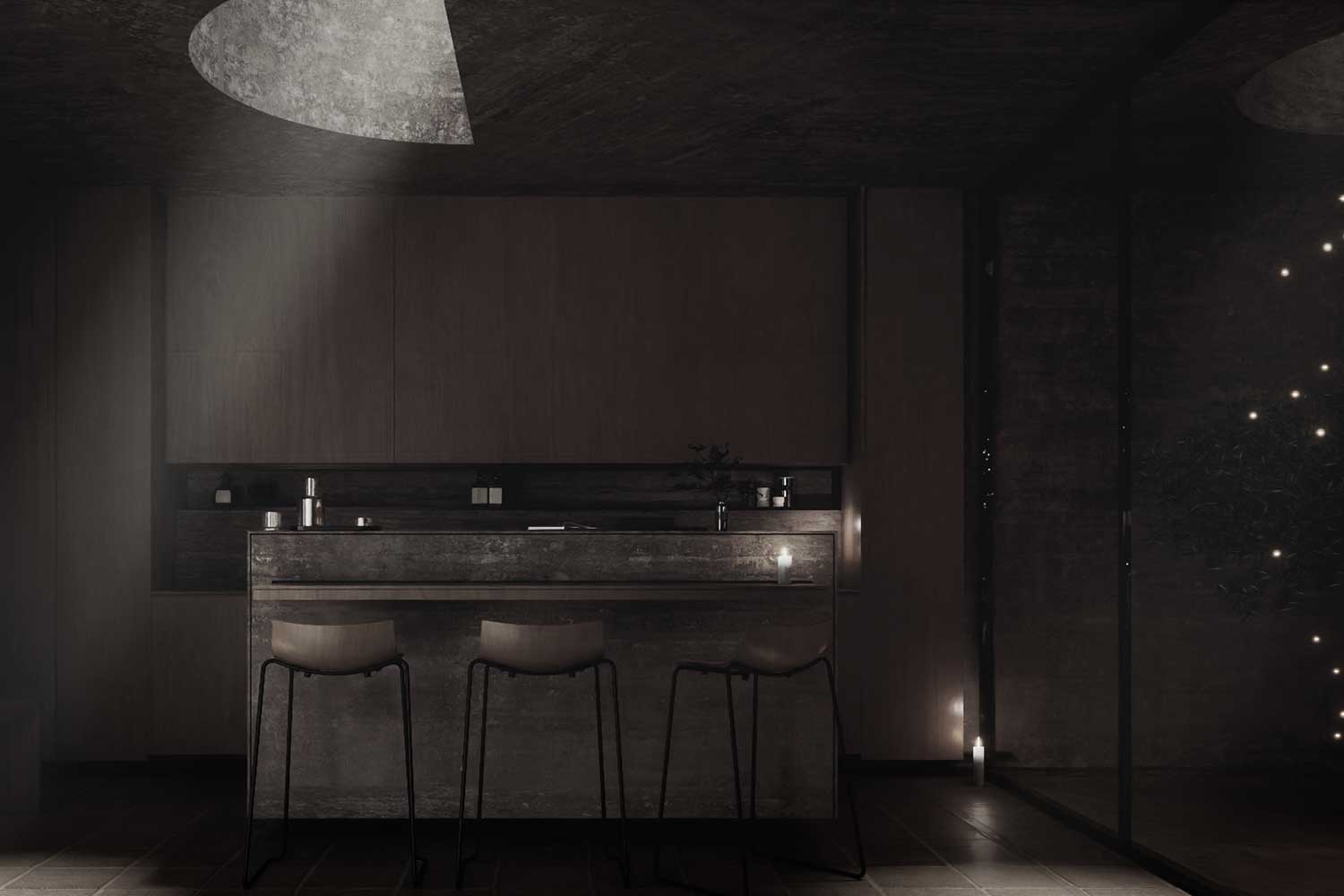
سرویسهای بهداشتی و آشپزخانه توسط نور غیر مستقیم و منعکس شده از حیاطهایی با مقیاس کوچکتر روشن میشوند. هر حیاط دارای نورگیر سقفی گنبدی شکل و الهام گرفته شده از ورودی چاههای قنات است. این حیاطها همچنین یک اکوسیستم طبیعی برای کرمهای شب تاب هستند که در شب روشنایی متحرک را ایجاد میکنند؛ اکوسیستمی که همراه با طبیعت است و برای انسان کهکشانی را در مقیاس یک حیاط ایجاد میکند.
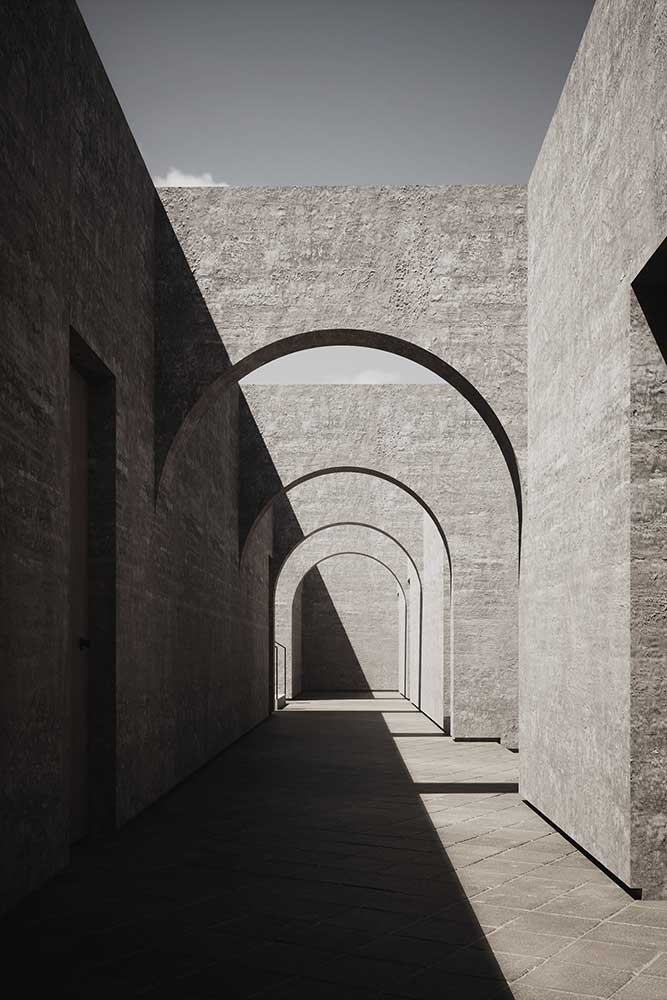
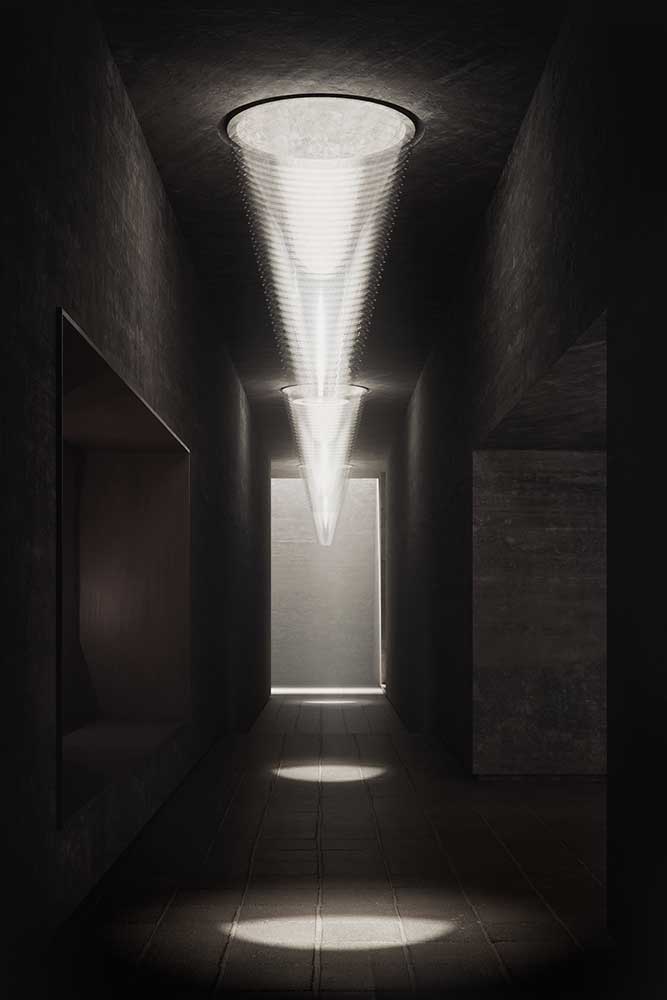
مسیر عبوری مدرسه که در دل زمین حفر شده است یادآور کوچه های تاریخی شهر یزد میباشد. این مسیر تناسبات، آسایش حرارتی و بازی مداوم و ریتم گونه بین نور و سایه را به وجود میآورد. فضای کلاسها و کتابخانه از نورگیرهای گنبدی در سقف و همچنین نورگیرهای راهروی زیرزمینی بهره میبرند.
آب انبار متصل به قناتهای موجود، با رساندن آب به زمینهای کشاورزی ارنان به خدمت مردم درخواهد آمد. آب انبار فرم خود را از گونه بندی غالب آب انبارهای منطقه الهام گرفته است. این گونه به همراه بادگیر که آن هم فرمی انتزاعی از بادگیرهای یزد دارد، حضوری شاخص در محوطه مجموعه دارد. بادگیر امکان جریان هوا را برای مسیر زیرزمینی که سه بخش مجموعه را به هم اتصال میدهد فراهم میسازد. این مسیر بازخوانی نوینی از قنات است که در آن نورگیرها تعریف کننده مسیر و پایابها فضاهای مکث میباشند.
در نهایت این پروژه تلاشی برای ایجاد یک ترکیب بندی و یا به بیانی دیگر طیفی از محوشدگی میباشد. هر عنصر در این پروژه علاوه بر ارتباط و دیالوگی منحصربه فرد که با نور دارد، یک ضرب آهنگ به خصوص را نیز ایجاد میکند. مجموع این عناصر و قرارگیری آنها در ترکیب بندی فرمی، بصری و حتی عملکردی یک مجموعه واحد را ایجاد کرده و امکان تجربه فضایی شاید فراموش شده و به دور از خیرگی را فراهم میکند.
چهارمین شب معماران ایران، 1403
_______________________________________
نام پروژه: حفر برای نور (ویلای قنات)
دفتر معماری: استودیوی معماری کالبد
معمار: محمد رحیمی زاده
ایمیل: kalboddesignstudio@gmail.com
Project name: Digging for Light
Office: Kalbod Design Studio
Architect: Mohamad Rahimizade
Email: kalboddesignstudio@gmail.com
Digging for Light
The traditional and local architecture of each region may have principles that must be updated and fit our fast-paced, highly dependent technology lives, but, as a matter of fact, with minor changes, they can have the long-lost solutions hidden within their simple yet highly functioning approach towards architecture as a problem-solving instrument.
The ancient Persian city of YAZD, described as the “Noble City of Yazd” by Marco Polo, and its nearby villages are great examples of this notion. This historical city is located amidst the most desolated parts of the Iranian Plateau, which stands on a primarily barren sand-ridden plain with a desertic climate. Yet solely because of its rich architecture, it is one of the ancient Iranian history and culture cradles.
Inspired by the ancient and resilient architecture of Yazd and choosing the historical and semi-abandoned village of Ernan as our project’s site, we aimed to add value to our surroundings, whether to its nature, artificial aspects, or even to its human society.
The village of Ernan is adjacent to a mountain where human tracks from 12000 years ago exist. It is also close to a seasonal lake, lots of dried qanats, and numerous villages that need proper public, medical, and educational facilities.
Through in-depth research, it turns out that the winning element of the ancient architecture of Yazd is based on resiliency. Resiliency is the ability of a system to withstand environmental, social, and economic challenges, which may now be our only way to live in peace and harmony with nature.
We referred to the resources to deepen our understanding of resiliency in architecture. Resources that expressed their presence for centuries, from large-scale, such as the ancient city of Yazd, to more minor scales, like buildings or functional architectural elements like Qanats.
The historical site gave us another essential feature: Qanat, A series of underground historic water canals that still function in arid regions, and to this day, they supply water for human settlements in the Iranian Plateau. A Qanat taps underground mountain water sources trapped beneath the earth and, through a series of gently sloping tunnels, often several kilometers long, they provide water for irrigation and domestic use.
Qanats, landscape, earth, ancient building techniques, and historic references gradually formed our ideas. We did not want to make only a home in the middle of an abandoned place; we wanted to use architecture to solve existing challenges. So, we established two other programs to add something to the community: a school and a water reservoir.
The home takes its orientation from its adjacent ancient castle and is sunken underground with the rest of the composition to minimize the thermal exchange between outside and inside. With this solution, we also tried to push the brief further and omitted using artificial heating and cooling systems.
In the home, spaces are illuminated by either direct or indirect light. Natural lights entering from domes or glass pools will function as skylights. The shape and size of domes and their position differ in various ways as they create a different atmosphere beneath at any time of the day. The breezy weather of the desert blows on the surface of the thin layer of water and creates wavy patterns as the natural motion casts an enigmatic shadow and illumination on the yard beneath it.
The house indoors is lit by indirect light through small gardens. Each garden has its domed skylight. These gardens also house fireflies, creating a habitat that is beneficial to humans as they address the bio-diversity of the Iranian deserts.
Yazd alleys inspired the school’s sunken pathway to create shade, thermal comfort, and rhythmic play with light and shadow. Classrooms and the library enjoy direct light from skylights and indirect light from the pathway.
A water reservoir connected with existing Qanats serves the community and provides water for nearby farms. It takes its form from traditional reservoirs of the region (Ab Anbar) and has a unique presence on the landscape with its traditional windcatcher (Baadgir).
The light and wind catcher provides air circulation for the underground pathway. This pathway connects these triad programs and reinterprets the Qanat system with its domed skylights.
This project tries to make a coherent whole in harmony with the site’s unique nature, historical surroundings, and rich traditional architecture of this region. Each element has a different dialogue with light and creates a peculiar tune. But simultaneously, it tries to be in the right place for the overall gradient.
مدارک فنی
مطالب مرتبط