موزهی چوب ، اثر تادائو آندو
موزهٔ چوب
پروژه : موزهٔ چوب
مکان : میکاتا، استان هیوگو
مساحت سایت : ۱۶۸٬۳۱۰ مترمربع
زیربنا : ۲٬۶۹۴٫۶ مترمربع
نوع بنا : موزه
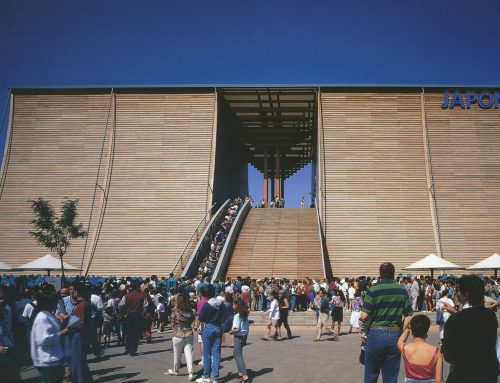
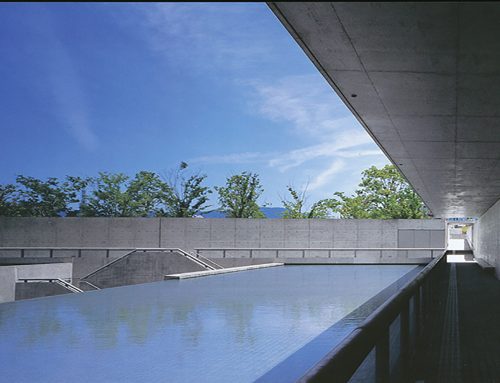
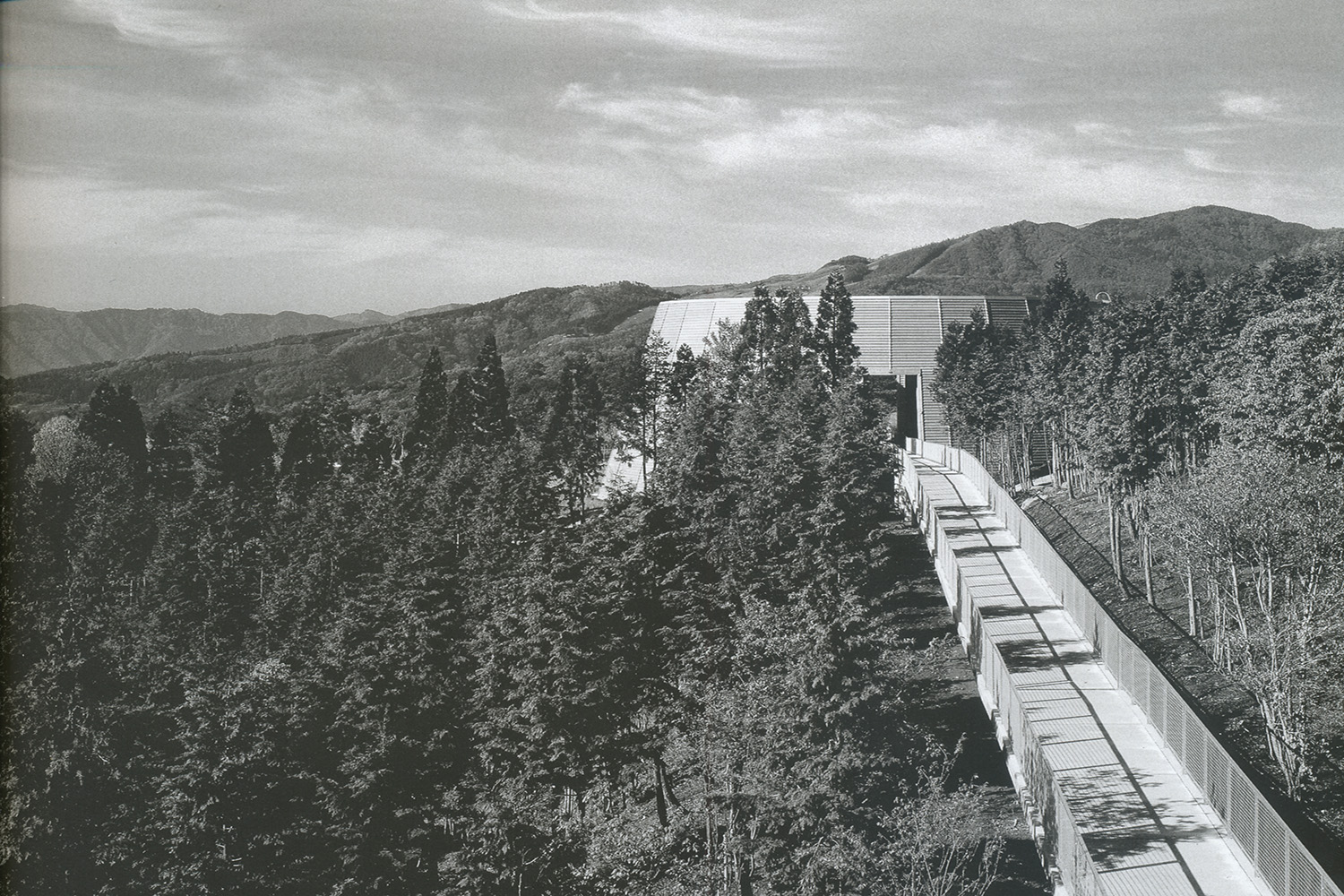
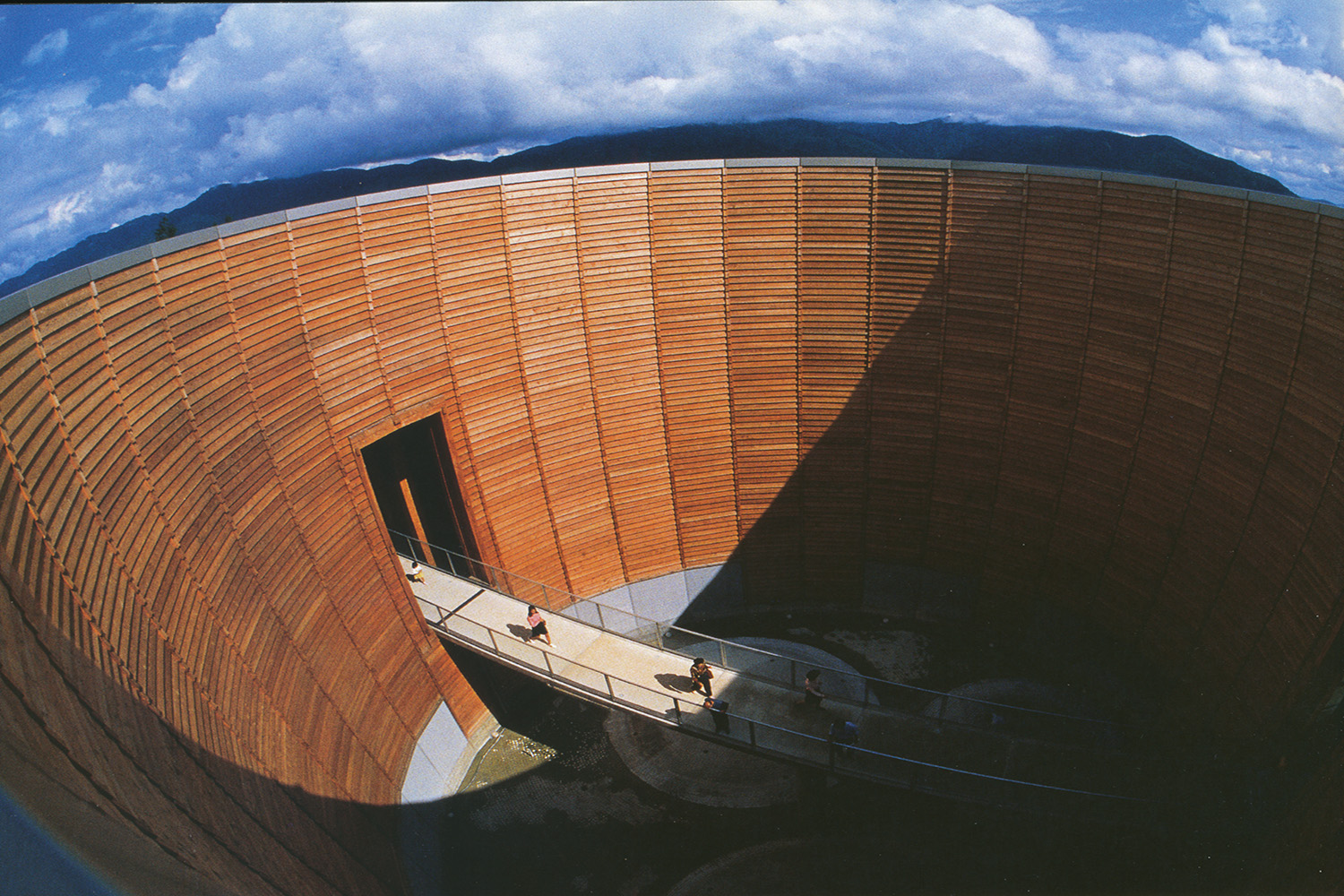
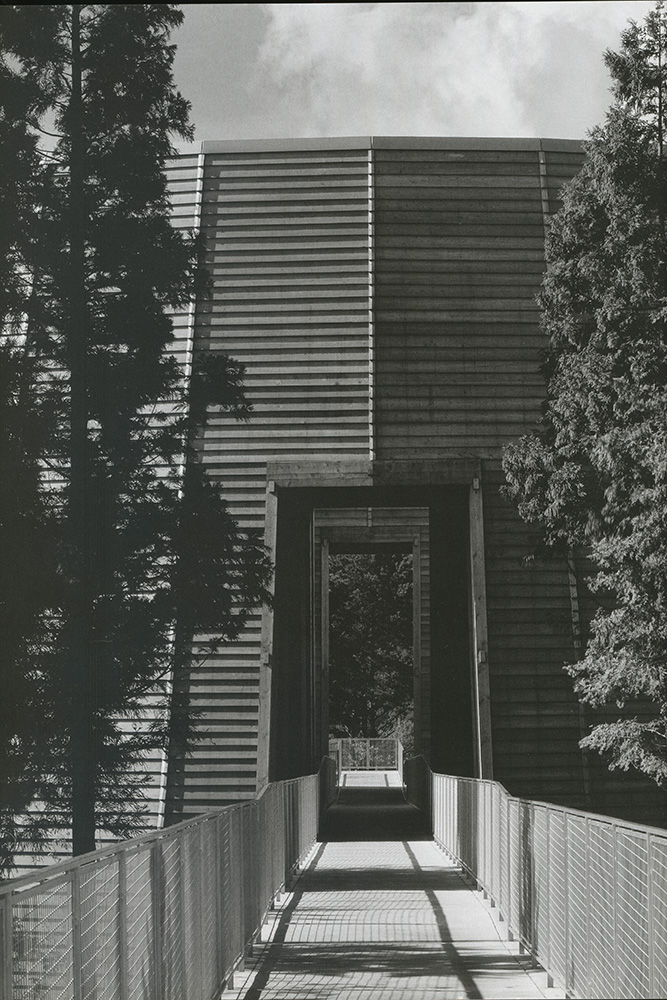
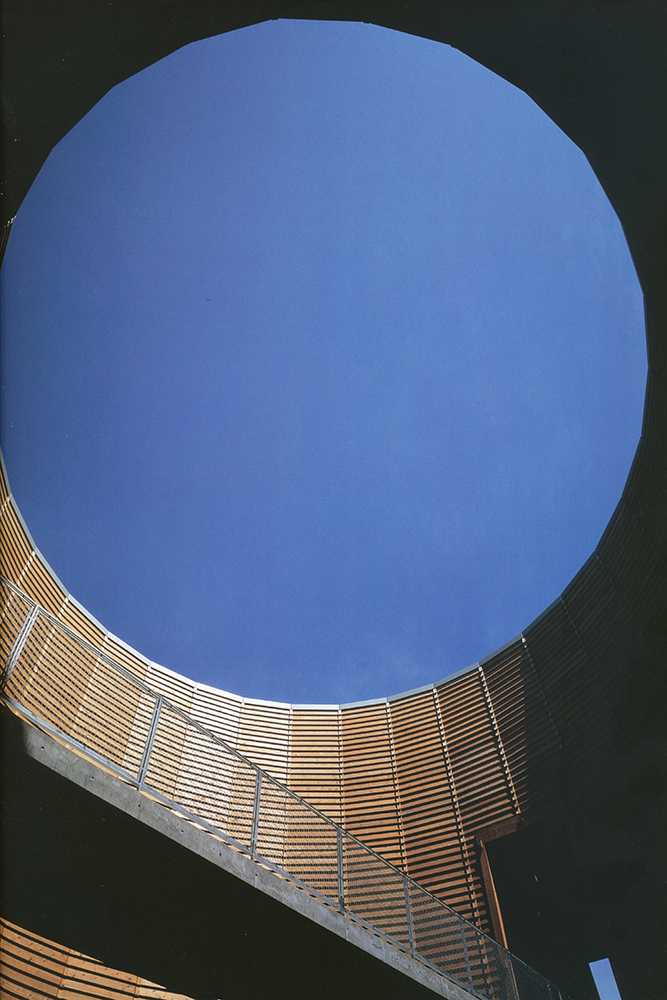
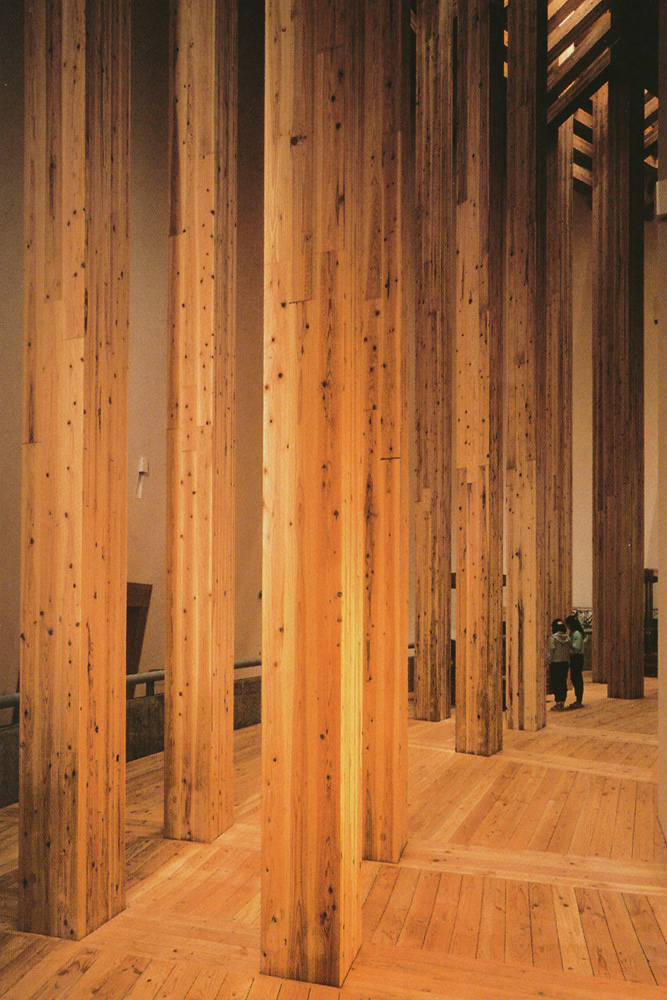
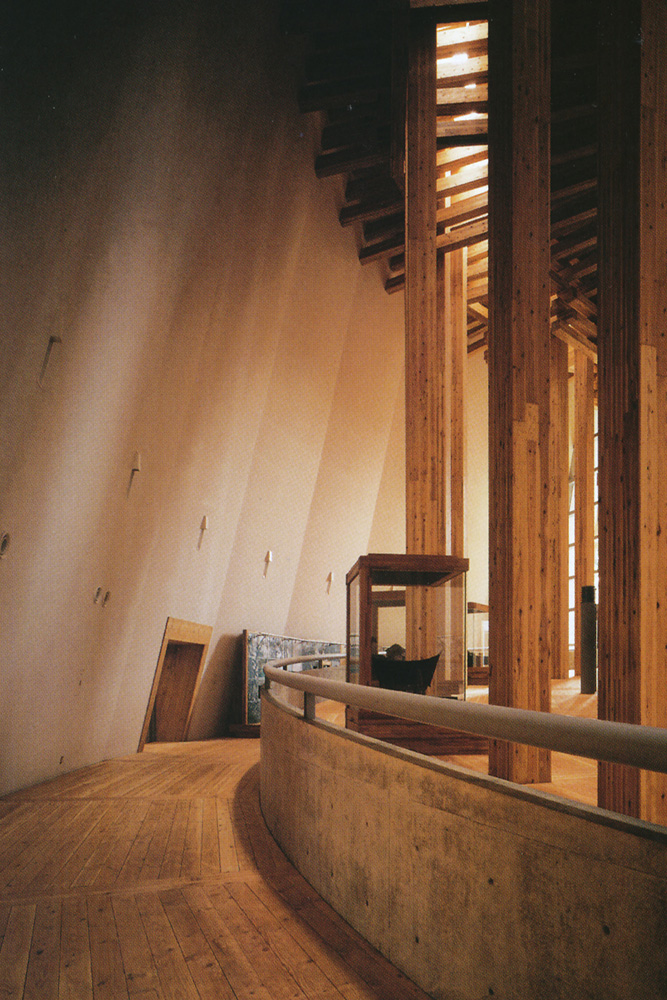
در سمت چپ، این چشمانداز از رمپِ ورودیِ موزه، طراحی «فضای مراقبه» در پاریس را به یاد میآورد؛ با این تفاوت که در مقیاسی بزرگتر و با مصالح چوبی اجرا شده است. با این حال، برخلاف نمونهٔ پاریسی که فضایی بسته دارد، هستهٔ موزهٔ چوب بهسوی آسمان گشوده است. این موزهٔ شاخص به مناسبت برگزاری چهلوپنجمین جشنوارهٔ ملی چوب در استان هیوگو ساخته شد؛ رویدادی که همزمان با «روز درختکاری» برگزار میشود و آیینی است که در دههٔ ۱۹۵۰، پس از ویرانی گستردهٔ جنگلها در دوران جنگ، به ابتکار امپراتور ژاپن بنیان نهاده شد. این سایتِ دورافتاده و جنگلی، که در نزدیکی یک پیست اسکی و در فاصلهٔ حدود سه ساعت رانندگی از اوساکا قرار دارد، مساحتی برابر با ۱۶۸٬۳۱۰ مترمربع را در بر میگیرد. موزه با ترکیبی از چوب، سازهٔ فلزی و بتن مسلح ساخته شده و شامل سالنی نمایشگاهی بهشکل حلقه است؛ با قطر خارجی ۴۶ متر و فضای خالی مرکزی به قطر ۲۲ متر. پل دسترسی، مستقیماً از دلِ سازه عبور میکند، از فراز فوارهای مرکزی میگذرد و بازدیدکنندگان را در امتداد مسیری به طول ۲۰۰ متر به سکوی تماشا و اقامتگاه میرساند. در فضای داخلی موزه، کفِ شیبدار بازدیدکنندگان را در امتداد مسیری مارپیچ هدایت میکند؛ مسیری که آنها را دو بار به درون فضای خالی مرکزی وارد میسازد. برای ستونها و تیرها از چوب سدرِ محلیِ استان هیوگو استفاده شده است. ستونهای عظیمِ چوبِ لمینیتشده، که تا ارتفاع ۱۶ متر اوج میگیرند، بهگونهای چیده شدهاند که تداعیگر فضای جنگل باشند. با اینحال، کیفیت آثار نمایشی –شامل ماکتهای خانههای چوبی و تصاویر نورپردازیشده– همسنگ کیفیت استثنایی معماری بنا نیست. اگرچه این سازه بهطور مستقیم یادآور هیچ معبد خاصی نیست، اما دستکم حسی از همزیستی و پیوند با طبیعت را القا میکند و یادآور این واقعیت است که جنگلهای غنی ژاپن، سرچشمهٔ علاقهٔ دیرینهٔ این کشور به معماری چوبی بودهاند. همانند شماری از دیگر موزههای آندو (برای نمونه، موزهٔ تاریخی چیکاتسو–آسوکا)، موزهٔ چوب نیز ادای احترامی است از سوی معمار به سرچشمههای فرهنگ و تاریخ ژاپن. در فضای داخلی موزه، مسیر پیادهروی مارپیچی از بازدیدکننده استقبال میکند. ستونهای چوبی لمینیتشده –که بسیار شبیه به نمونههای بهکاررفته در پاویون ژاپن در سویا هستند– بهصورت نمادین هم به جنگل مجاور اشاره دارند و هم به هدف بنیادین این موزه. نقشهها، نحوهٔ توزیع فضاهای داخلی و نقش اساسی هستهٔ خالیِ سازه را نشان میدهند. در سمت راست: نمایی رو به بالا از تراز فواره، در حیاط داخلیِ مدور بنا.
Museum of Wood
PROJECT : MUSEUM OF WOOD
Location : MIKATA, HYOGO
Site area : 168 310.0 m²
Floor area : 2 694.6 m²
Building : MUSEUM
To the left, this view from the approach ramp of the Museum recalls the design of the Meditation Space in Paris, albeit on a larger scale and in wood. However, rather than being closed, as in Paris, the core of the Museum of Wood is open to the sky. This remarkable museum was built to commemorate the 45th National Wood Festival held in Hyogo Prefecture, which occurs on Arbor Day, a ceremony founded by the Emperor of Japan in the 1950s following the wartime destruction of the forests. Located three hours by car from Osaka near a ski resort, the remote, wooded site covers an area of 168 310 m². Built of wood with a steel frame and reinforced concrete, the museum features a ring-shaped exhibit hall with a 46-metre outer diameter and a 22-metre void within. The access bridge cuts directly through the structure, bridging over a central fountain, and leading visitors 200 metres further on to an observation deck and guest house. Inside the museum, a sloping floor guides visitors down along a spiral path, which takes them twice into the central void. Locally milled Hyogo cedar was used for the posts and beams. The enormous laminated wood columns, rising to a height of 16 metres, are arranged in a manner that recalls the forest. Unfortunately, the quality of the exhibits, with models of wooden houses and light-box images, is not equivalent to the extraordinary quality of the architecture. Although not reminiscent of any particular temple, this structure does give at the very least an impression of communion with nature, and recalls that Japan’s rich forests are the source of its traditional interest in wooden architecture. Like a number of his other museums (Chikatsu-Asuka Historical Museum, for example), the Museum of Wood is a homage by the architect to the sources of Japan’s culture and history. Inside the Museum, a spiralling inner walkway greets the visitor. Laminated wooden columns, much like those used in Seville, symbolically recall both the neighbouring forest and the very purpose of the museum. Plans show the distribution of interior space and the essential role played by the empty core of the structure. Right: A view looking up from the level of the fountain in the round interior courtyard.
mail@tadao-ando.com
مطالب مرتبط