 مجتمع تجاری، تفریحی، فرهنگی سپهر گلدسته، اثر امین ترکان
لومن، اثر علیرضا تغابنی
هفتمین کتاب سال معماری معاصر ایران، 1403
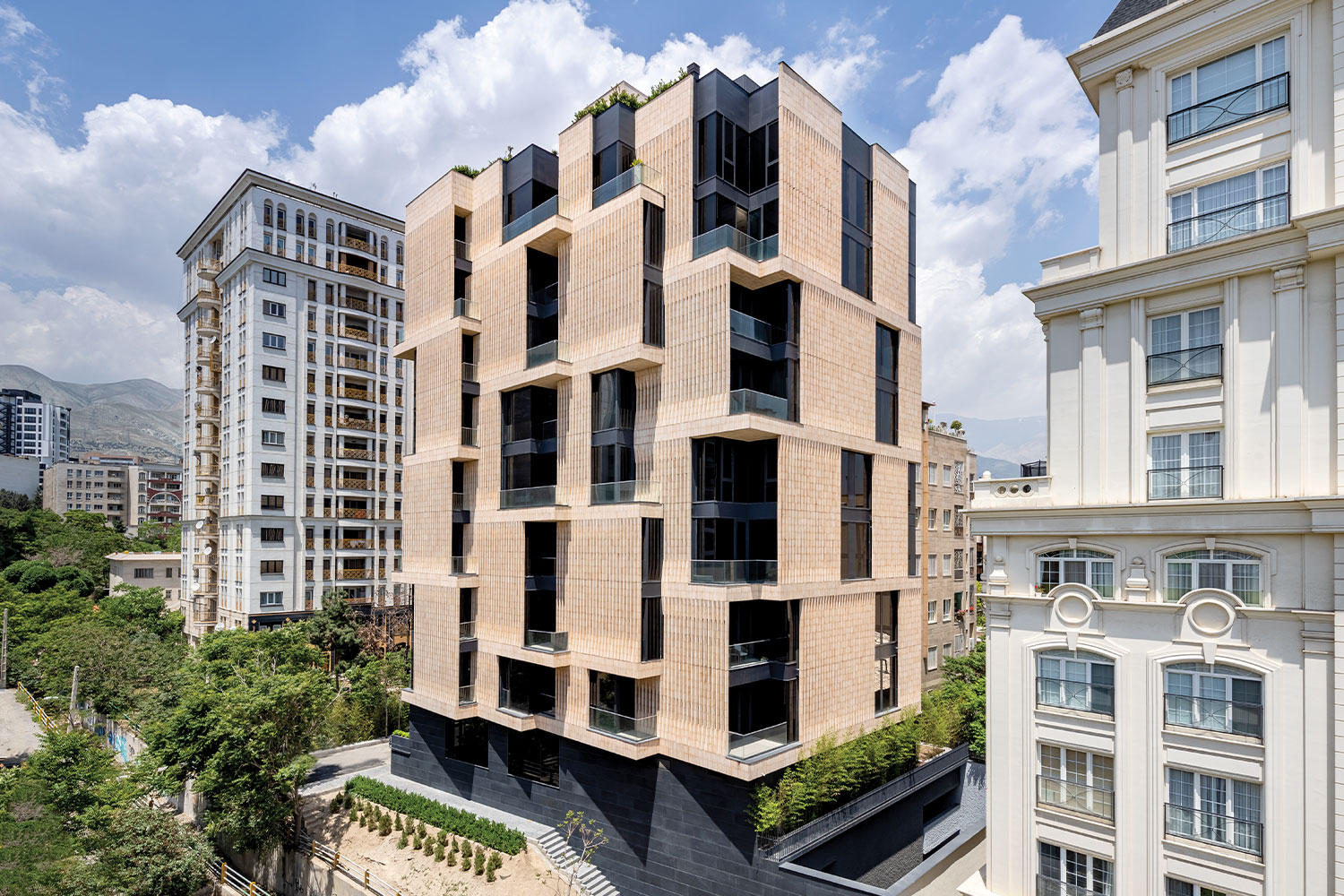

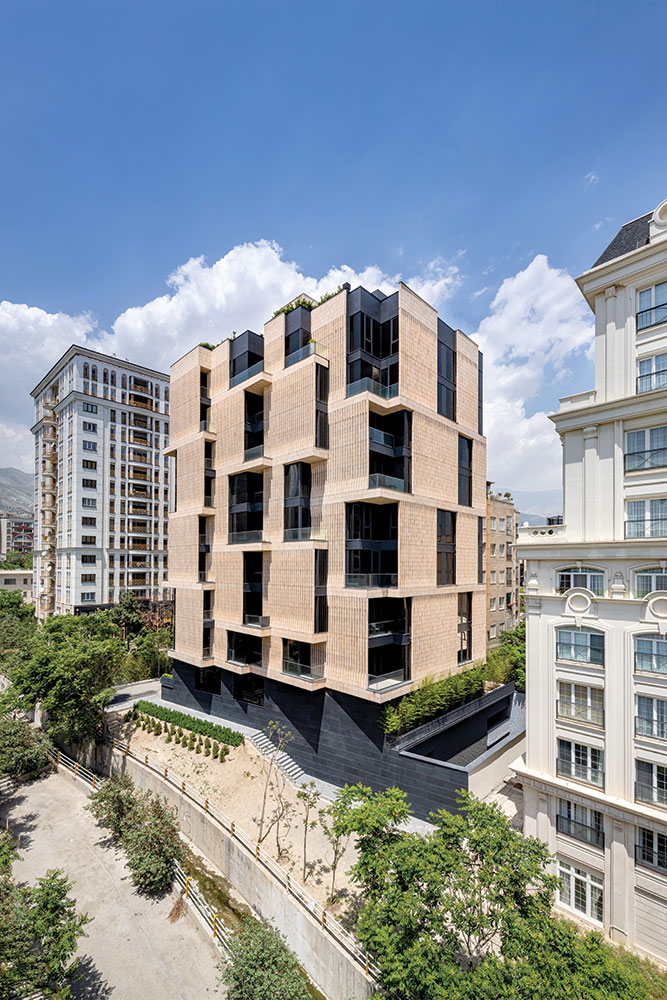
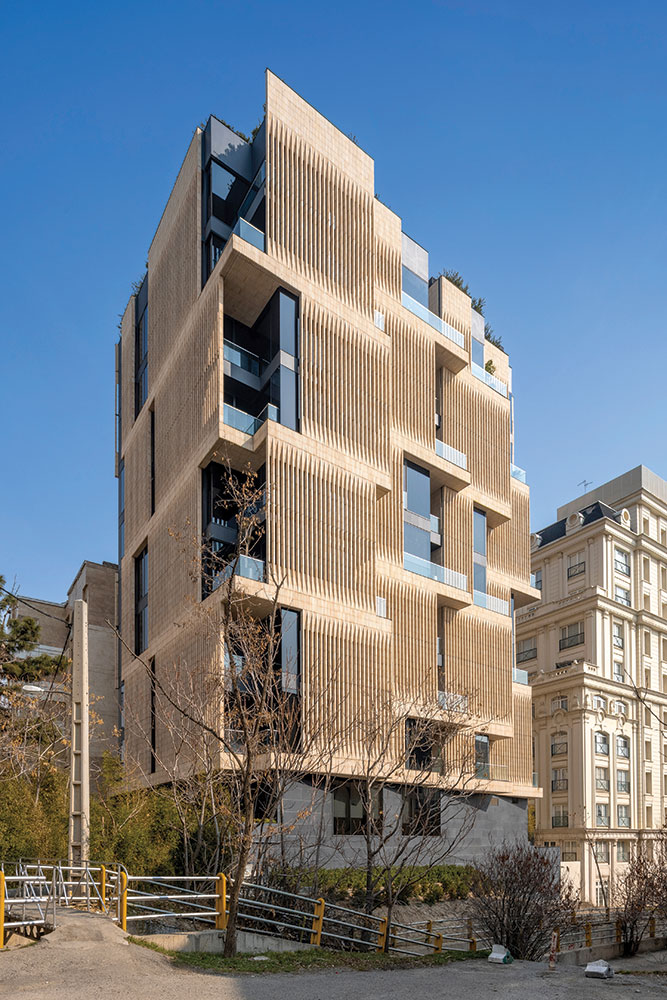
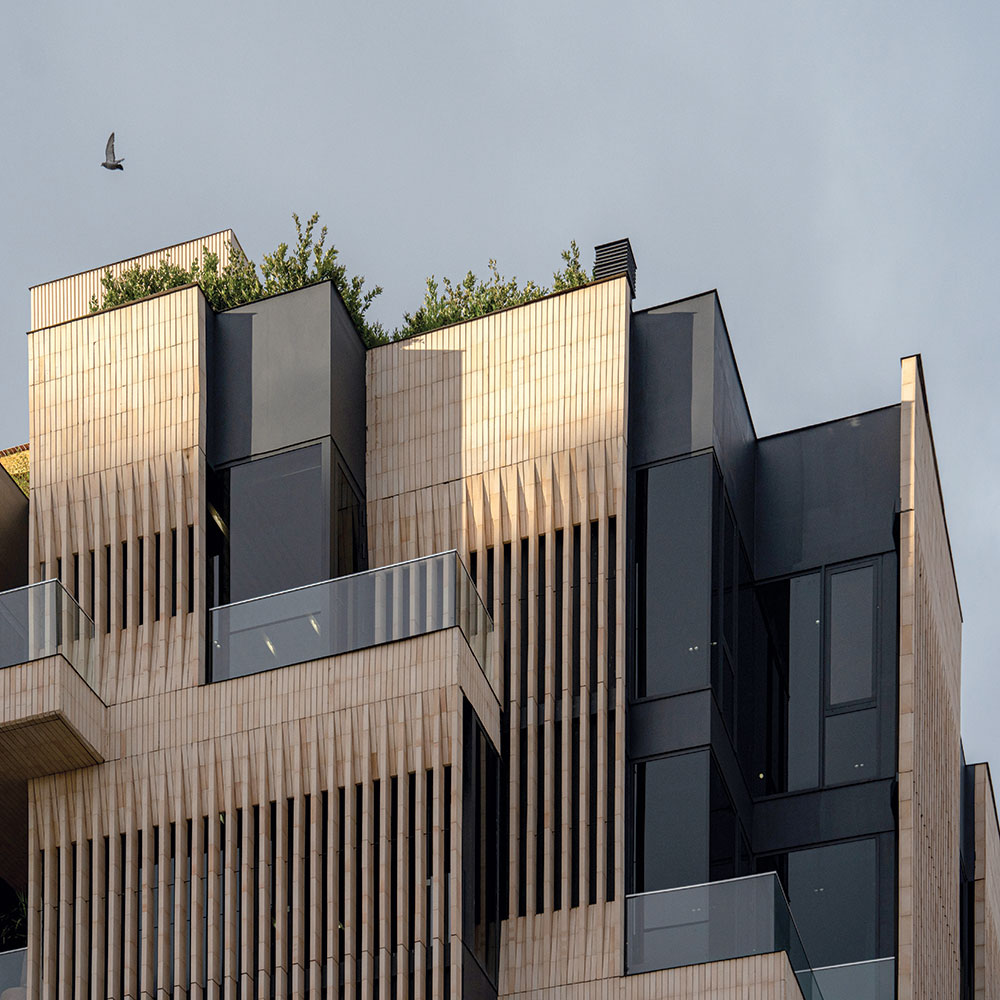
پروژهی لومِن را ما «پروژهی کنجها» مینامیم، به این دلیل که با دخل و تصرف و تحریفهای فرمی در کنجهای این بلوک ساختمانی، به سطوحی مستقل از هم میرسیم که این سطوح را به واسطهی استراتژیهایی مثل رشتهشدگی، نیمهشفافیت و چندلایگی تبدیل به ابزارهایی کردیم (device) که هم نمای سوم و فرم مجموعه را برای ما حل میکنند، هم وجه اصلی پروژه که در مقابل نور شدید است (چه در جنوب و چه در غرب)، را رام میکنند. به عبارت دیگر، چگونه میتوان ساختمانی با کاربری مسکونی که هر چهار نمای آن از گذر و همجواریها خوانایی دارد را به صورت شاخص در بافت تعریف کرد، طوری که نماهای سوم مورد غفلت قرار نگرفته و به صورت عام و رها شده باقی نمانند به علاوه، چالش کنترل نور در جبههی غربی – وجه رو به مسیل – به گونهای در پروژه مورد مطالعه قرار گیرد که علاوه بر حفظ دید و منظر و بهرهگیری از نور طبیعی در طبقات مسکونی، بهصورت توأمان از مضرات نور خورشید در این نما و موضوع خیرگی و نامطلوب بودن آن جلوگیری کند.
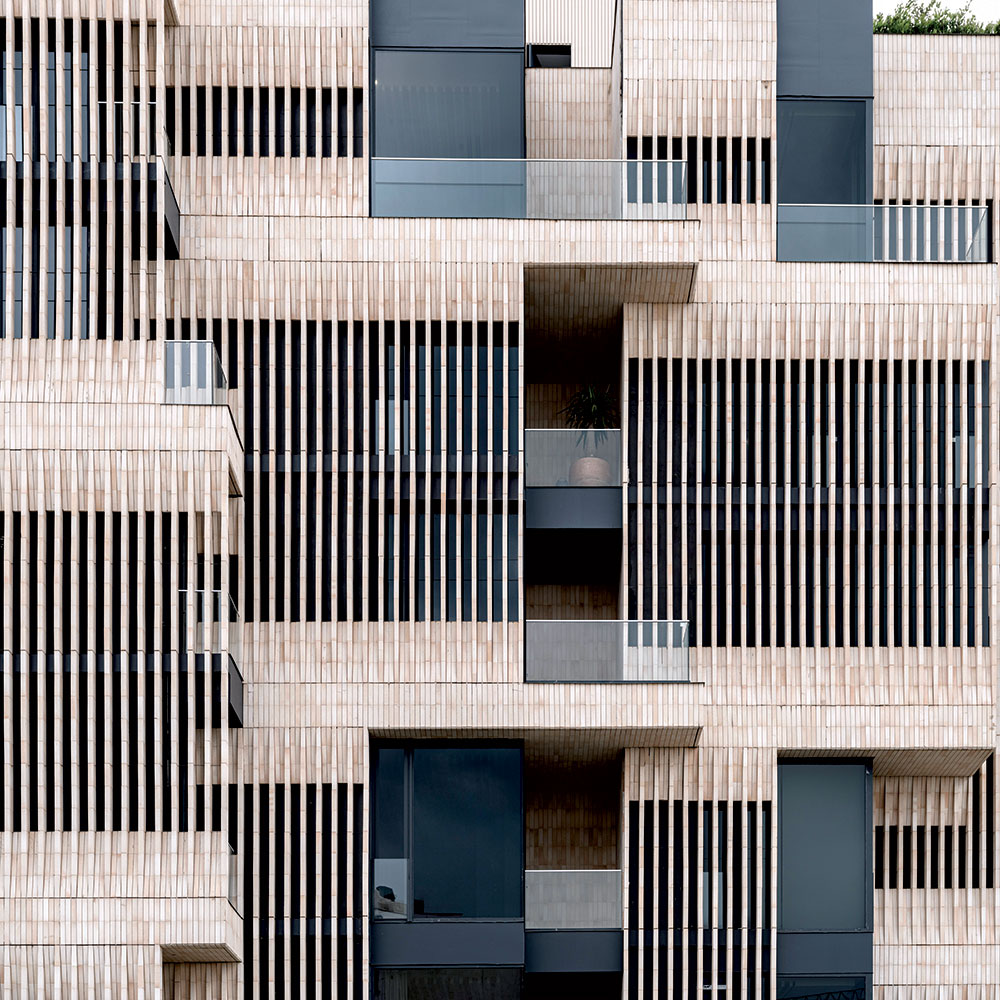
دو رویکرد ایجاد خوردگیها در کنج، جهت ایجاد تراسها و کنترل نور از طریق لوورها در روند طراحی دنبال شد تا در عین حفظ کلیت و یکپارچگی حجم، تخلخل فرمی و آسایش حین بهرهبرداری رعایت گردد. لوورها در سطوح نما به صورت صفحاتی با ابعاد مختلف در تراز طبقات لغزیدهاند تا در عین تنوع بصری و همخوانی با کاربریهای داخلی، بر روی کلیت یکپارچهی حجم تاکید کنند. به علاوه، به منظور تمایز از استفادهی عام از لوور در نما، قسمتهای بالایی و پایینی هر کدام از صفحات لووردار، به صورت مورب در مجاور پلان طبقات قرار گرفته تا نوعی بافت “شانهای” در این صفحات به وجود آید.
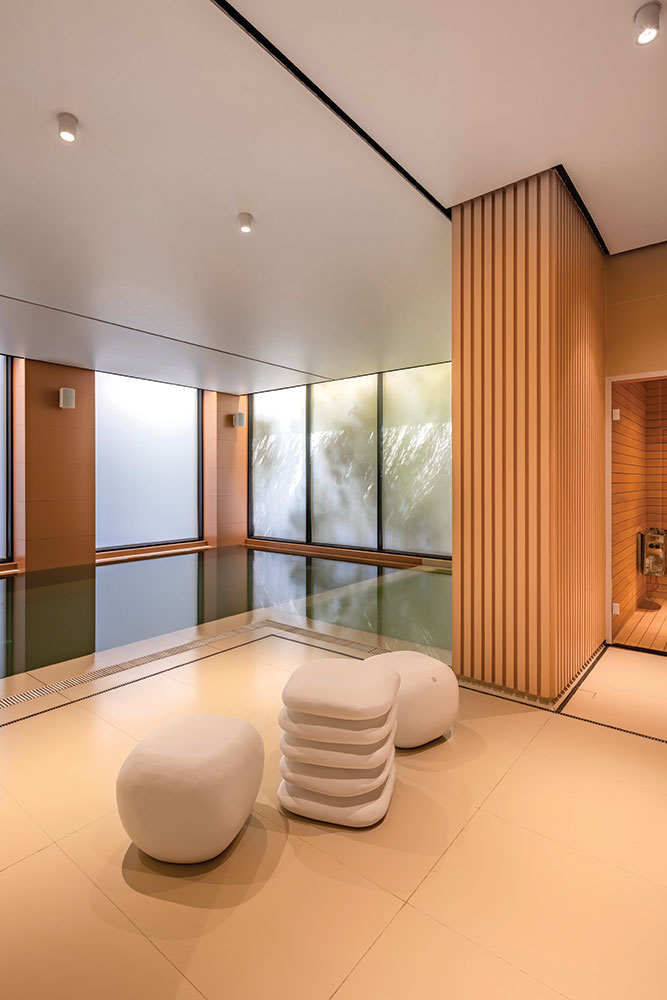
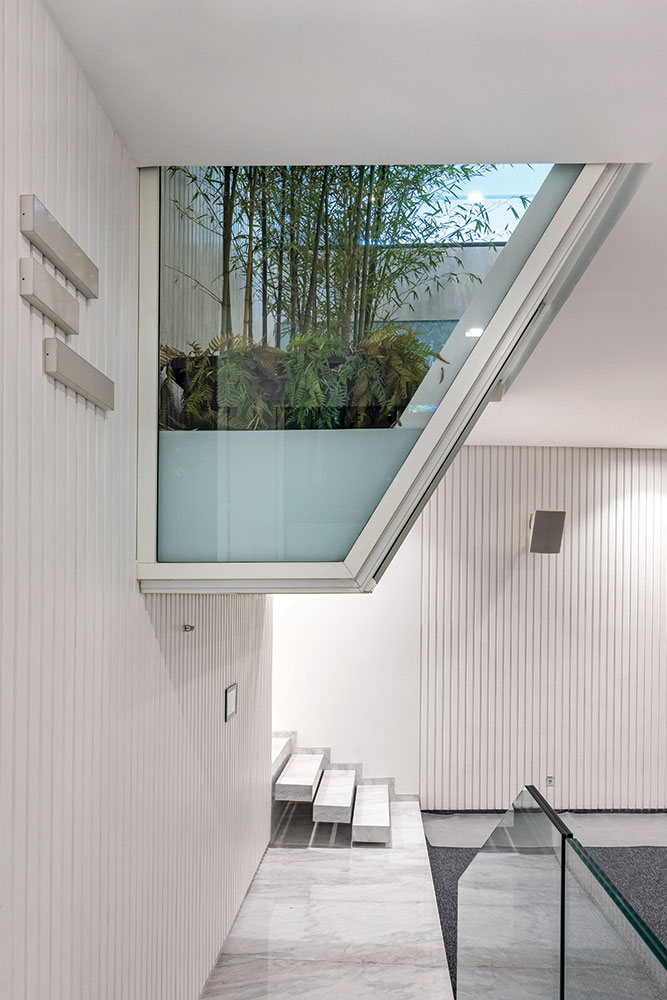
حاصل پروژه، نوعی رشتهشدگی، نیمهشفافیت و چندلایگی را به منظر شهری پیشنهاد میدهد که هم یکدستی مبهمی را از کنار هم قرار گرفتن و تکثیر “شانه”ها به دست میآورد و هم درجات مختلفی از درونی بودن، محصوریت و ارتباط با بیرون را برای فضاهای داخلی به وجود میآورد.
هفتمین کتاب سال معماری معاصر ایران، 1403
_______________________________________
نام پروژه: لومن
عملکرد: مسکونی
دفتر طراحی: دفتر دیگر
معمار: علیرضا تغابنی
همکاران طراحی: علیرضا تغابنی، هما اسدی، مهران معتمدینیا، فریده آقامحمدی، مهرداد مکّارمی، مازیار قاسمینیا، عاطفه لطفالهی، هوداد ظروفچیان، گلاره گرانسرشت، هادی ایرانی، روژا عزیززاده، سارا تشیعی، پیمان نوذری، امیر پورمحمد، علیرضا خلتعبری، مسعود صوفیانی، احسان آهنی
طراحی معماری داخلی: علیرضا تغابنی
کارفرما: نکسا
مجری: نکسالاین
همکاران مجری: محمد اسدی، علی فلاح، محمدرضا اعتضادالسلطنه، علی آگاهیمند، سعید شریفیپور، علی قاضی، پریسا حدادی، الهام نظریه، رضا عسگری، مختار دربندی، آرزو مهدیپور، محمد محمدی دهچشمه، افشین نوریفرد، احمد مواجی، فریدون پورتوکلی، هادی مصطفوی، محمدرضا اثباتی، علی غروی
مهندس تاسیسات: بهرام اکسیری
مهندس سازه: رضا کامرانیراد
نوع سازه: بتنی
آدرس پروژه: تهران، سعادتآباد، میدان فرهنگ، بلوار ۲۴ متری، انتهای کوچهی سوم غربی
مساحت زمین: ۷۸۳ متر مربع
زیر بنا: ۷۲۳۵ متر مربع
تاریخ شروع – پایان ساخت: 1402-1399
عکاس پروژه: ترانه افتخاری، پرهام تقیاف.
وبسایت شرکت نکسا: www.nexagroup.net
وبسایت شرکت معماری دفتر دیگر: www.nextoffice.co
ایمیل شرکت نکسا: info@nexagroup.net
ایمیل شرکت معماری دفتر دیگر: info@nextoffice.ae
اینستاگرام شرکت نکسا: nexagroup
اینستاگرام شرکت معماری دفتر دیگر: nextoffice
Lumen, Alireza Taghaboni
Project Name: Lumen
Function: Residential Buildings
Office: Next Office
Lead Architect: Alireza Taghaboni
Design Team: Alireza Taghaboni, Homa Asadi, Mehran Motamedinia, Farideh AghaMohammadi, Mehrdad Makaremi, Maziar Ghaseminia, Atefeh Lotfolahi, Hoodad Zoroufchiyan, Gelareh Geranseresht, Hadi Irani, Roja Aziz Zadeh, Peyman Nozari, Sara Tashayoei, Amir Pour Mohammad, Alireza Khalatbari, Masoud Soufiyani, Ehasan Ahani
Interior Design: Alireza Taghaboni
Client: Nexa
Constructor: NexaLine
Constructor Team: Mohammad Asadi, Ali Falah, Mohammadreza Etezad Al Saltaneh, Saeed Sharifipour, Ali Agahimand, Ali Ghazi, Parisa Hadadi, Elham Nazarieh, Reza Asgari, Mokhtar Darbandi, Arezo Mehdipour, Zahra Salehi, Mohammad Mohammadi Dehcheshmeh, Afshin Nori Fard, Ahmad Mavaji, Fereidon Pour Tavakoli, Hadi Mostafavi, Mohammad Reza Esbati, Ali Gharavi
Mechanical Installations Engineer: Bahram Eksiri
Structural Engineer: Reza Kamrani Rad
Structure: Concrete
Location: Western Third Street, 24 meter-wide Boulevard, Farhang Square Saadat Abad, Tehran
Total Land Area: 783 m²
Area of Construction: 7235 m²
Date: 2021–2024
Photographer: Taraneh Eftekhari, Parham Taghiof.
Website: www.nexagroup.net
Website Nextoffice: www.nextoffice.co
Email: info@nexagroup.net
Email Nextoffice: info@nextoffice.ae
Instagram: nexagroup
Instagram Nextoffice: nextoffice
We call Project Lumen ‘the corners project,’ since we were able to achieve independent planes by executing formal distortions and modifications in the corners of this infill block. By using strategies such as stripiness, semi-transparency, and multi-layering, these planes were turned into certain devices used to resolve problems of the third façade and of the form of the complex, simultaneously. Moreover, these surfaces helped tame and filter the strong light and radiation affecting the main facades of the project facing South and West.
In other words, the problem was to design a residential building that is visible on all sides to both passersby and adjacent neighbors, stands conspicuously in its field without neglecting the third facades, and does not look as if it is just another typical generic building. Furthermore, one of the principal challenges facing the project was controlling light radiation in the West Elevation-the side facing the street-in a way that, at the same time, the pros of landscape view and natural light are maintained while the cons of glare and extreme undesirable radiation on the facade are reduced to their minimum.
In order to retain formal coherence in the project, we primarily applied two main approaches: one of creating formal porosity in the corners to make space for terraces, and the other of controlling radiation by employing louvers. These approaches also provide the building with formal unity plus bringing a sense of comfort for its users.
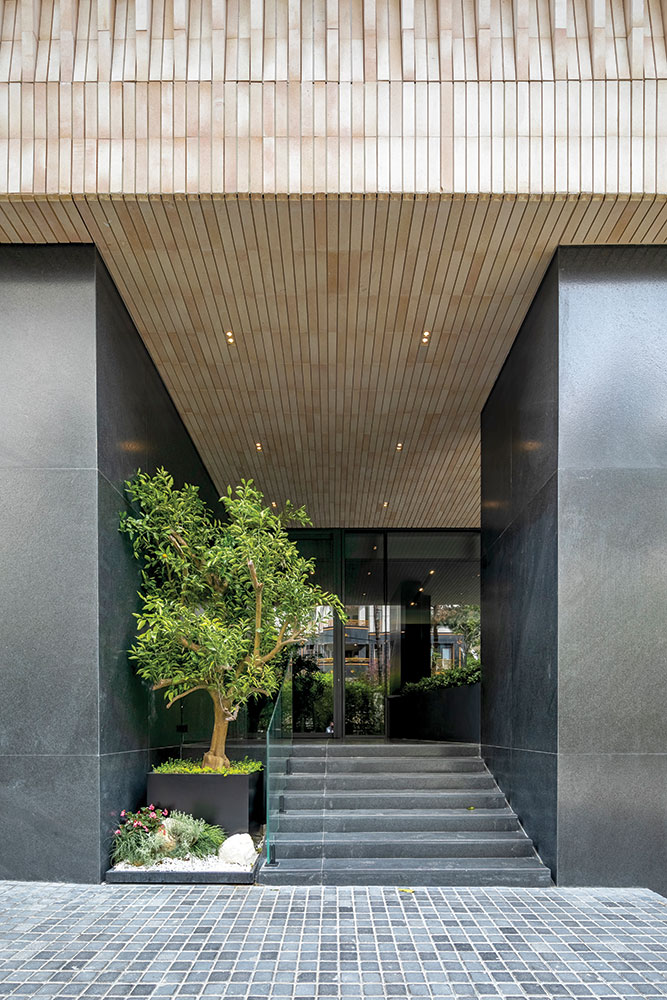
The louvers are sliding on the façade as multi-dimensional panels in line with the floor levels. This helps them showcase visual variety and coincide with the internal functions, hence emphasizing the object as a coherent whole. Also, to distinguish the louvers in the façade from generic louvers commonly used, the upper and lower parts of each louver surface are installed diagonally tangent to the level plans. As a result, a kind of ‘comb-like’ texture was created in these exteriors.
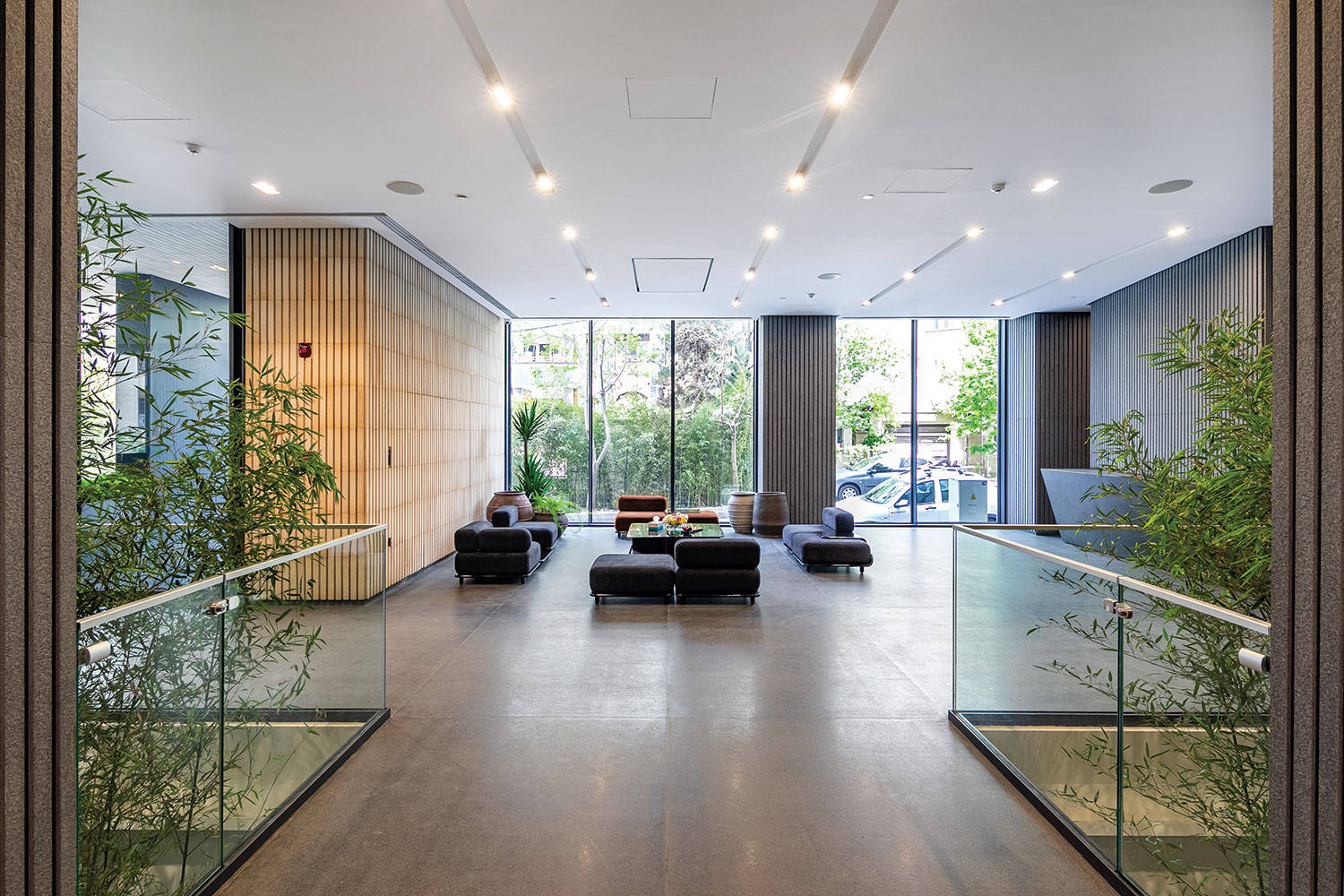
The outcome of the project is introducing a quality of stripiness, semitransparency, and multilayered surfaces to the urban landscape. This quality bears an ambiguous integrity from the juxtaposition and multiplication of said ‘combs-like’ surfaces, and also creates different degrees of interiority, enclosure, and connection to the urban view for interior spaces.
مدارک فنی
مطالب مرتبط