 ساختمان مسکونی نوژان، شیراز اثر محمد گرمنجانی، سمیرا شفیعی، چهارمین شب معماران، 1403
 خانهی شماره 7 اثر امین نیشابوری، فینالیست هشتمین ساختمان سال ایران بخش ویلایی و ششمین دوسالانهی معماری ایران بخش ویلایی، 1403
ساختمان مرکزی سازمان بینالمللی هیفر: معمارانهای از همدلی، پایداری و آموزش
Heifer International Headquarters: An Architecture of Empathy, Sustainability, and Education
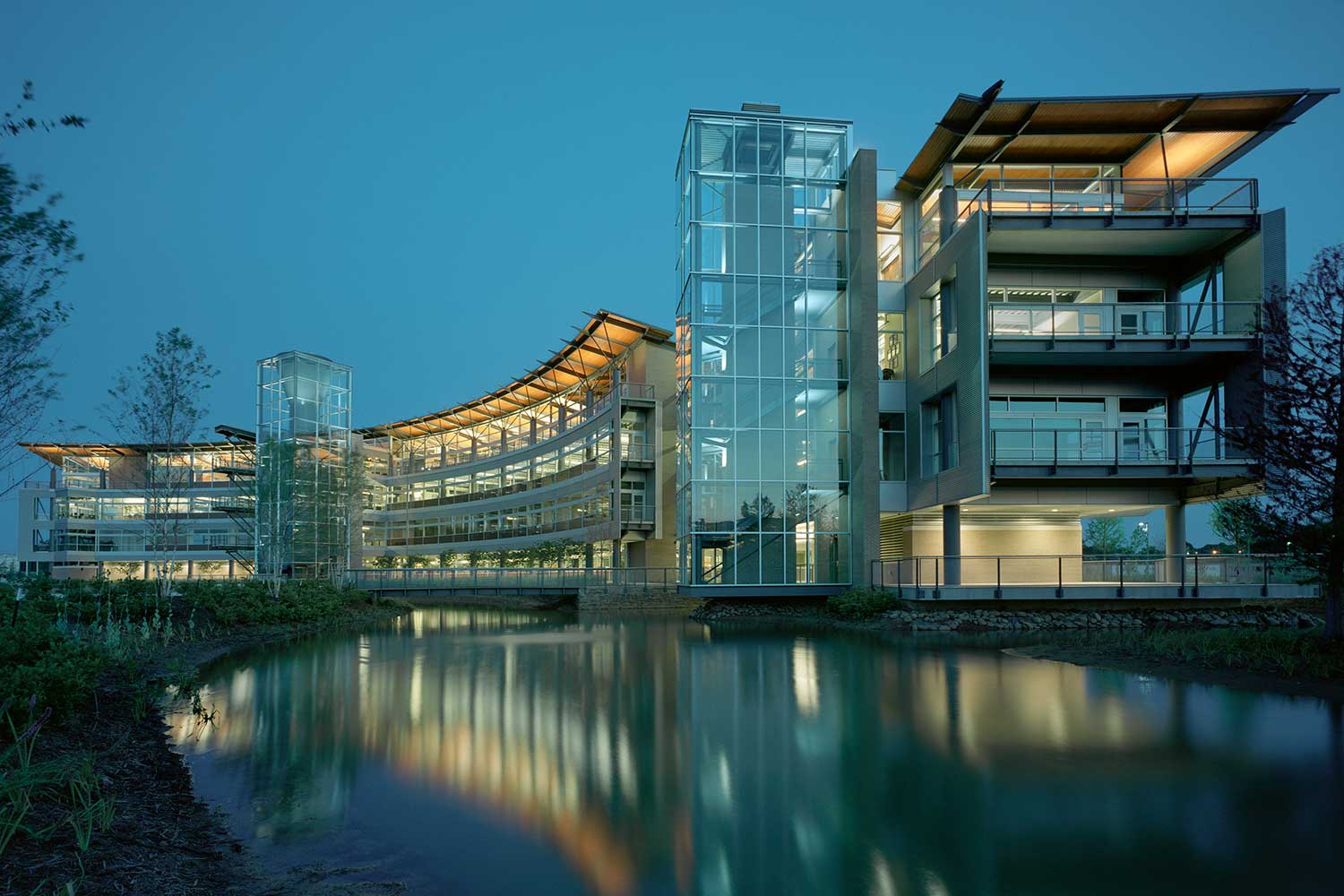
ساختمان مرکزی سازمان بینالمللی هیفر: معمارانهای از همدلی، پایداری و آموزش
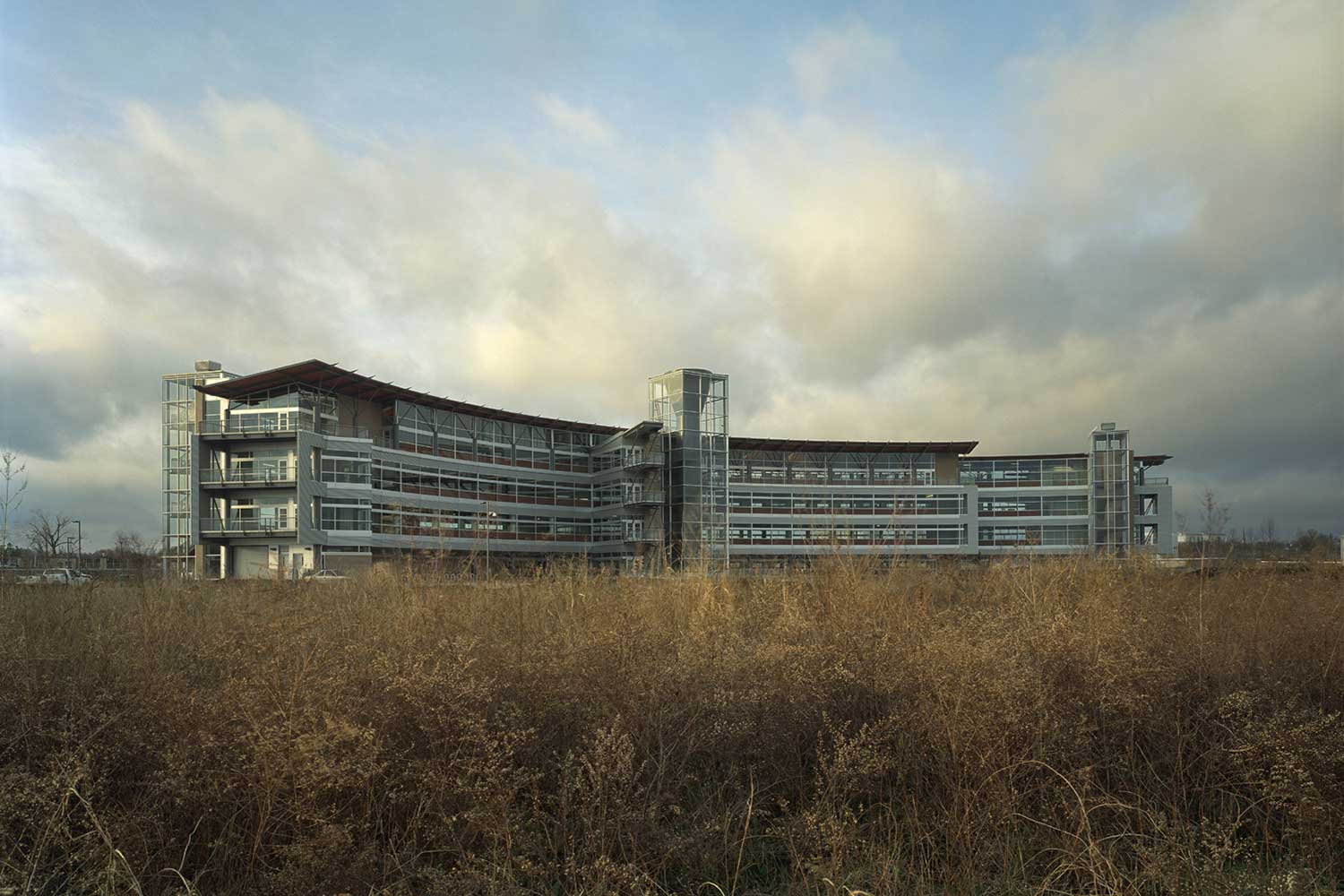
ساختمان مرکزی سازمان Heifer International در لیتل راک، آرکانزاس، نهتنها یک فضای اداری عملکردی است، بلکه تجسمی ملموس از رسالت بشردوستانه، زیستمحور و آموزشی این سازمان به شمار میآید. این بنا با اتکا بر طراحی یکپارچه، انتخاب مصالح بومی، و بهرهگیری از راهکارهای اقلیمی، نهتنها موفق به کسب رتبهی پلاتینیوم در سیستم ارزیابی LEED-NC شد، بلکه الگوی نوینی برای معماری مسئولانه و مشارکتمحور در بستر شهری پدید آورد.
معماری در خدمت آرمانها
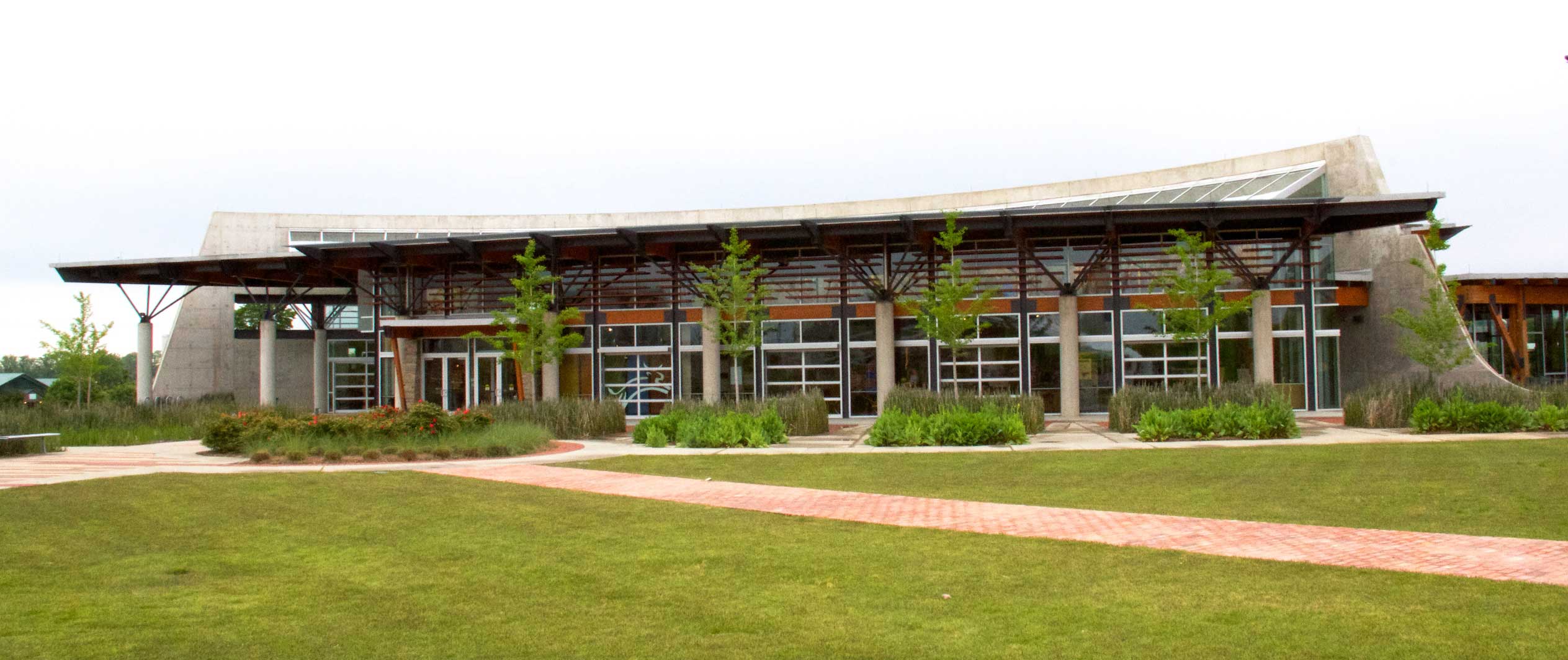
Heifer International سازمانی غیرانتفاعی با ماموریتی جهانی برای کاهش گرسنگی و فقر از طریق توانمندسازی جوامع محلی است. بنای مرکزی این سازمان باید همزمان با عملکرد اداری، رسالت فرهنگی–اجتماعی آن را بازتاب میداد. از این رو، پروژه از همان آغاز با رویکردی مشارکتی، زیستمحور و آموزشی طراحی شد. موقعیت سایت در مجاورت کتابخانه ریاستجمهوری کلینتون و در انتهای یکی از محورهای اصلی شهر، جایگاهی شاخص و نمادین به بنا بخشیده است. پروژه بر زمین آلودهی سابق راهآهن (brownfield) قرار دارد که با حمایت سازمان حفاظت محیط زیست آمریکا (EPA) پاکسازی شد. دسترسی پیاده، قطار سبک شهری، دوچرخهروها و حتی امکان قایقسواری برای کارکنان، این پروژه را در دل پیوندهای زیستمحور شهری قرار داده است. فرم ساختمان با الگویی حلقهای، الهامگرفته از جلسات سنتی جوامع بومی است که در آن افراد در دایرهای برابر گرد هم میآیند. فرم قوسی ساختمان، که حول یک تالاب مصنوعی پیچیده شده، در جهت شرق–غرب قرار گرفته و با عرضی بهینه (۶۲ فوت) امکان نفوذ نور طبیعی به مرکز طبقات را فراهم میکند. پنجرهها، پرههای عمودی، سایهبانها و بالکنهایی بر فراز تالاب، نور را بهنرمی در فضا توزیع و از گرمایش اضافی جلوگیری میکنند. بنا با هدف عمر مفید ۱۰۰ ساله طراحی شده است. سیستمهای آب خاکستری، جمعآوری آب باران از بام وارونه، توالتهای بدون آب، کف کاذب برای توزیع هوا، و کنترل نوری هوشمند، همگی سبب صرفهجویی ۵۵٪ انرژی نسبت به نمونههای مشابه شدهاند. شاخص مصرف انرژی (pEUI) بنا برابر با 34 kBtu/ft²/yr است. بام شیبدار نیز برای استقرار آیندهی سامانههای فتوولتائیک بهینه شده است. مصالح با معیار دوام، سمیت پایین، دسترسی محلی و محتوای بازیافتی انتخاب شدهاند. اسکلت فولادی از کارخانهای در نزدیکی سایت تأمین شد (۹۷٪ بازیافتی)، سقف چوبی از منابع بومی، و نمای آلومینیومی توسط کارخانهای در آنسوی خیابان اجرا شد. پارتیشنهای داخلی از خاکاره فشرده و میزهای پذیرش از شیشه بازیافتی ساخته شدهاند.
طراحی داخلی با نگاه بلندمدت و انعطافپذیر انجام شده است: ۵۰ فوت از عرض بنا به سیستمهای قابل تغییر اختصاص دارد. اتاقهای کنفرانس در دو سر ساختمان، فضاهای باز کافهای، و “جعبههای چوبی شفاف” برای تعاملات کوتاه، ساختاری پویا و مشارکتی ایجاد کردهاند. پروژه نهتنها بهروی عموم باز است، بلکه در فضاهایی چون لابی با مدل تعاملی، آتریوم بهعنوان گالری اطلاعاتی، و نمایش سیستمهای زیستمحیطی در جایجای ساختمان، خود به یک ابزار آموزشی بدل شده است. این پروژه در سال ۲۰۰۷ موفق به دریافت گواهی LEED-NC Platinum با ۵۲ امتیاز شد. موفقیت Heifer Headquarters نه تنها در تحقق اهداف محیطی و عملکردی، بلکه در ایجاد یک معماری مشارکتی، معناگرا و آموزشی است. بنایی که در آن فرم و عملکرد، تکنولوژی و بومشناسی، زیبایی و تعهد، در تاروپود یکدیگر تنیدهاند.
در ادامه شرح کامل پروژه را خواهیم داشت.
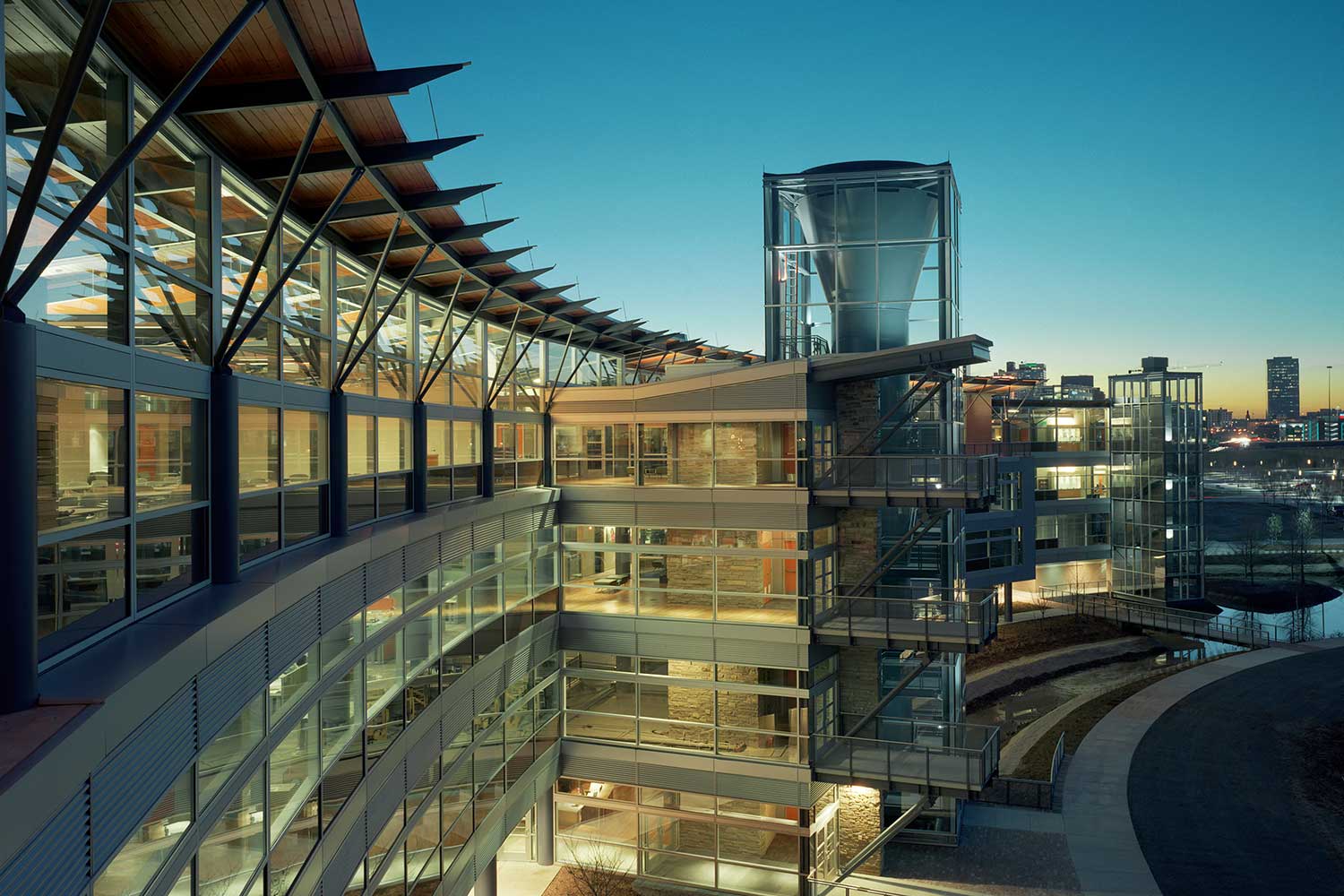
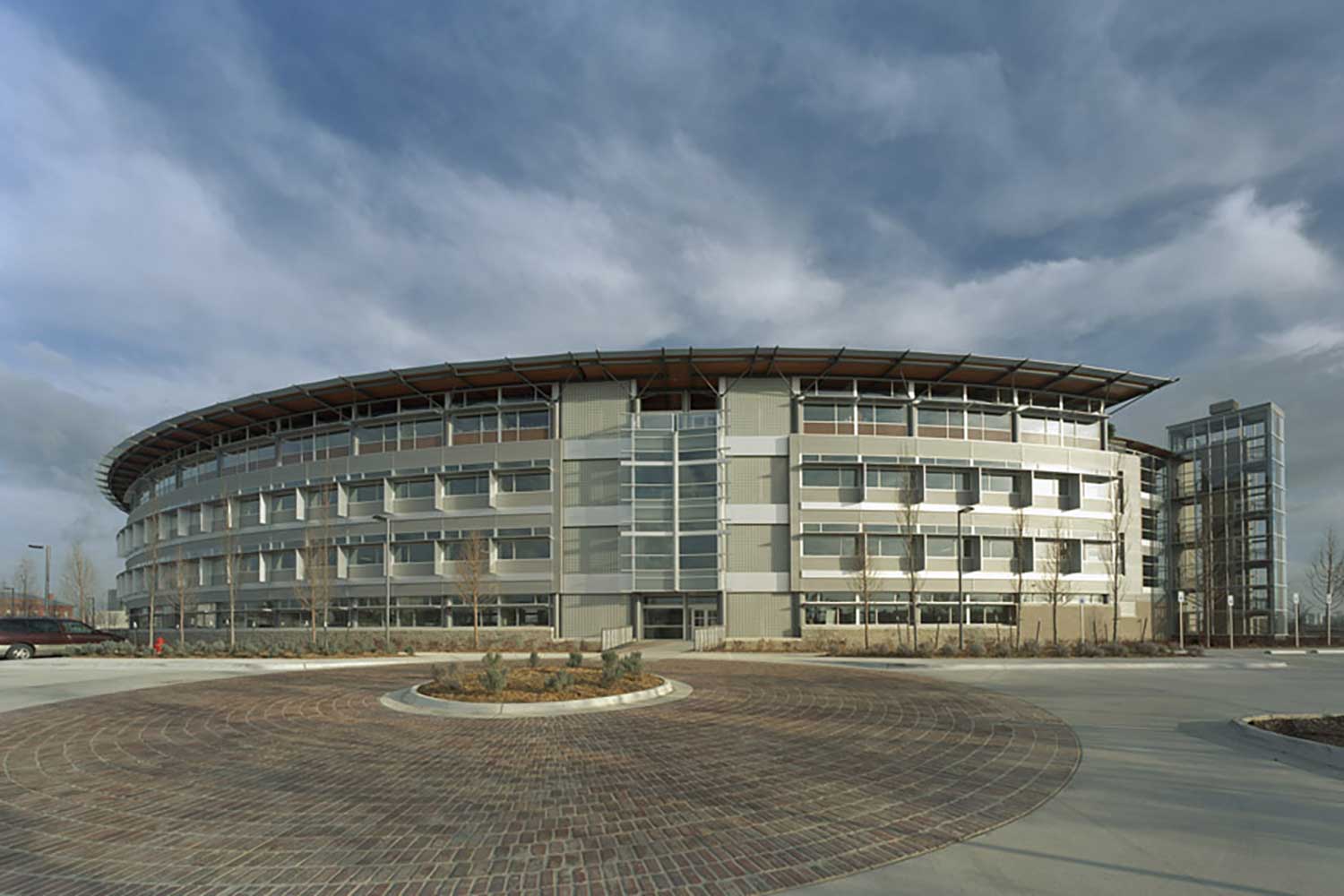
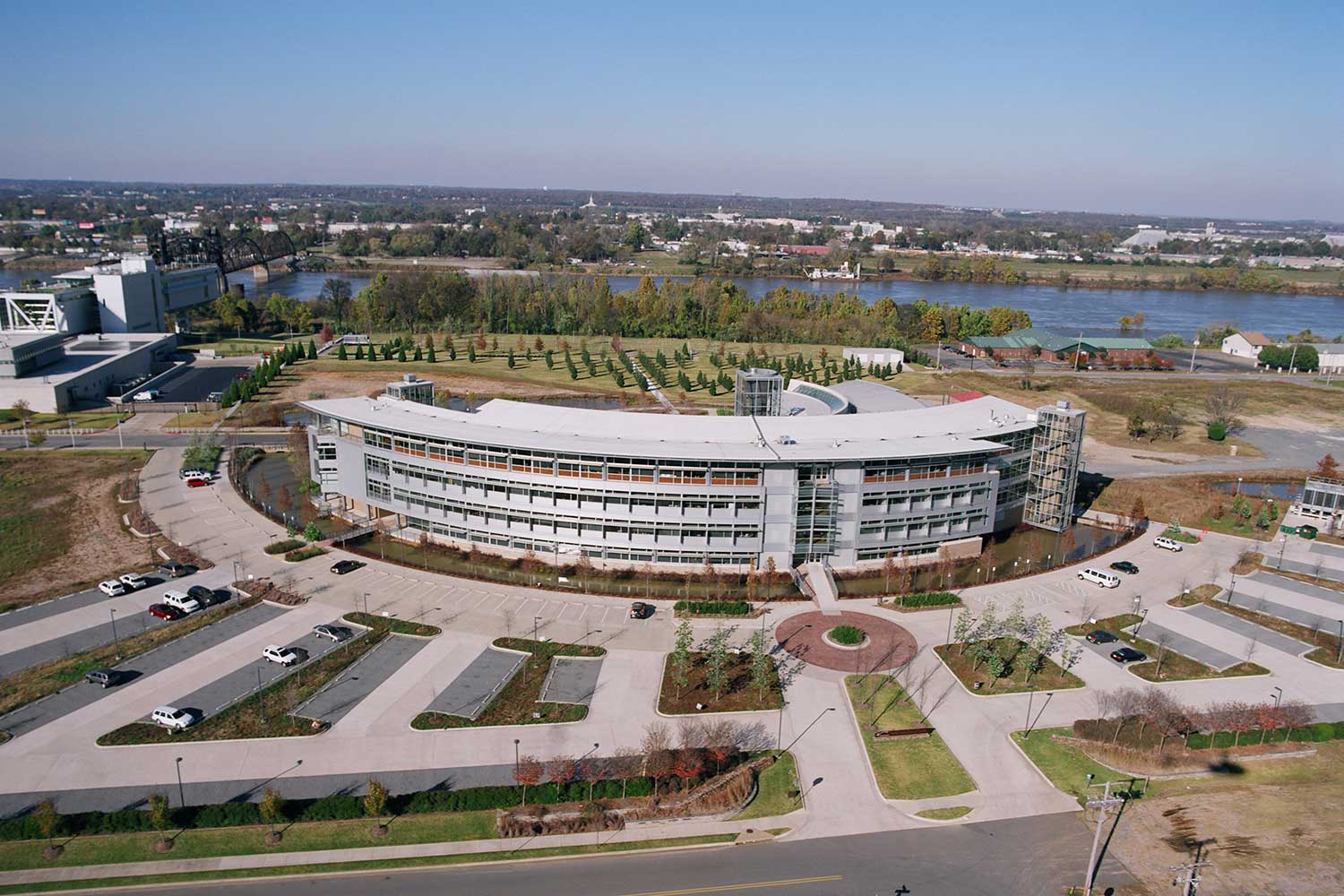
سازمانی متعهد به کاهش گرسنگی در جهان، Heifer International فعالیت خود را در جوامع با اهدای یک حیوان به یک خانواده آغاز میکند. همانگونه که یک قطره آب با افتادن بر سطح، امواجی دایرهوار پدید میآورد، این حیوان نیز حلقههایی از تأثیر در سراسر روستا ایجاد میکند؛ حلقههایی که با تولد و اهدای نسل بعدی حیوان، دانش و فرصت را به دیگران منتقل میکنند. در چارچوب یک طرح جامع چهارمرحلهای، ساختمان مرکزی این سازمان بهمثابه مجموعهای از حلقههای هممرکز طراحی شد که از یک فضای مرکزی اشتراکی گسترش مییابند. این معماری با هدف گسترش مسئولیتپذیری زیستمحیطی به فضای عمومی شکل گرفت و همزمان بهعنوان نشانهای از امید ایفای نقش میکند.
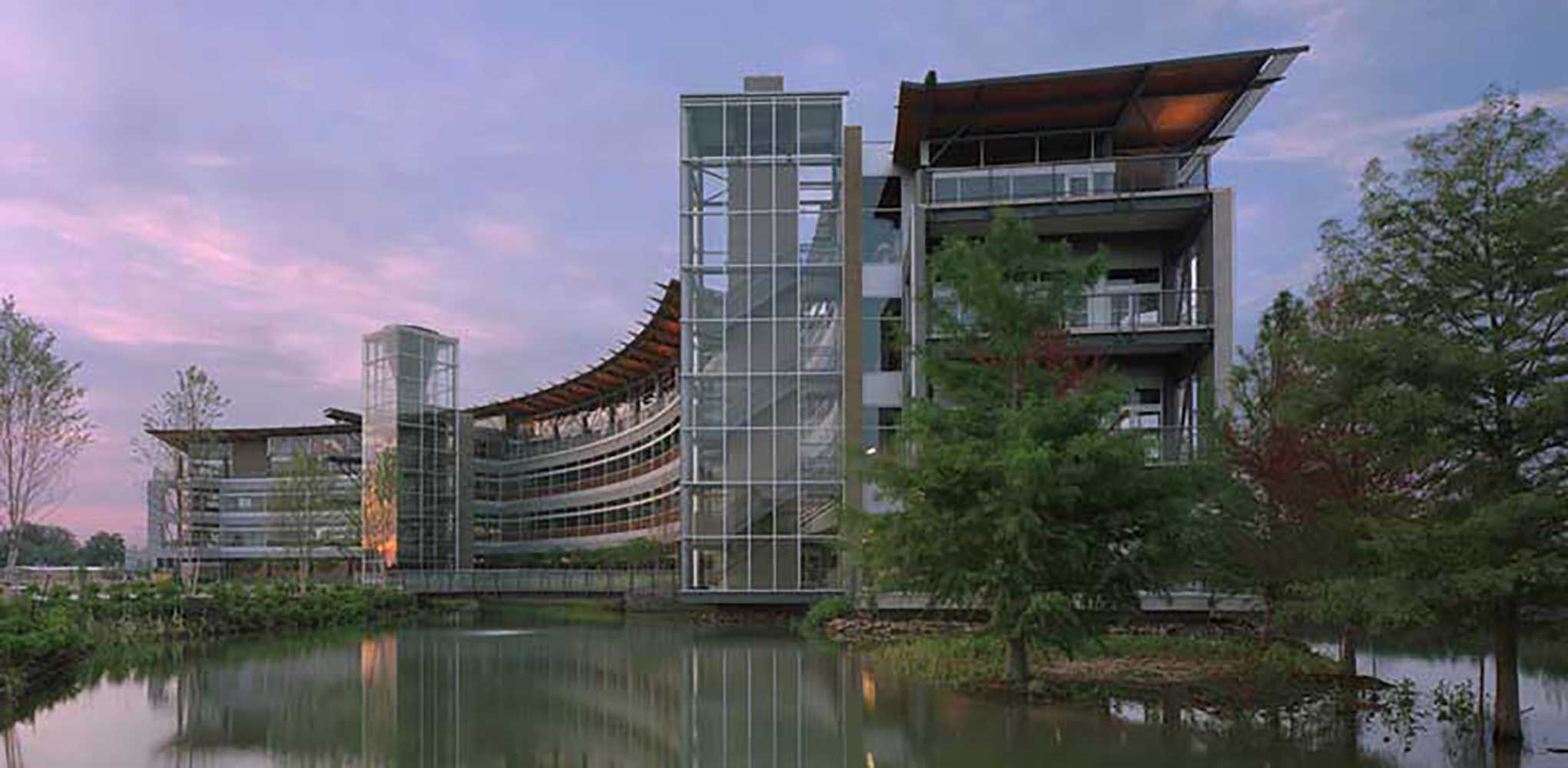
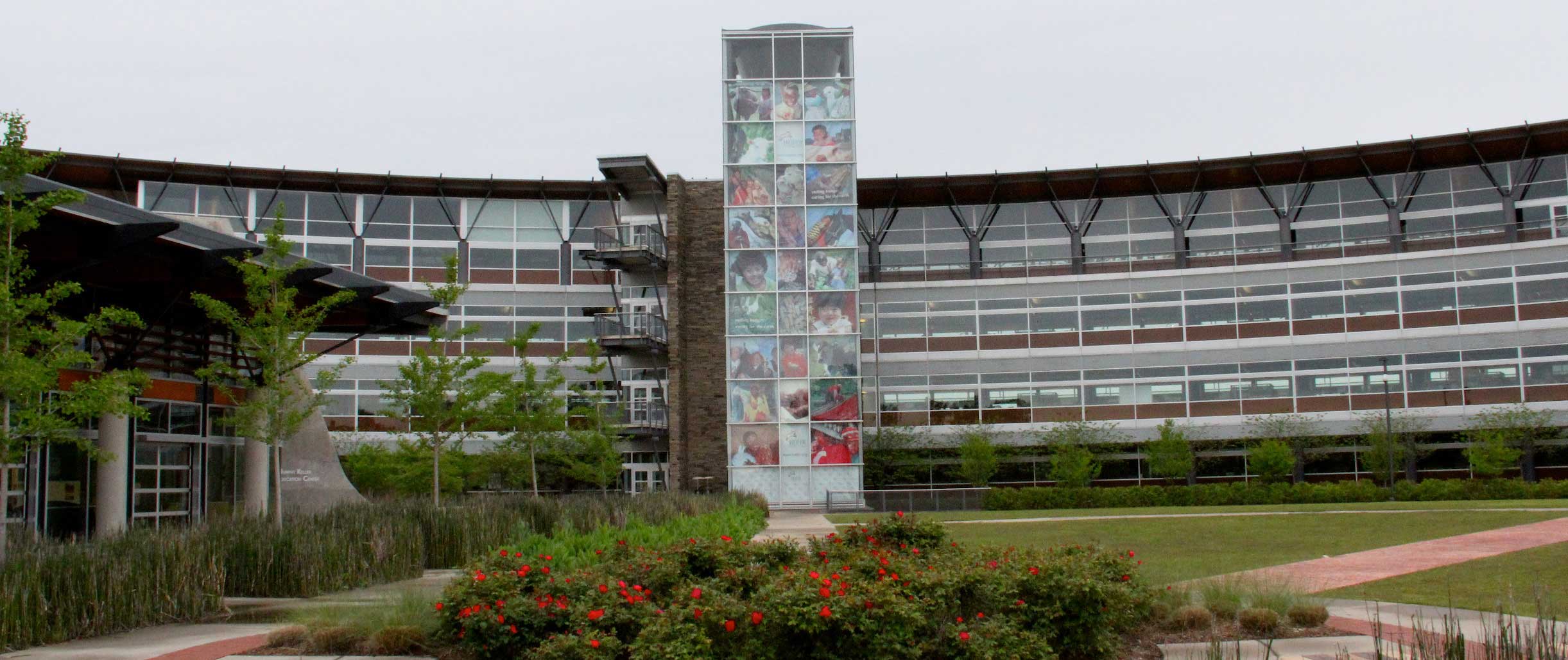
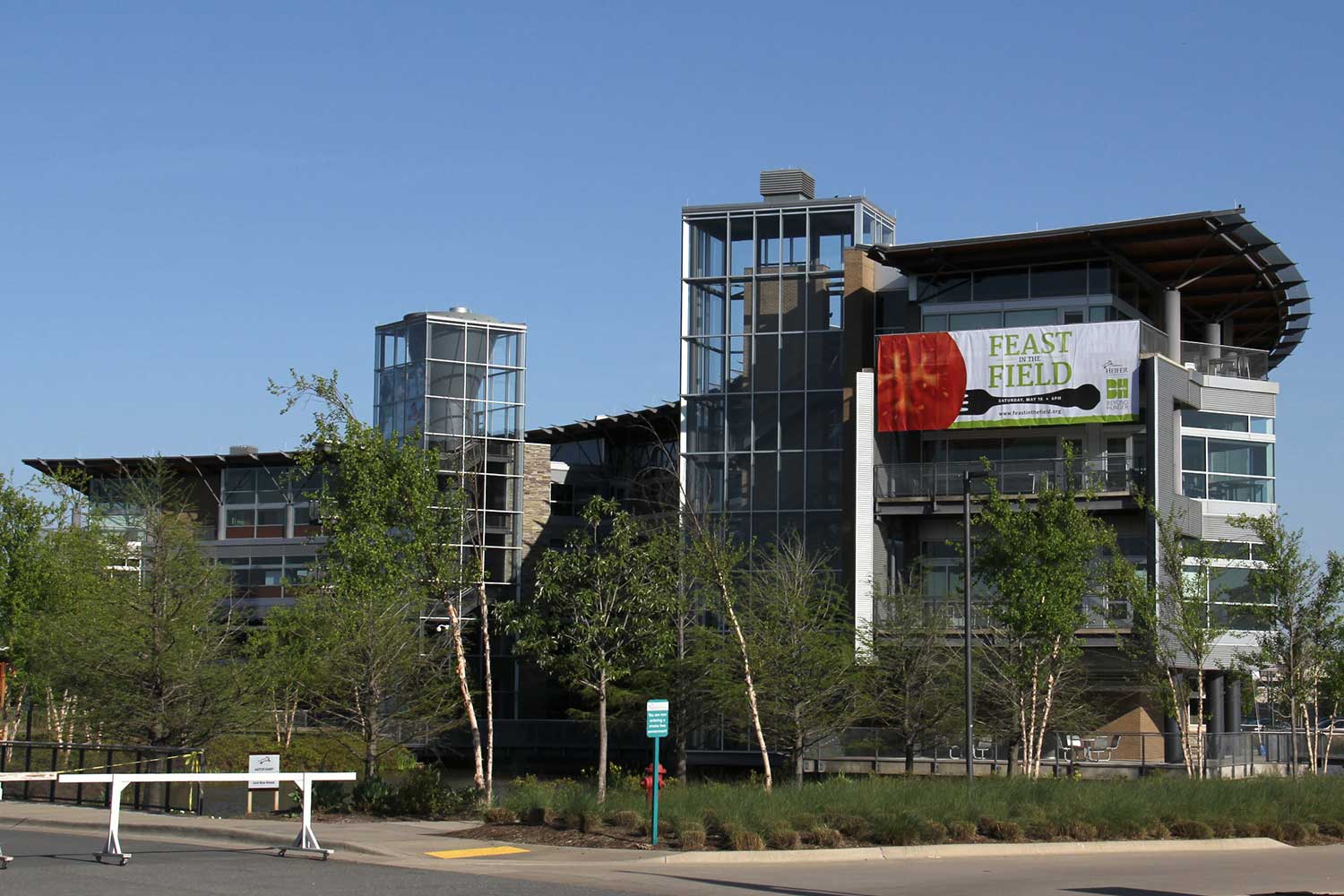
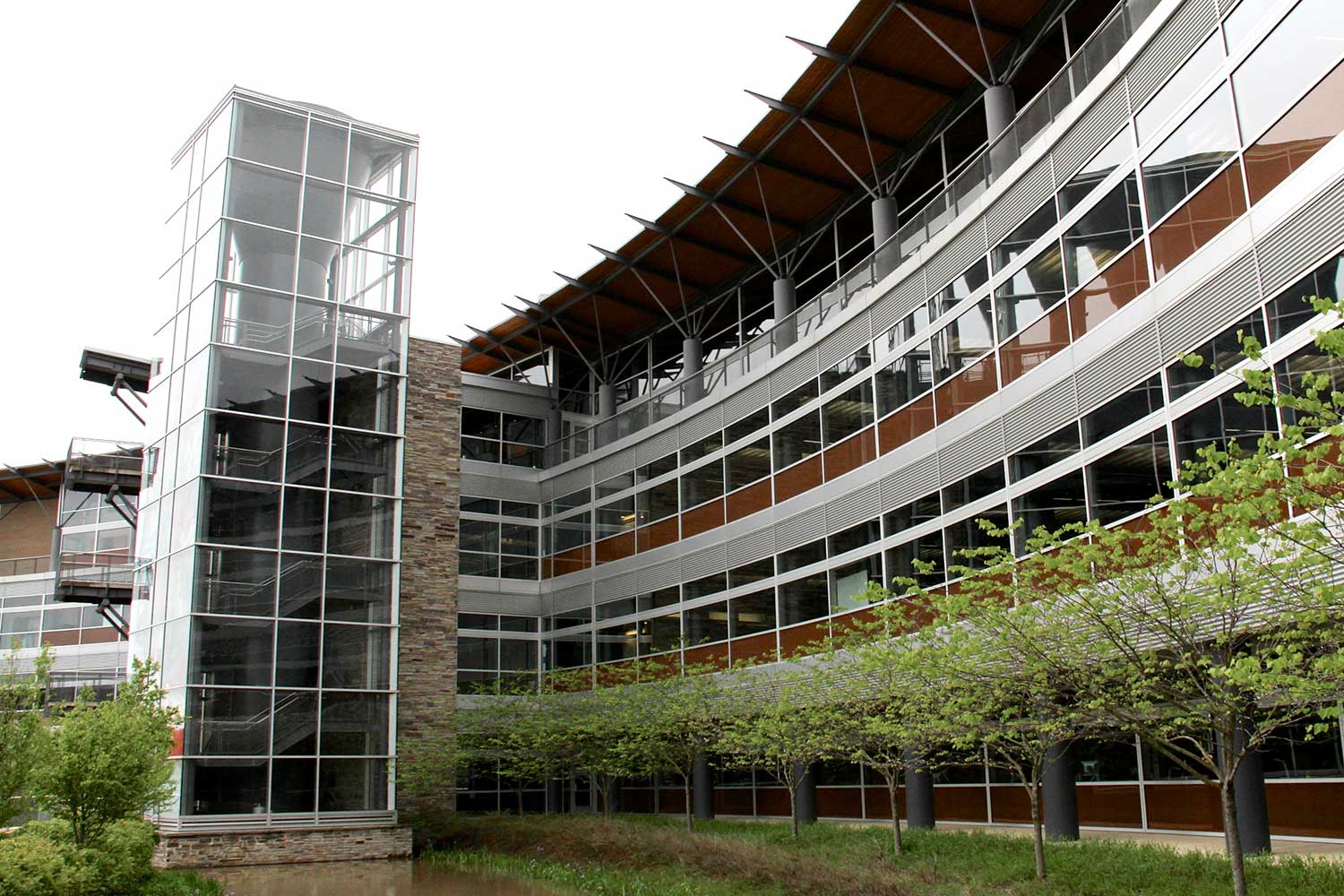
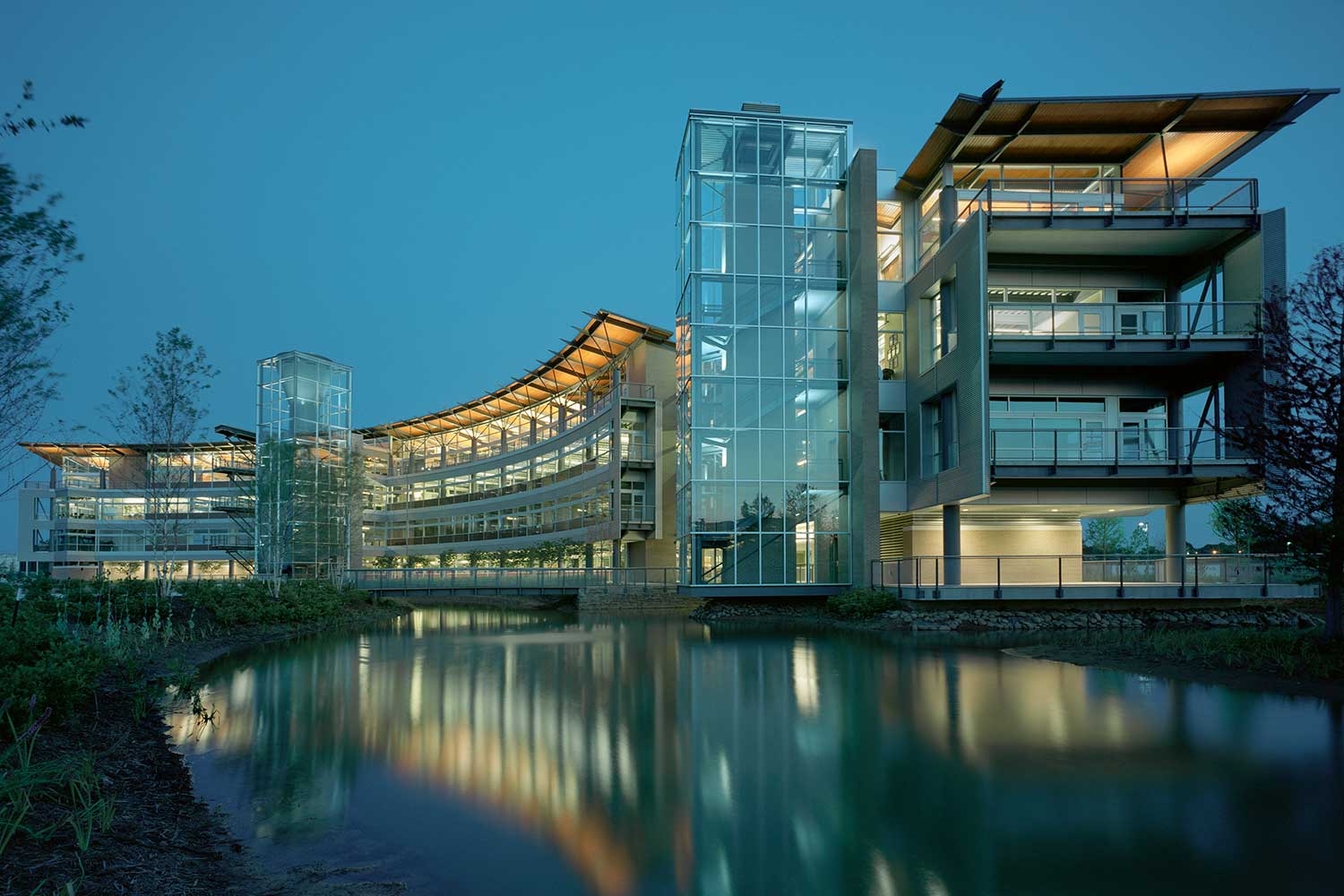
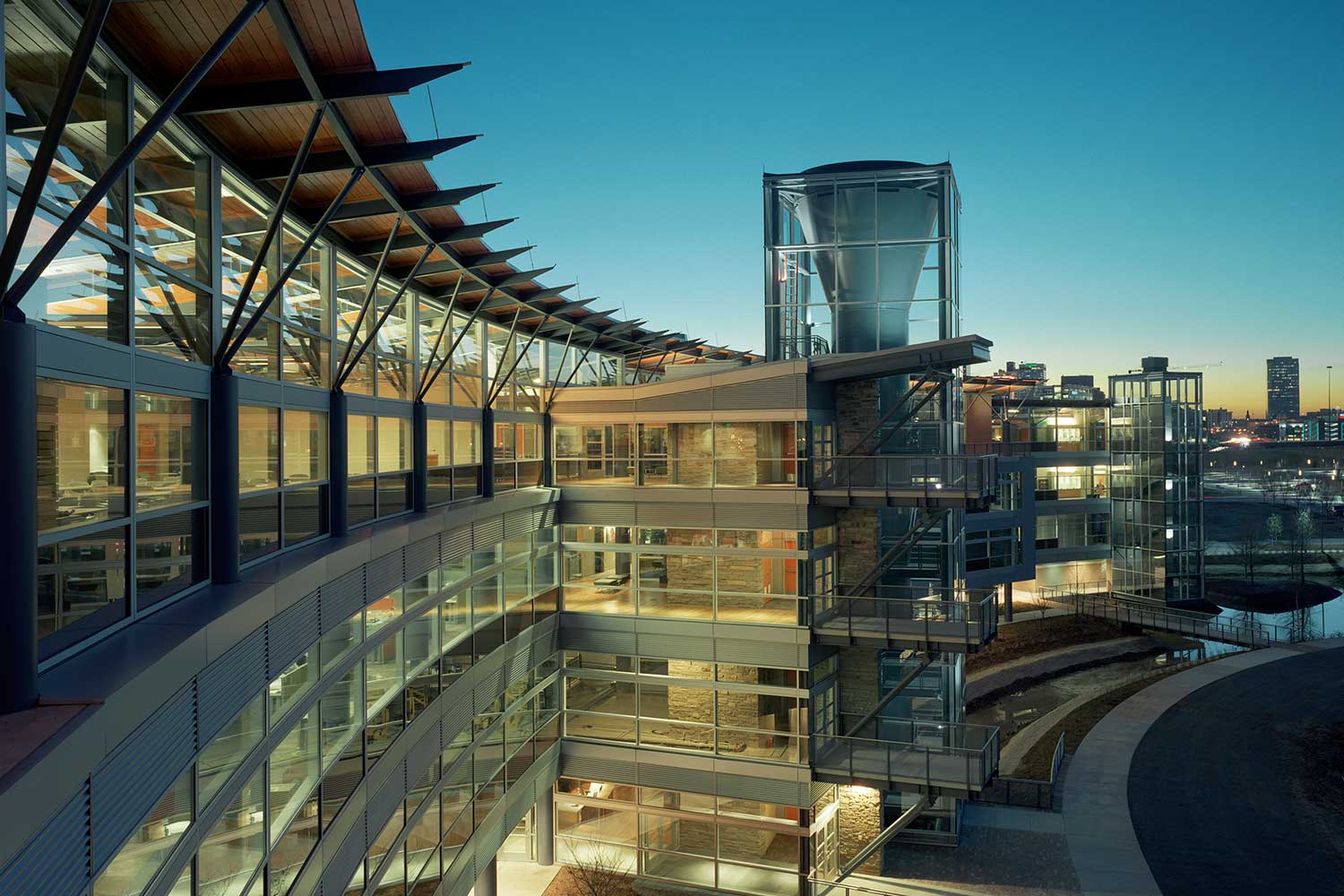
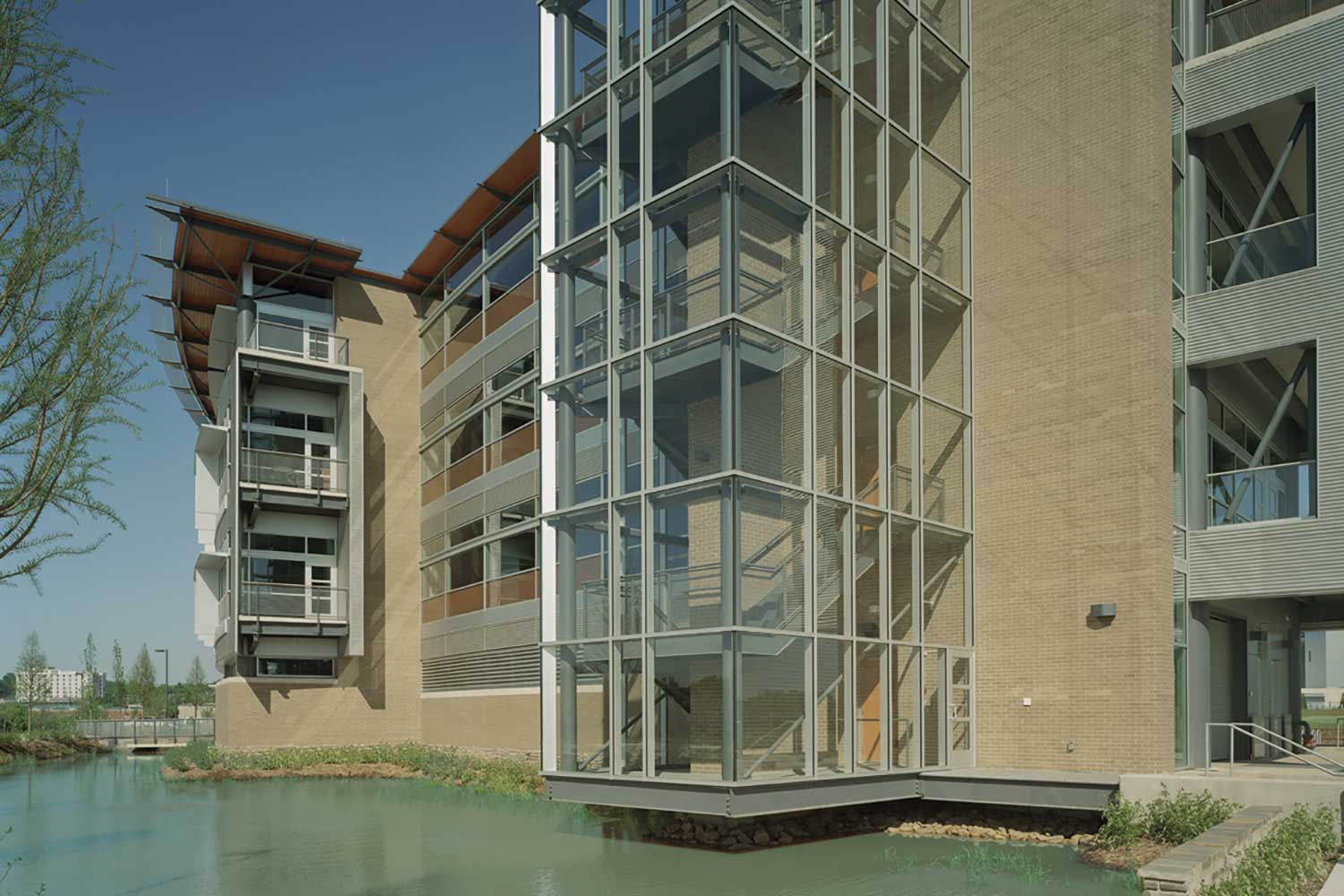
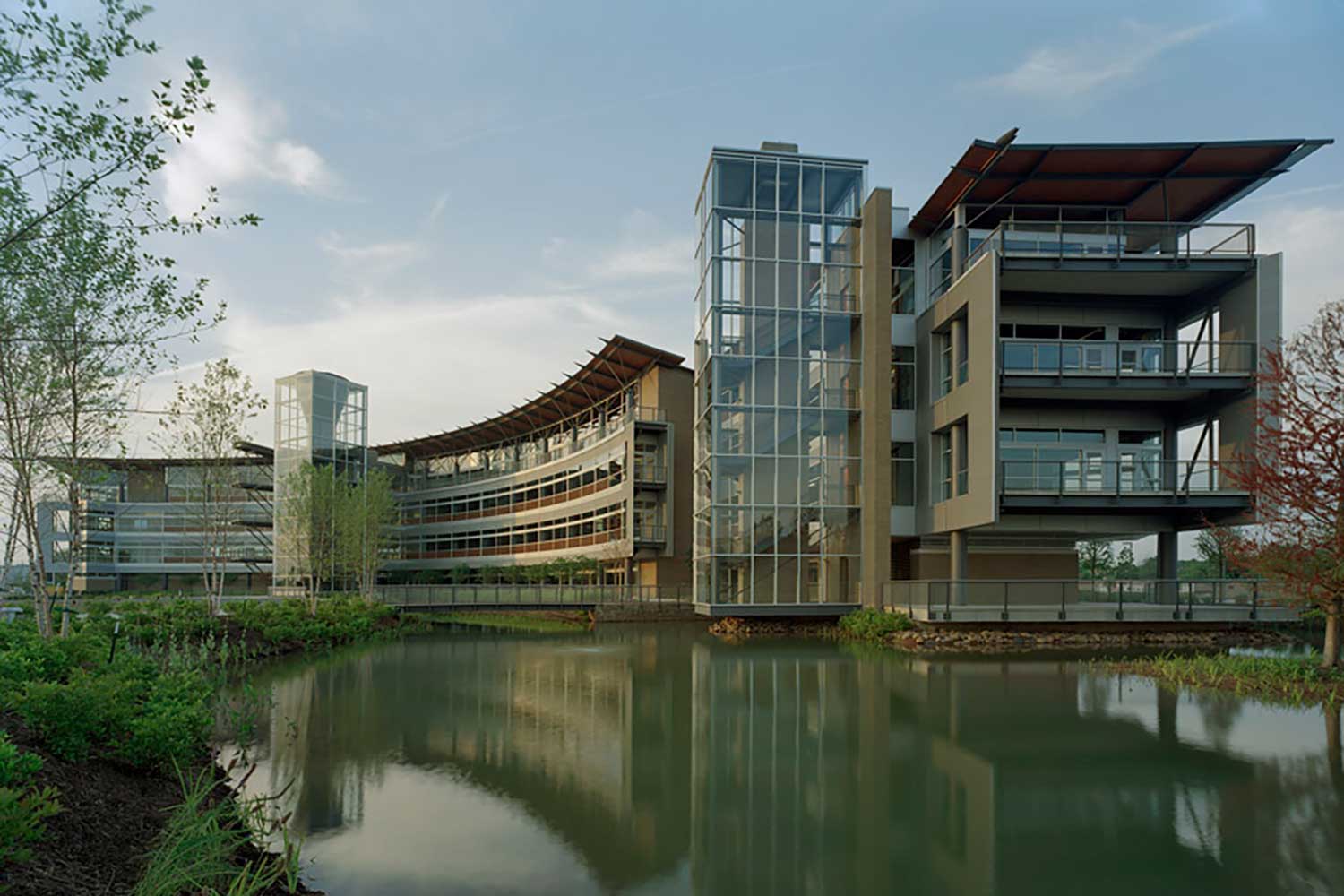
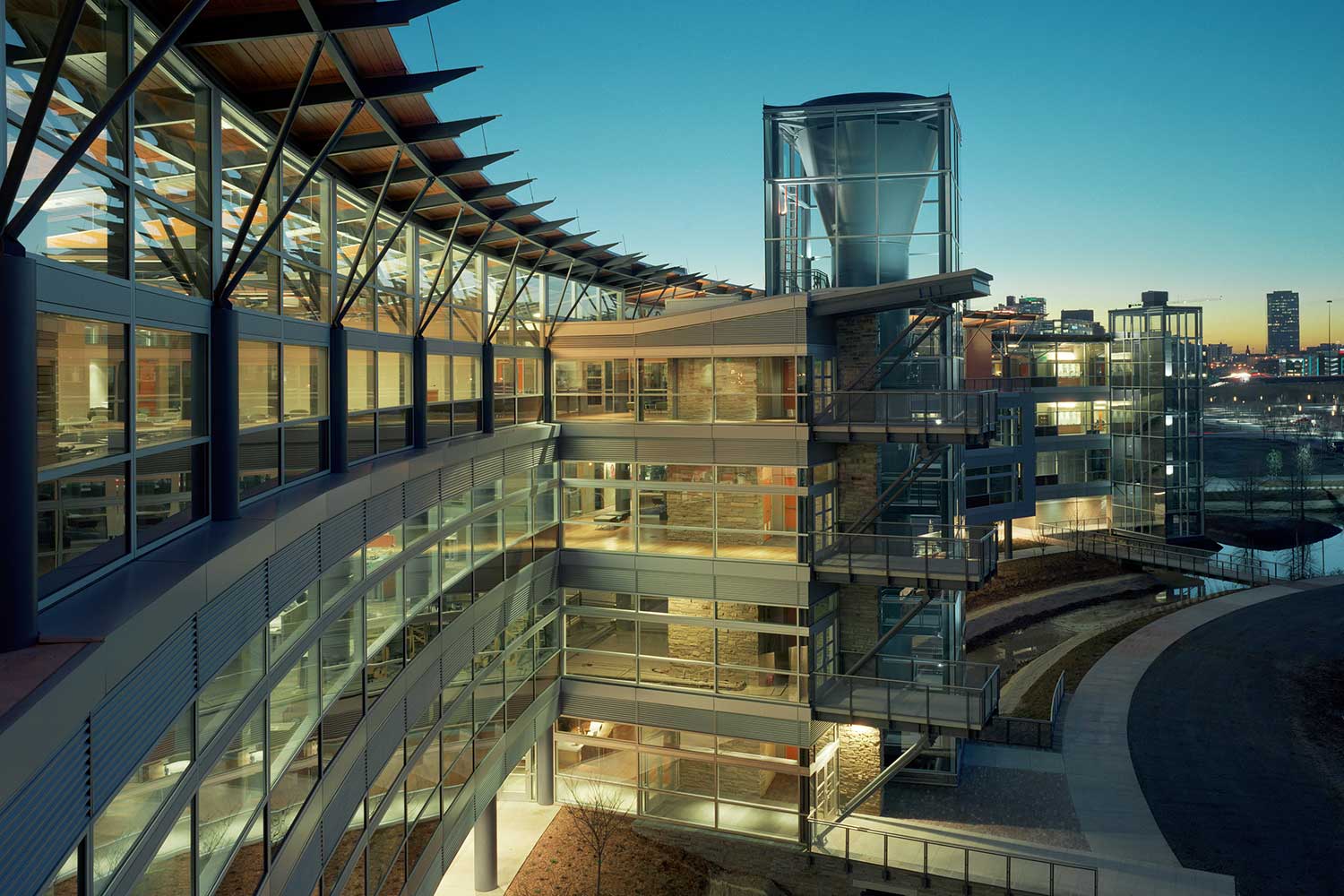
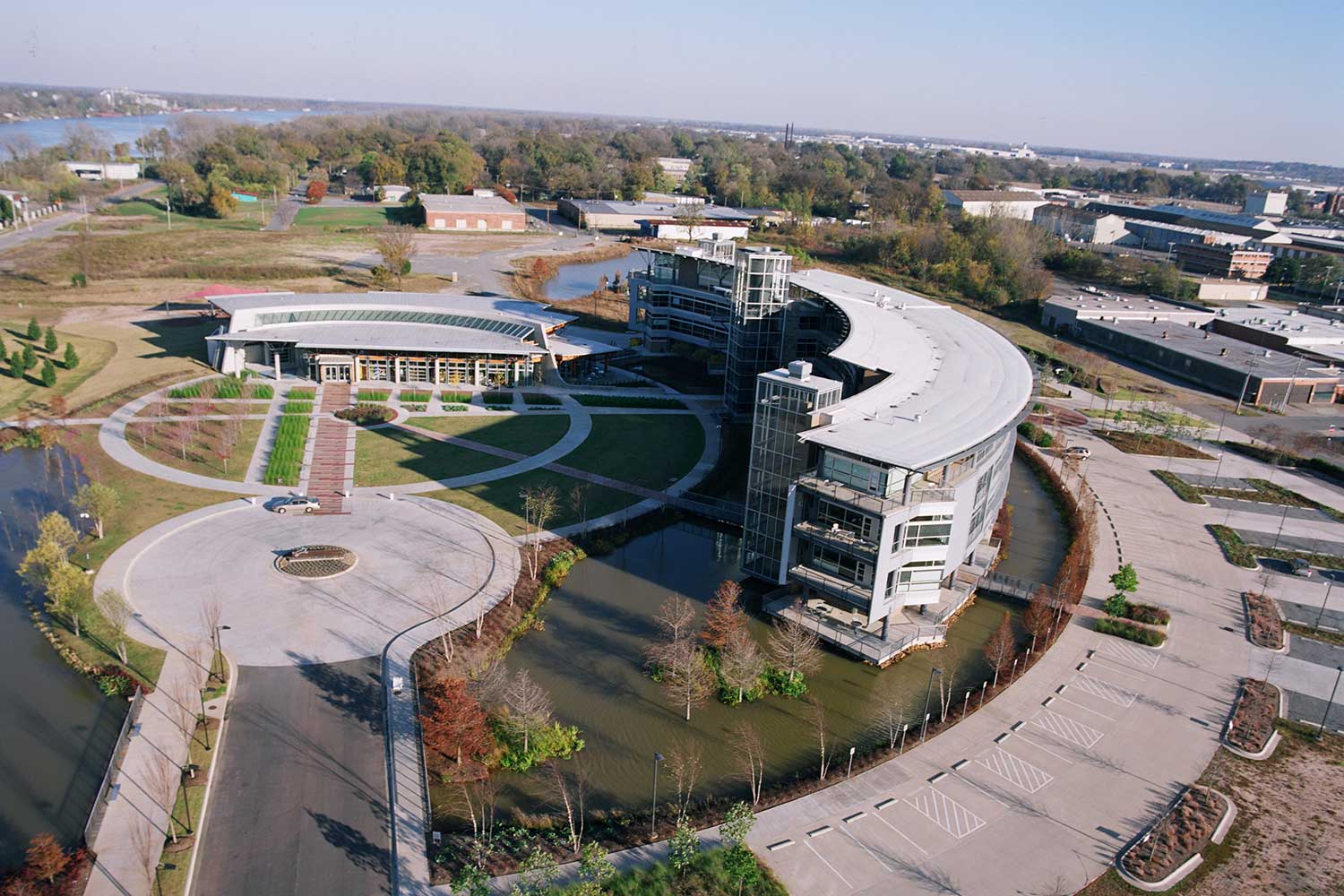
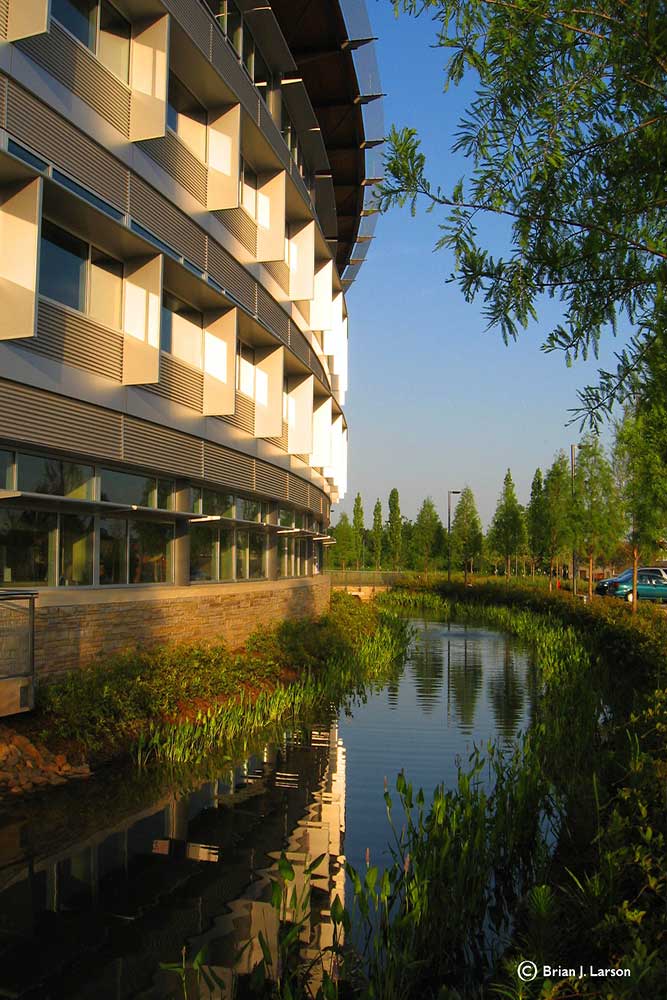
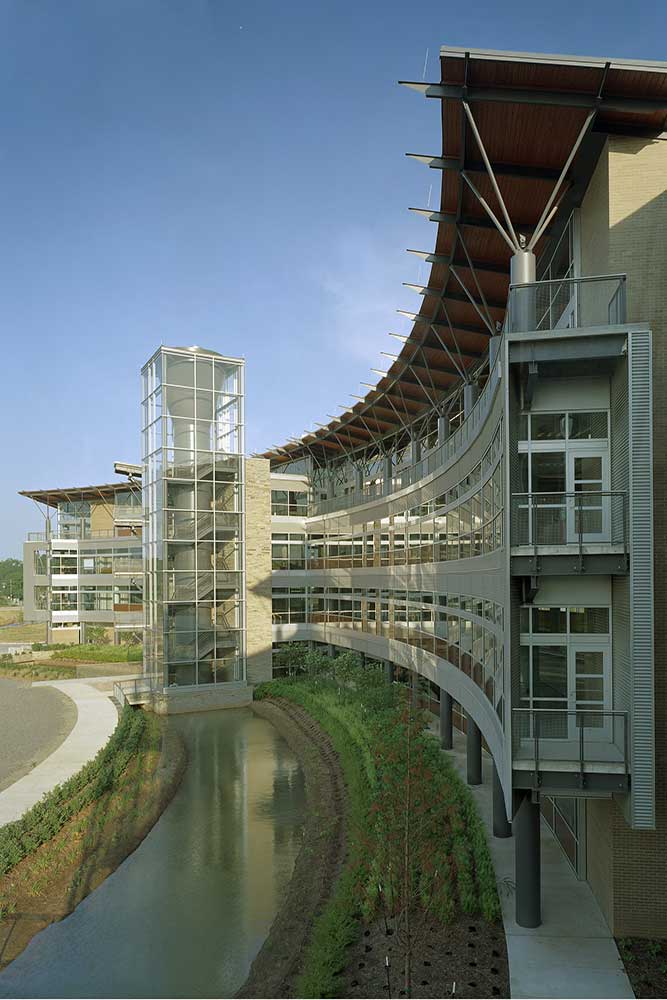
در جوار کتابخانهی ریاستجمهوری کلینتون، ساختمان مرکزی سازمان Heifer International در فاصلهی کوتاهی از ایستگاههای اتوبوس، سامانهی جدید قطار سبک شهری و منطقهی پیادهمحور تفریحی واقع شده است. یک تالاب بازسازیشده که سه طرف ساختمان را در بر میگیرد، آب باران را جمعآوری و برای آبیاری مجدد استفاده میکند. آب باران جمعشده از بام، در برجی پنجطبقه ذخیره میشود که پلههای اضطراری به دور آن پیچیدهاند. آب خاکستری حاصل از روشوییها و آبخوریها، کندانس دستگاههای تهویه، و آب باران ذخیرهشده در برج، همگی در سیستمهای فلاش توالتها و برج خنککننده بازیافت میشوند. رطوبتی که از داخل ساختمان به صورت میعان دفع میشود نیز برای خنکسازی مجدد ساختمان به کار میرود. استفاده از توالتهای بدون آب، شیرهای کممصرف و تجهیزات بهداشتی بهطور چشمگیری مصرف آب شرب را کاهش دادهاند. پلان طبقات با فرمی نیمدایرهای و باریک طراحی شده تا نور طبیعی و دید مناسب برای تمامی کارکنان فراهم گردد. بخش عمدهای از دفاتر باز در این ساختمان رو به رودخانه بوده و نور شمالی دریافت میکنند. همهی فضاهای تجمعی اصلی نیز با فضای باز در ارتباطاند: پنج بالکن در هر طبقه که بهعنوان اتاقهای کنفرانس روباز طراحی شدهاند، بر فراز تالاب معلقاند و همچون سایهبان عمل میکنند.
این بنا به گونهای طراحی شده تا تا ۵۵٪ انرژی کمتری نسبت به ساختمانهای اداری متداول مصرف کند و عمر مفید آن دستکم ۱۰۰ سال باشد. مصالح مورد استفاده با توجه به دوام، قابلیت نگهداری، سمیت پایین، محتوای بازیافتی و دسترسی محلی انتخاب شدهاند. در میان گزینههای موجود برای محل پروژه، سایتی که برگزیده شد، در عین آنکه بزرگترین چالش زیستمحیطی را پیش روی تیم طراحی قرار میداد، بیشترین ظرفیت را نیز برای بازتابدادن مأموریت انسانی Heifer در برابر دیدگان عموم فراهم میکرد. این سایت در مجاورت مستقیم کتابخانه ریاستجمهوری کلینتون و در انتهای یک خیابان اصلی شهری واقع شده است. چنین موقعیت شاخصی، امکان دسترسی آسان به اتوبوسها، سامانهی جدید قطار سبک شهری و منطقهی پیادهمحور تفریحی را فراهم میآورد. کارکنان این مجموعه با دوچرخه، پیاده، از طریق همسواری و حتی با قایق به محل کار خود میرسند. از مزیت همجواری با پارک ۳۰ هکتاری ساختمان مجاور نیز بهره گرفته شده است؛ خطوط مرزی ملک بهگونهای محو و درهمآمیخته طراحی شدهاند تا هر دو پروژه در پیوستاری سبز و گسترده، در پهنهای به وسعت ۶۰ هکتار، جای گیرند. این ادغام فضایی نه تنها پیوندی زیباشناختی میان بناها پدید آورده، بلکه روایت مشترکی از پایداری، همزیستی و چشمانداز آینده را در دل منظرهای سبز به نمایش میگذارد.
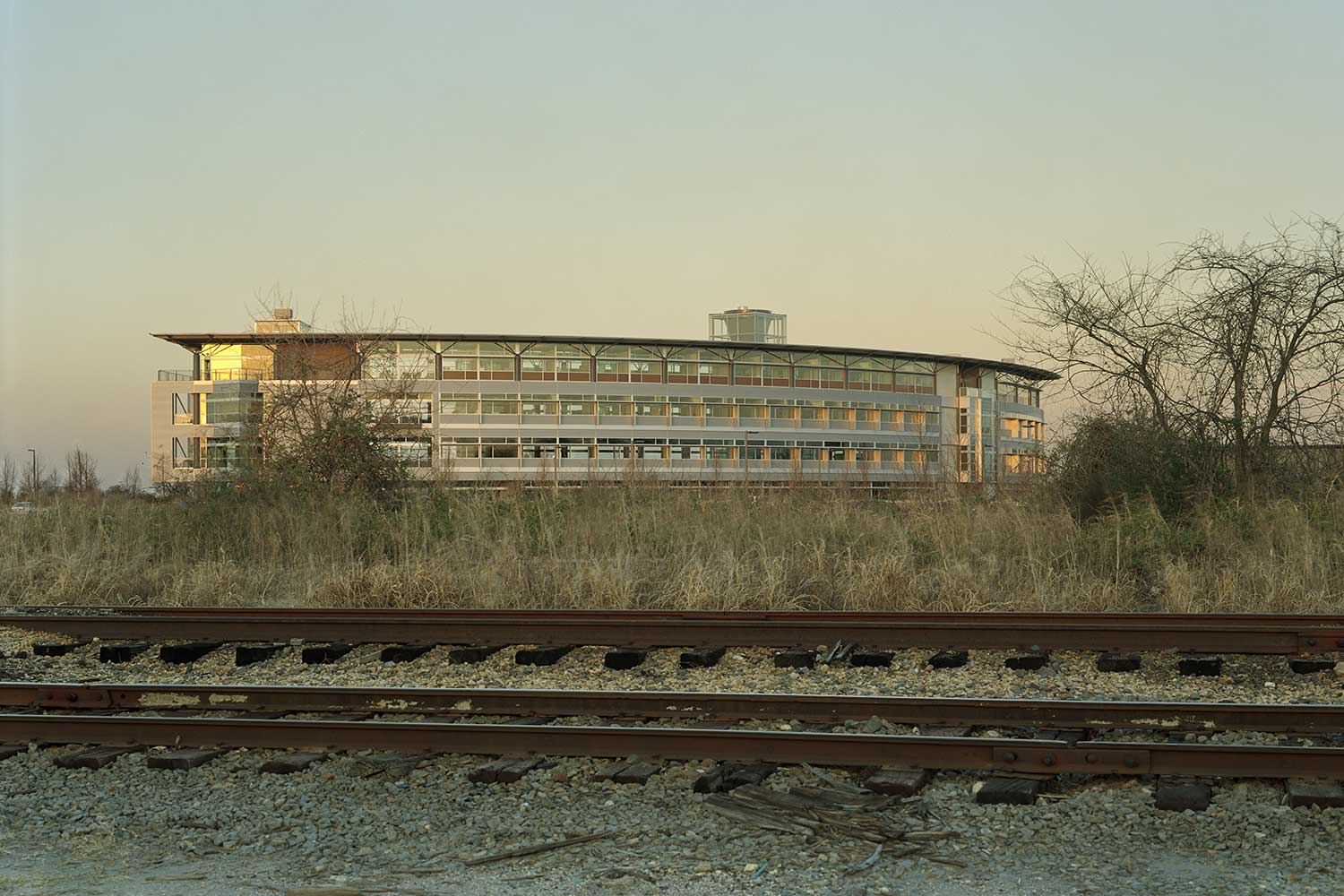
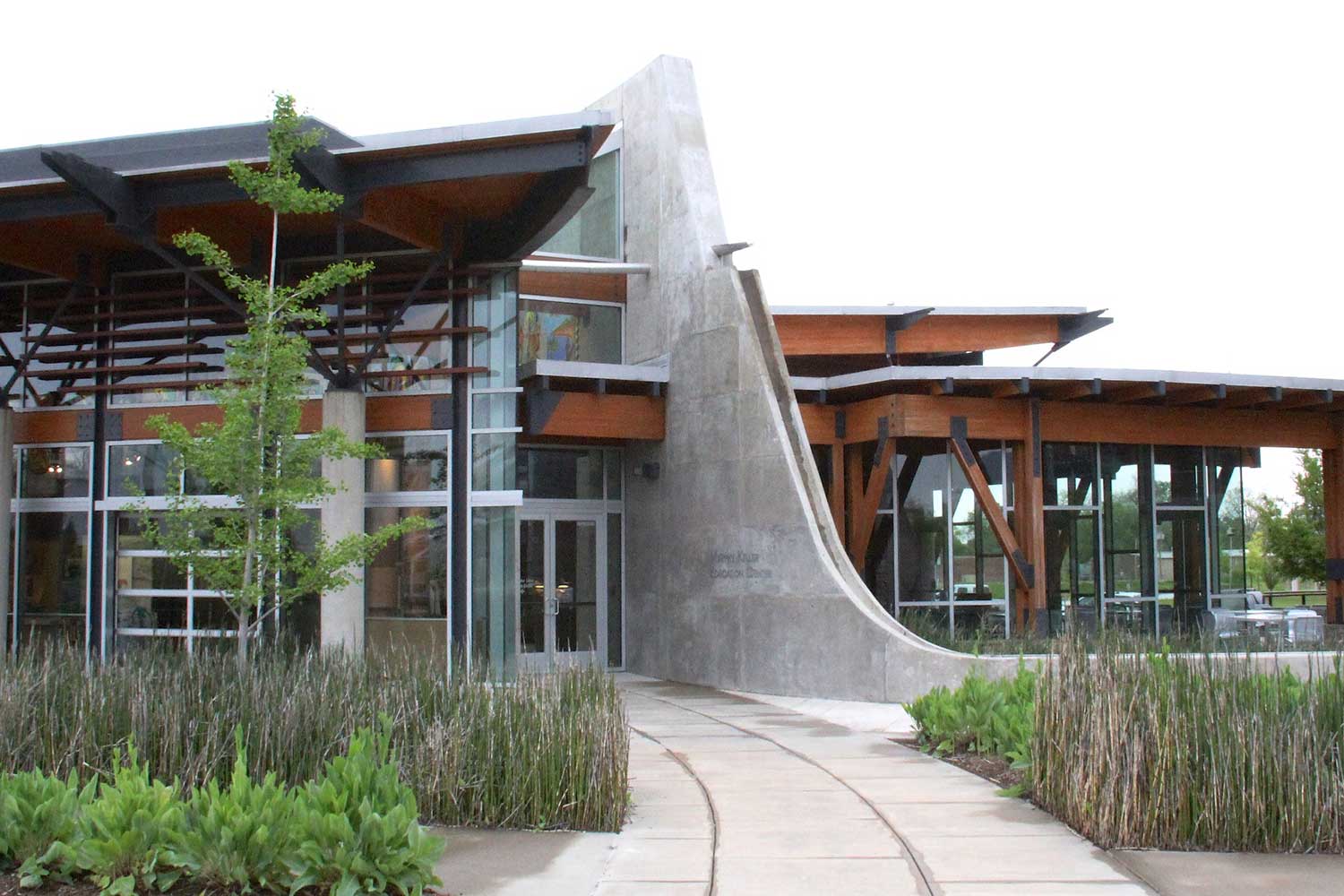
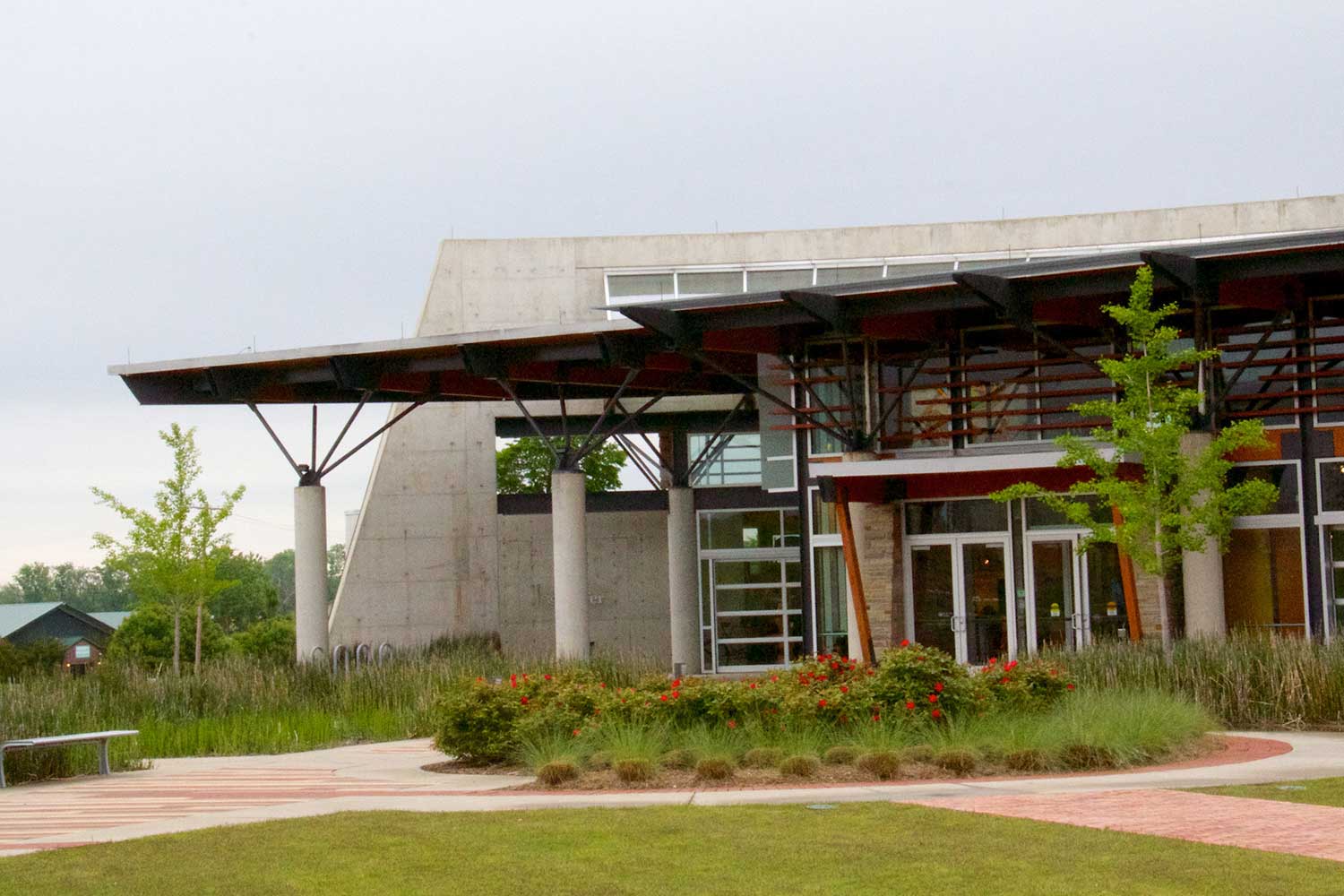
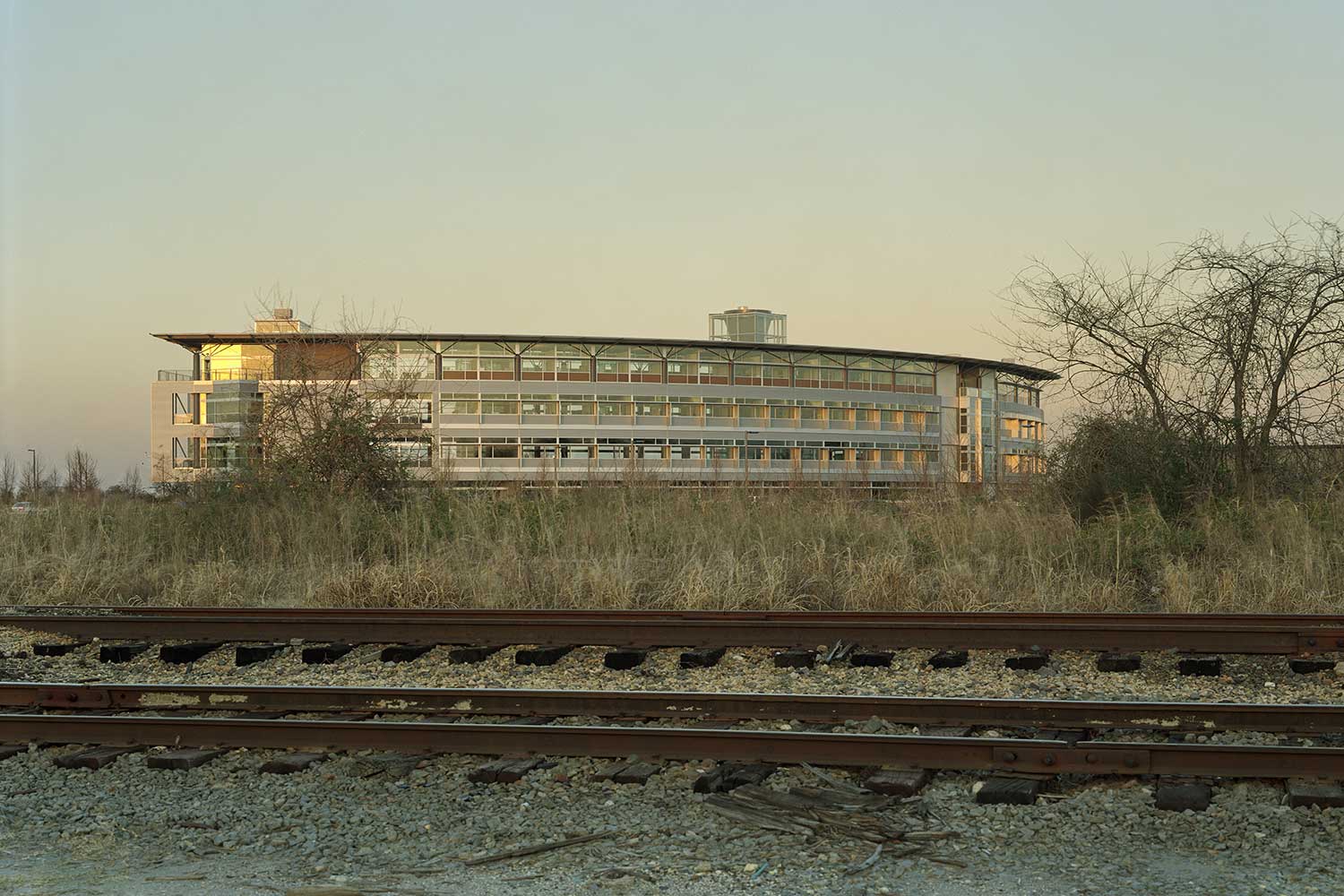
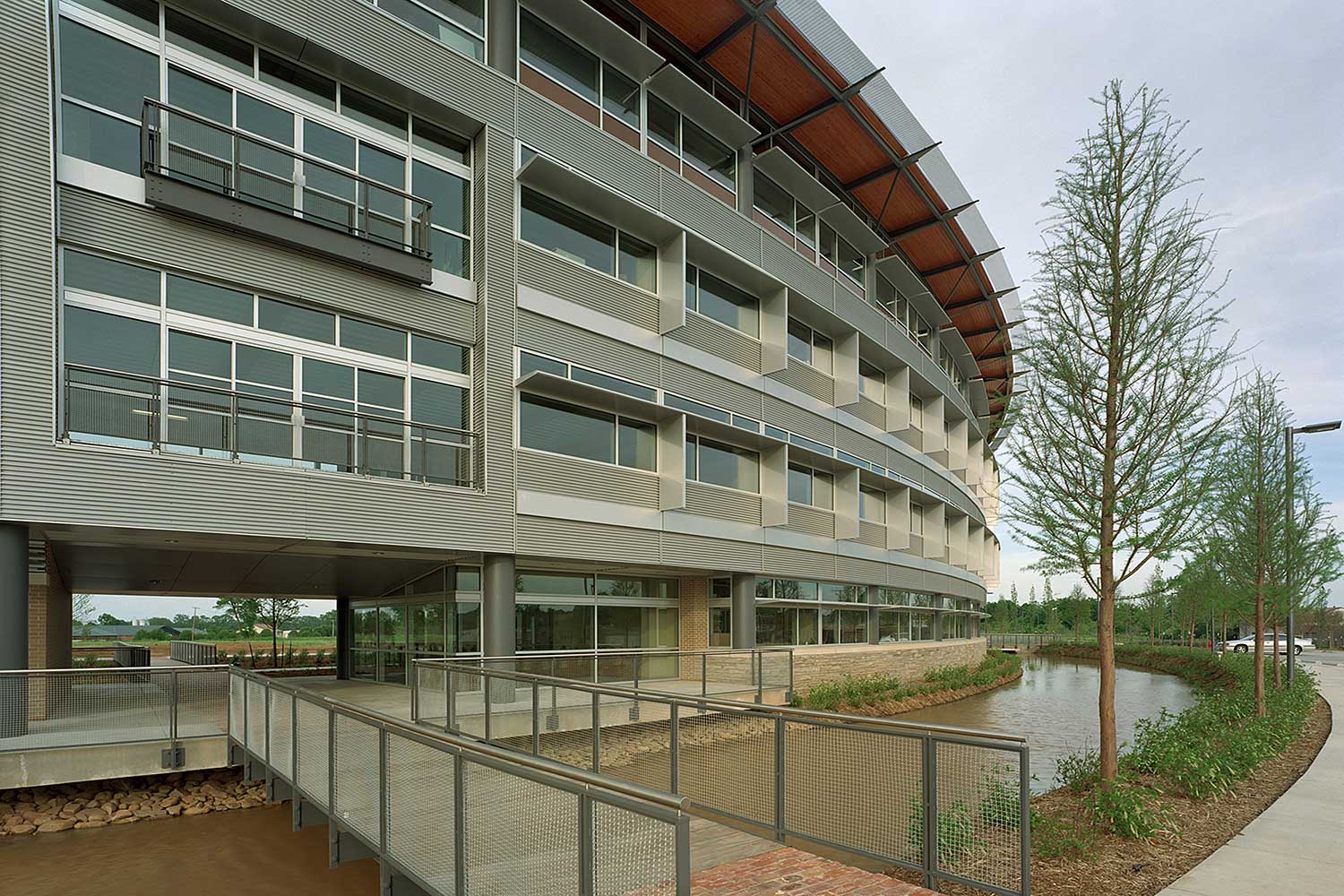
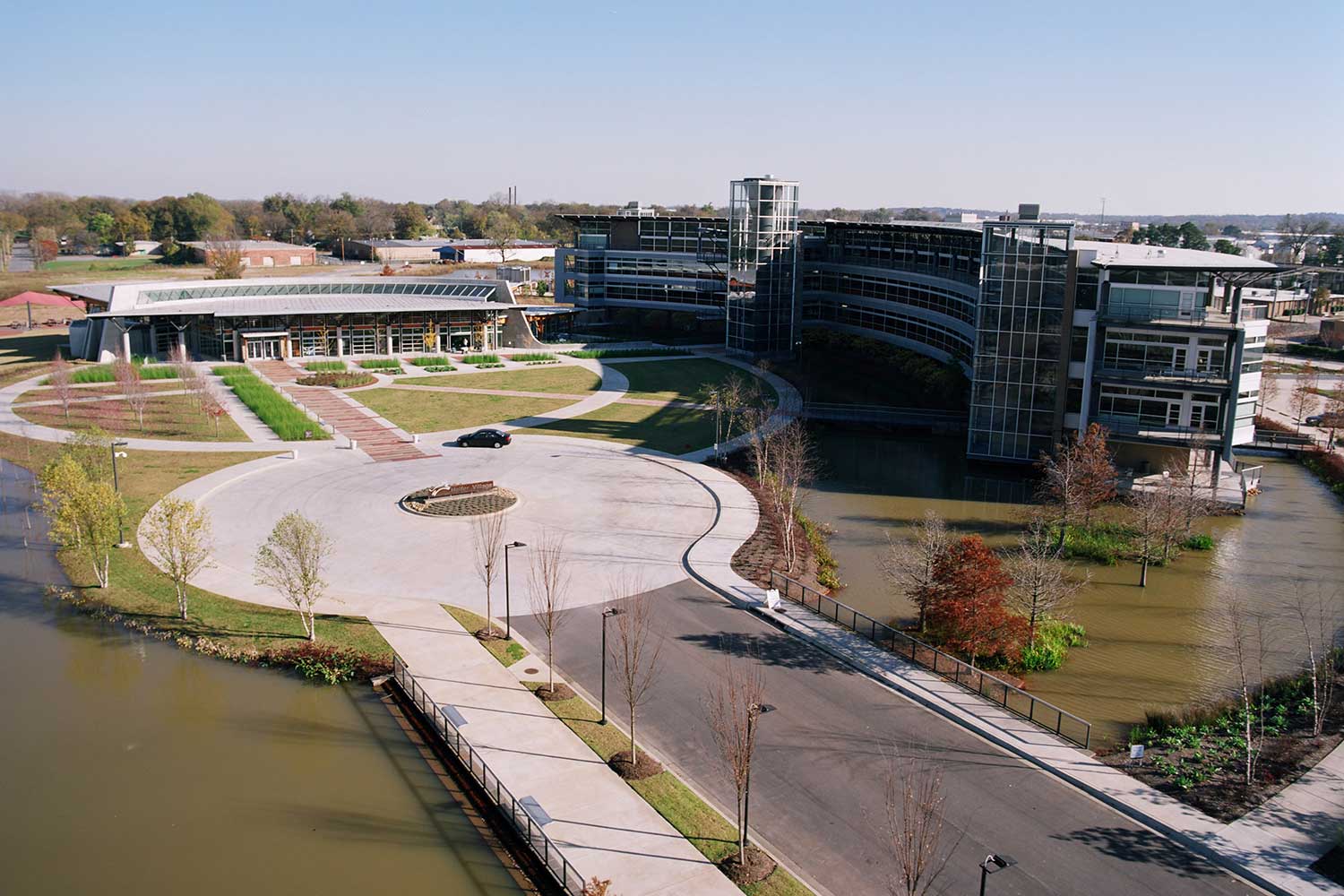
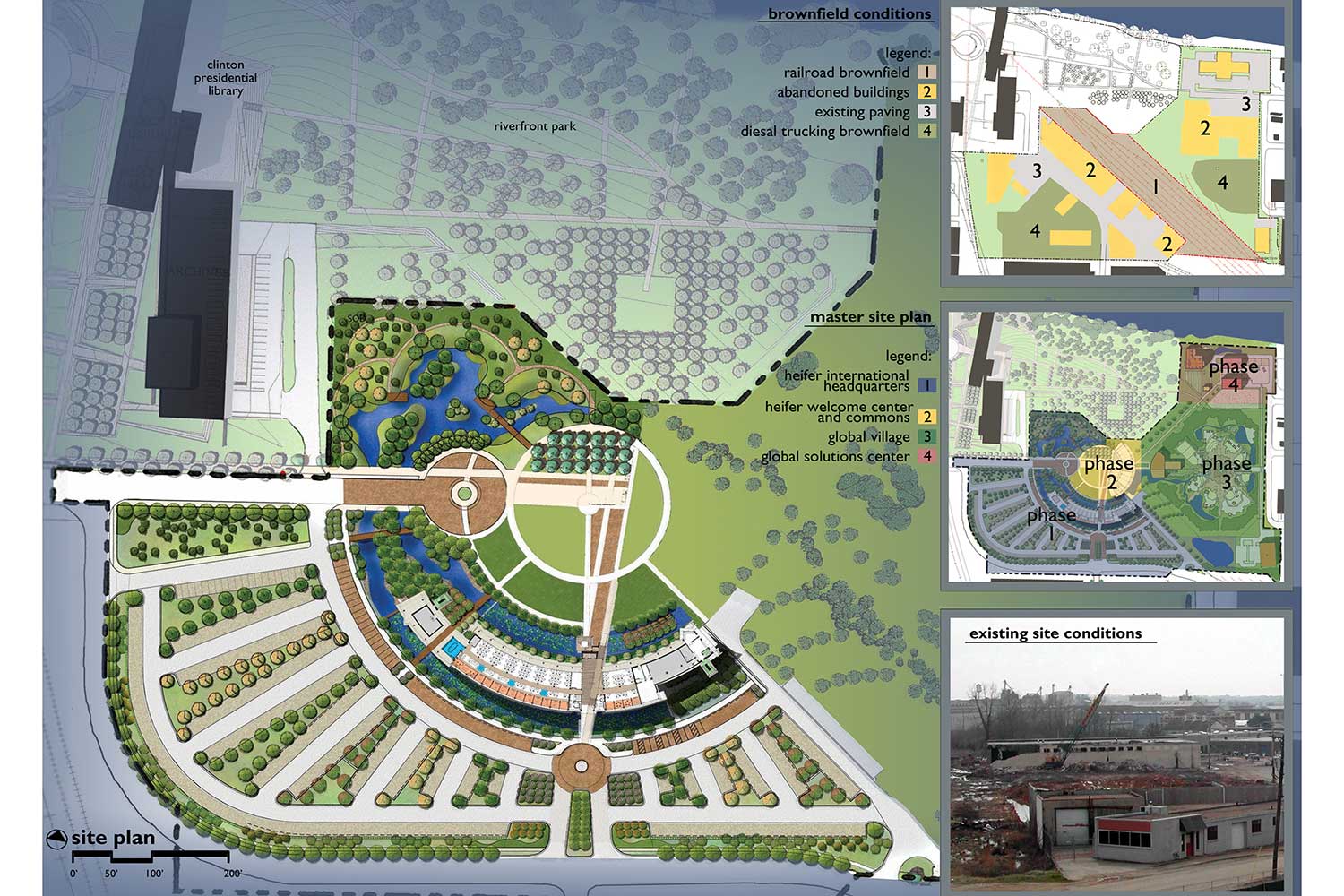
بهمثابه امتدادی از یک پارک ساحلی، محوطهی مجموعه Heifer در همنوایی با بومسازگان طبیعی شکل گرفته است؛ مسیرهایی پیوند میان رودخانه و ساختمان را ممکن میسازند. پارکینگها با چیدمانی شعاعی و سطحی نفوذپذیر طراحی شدهاند و در میان ردیفهای خودرو، آبراهههای زیستی (bioswales) تعبیه شدهاند که به درختان و گیاهان بومی امکان رشد و سلطه بر فضای پارکینگ را میدهند. فرم منحنی ساختمان، که از سه جانب در آغوش تالاب مصنوعی جای گرفته، فضای اشتراکی و پیادهمحور مرکزی را از دید و مزاحمت خودروها محفوظ نگاه میدارد. پروژه بر زمینی شکل گرفته که پیشتر یک brownfield محسوب میشد؛ حیاط تغییر مسیر راهآهن، که در گذشته این سایت را به دو نیم تقسیم میکرد. در آغاز، ۶۰٪ از این سایت ۲۲ هکتاری با آسفالت پوشیده شده بود. اما اکنون، این پهنه به اکوسیستمی پویا بدل شده است؛ تنها چند ماه پس از پایان پروژه، اردکها و گونههای مختلف حیات وحش، تالاب را سکونتگاه خود قرار دادند و روح زندگی را دوباره به آن بازگرداندند. سایت پروژه، بستر ارزشمندی برای بهرهگیری هوشمندانه از شرایط اقلیمی فراهم میکرد. از منظر خورشیدی، امکان استقرار ساختمانی با امتداد شرقی–غربی بهسادگی میسر بود؛ اما تحلیلهای دقیقتر از موقعیت بنا در ساختار حلقهای طرح جامع، فرصتی پدید آورد برای ایجاد فرمی خمیده و چندلایه که بتواند در ساعات پایانی روز، نور بیشتری را به درون ساختمان راه دهد. مدلسازیهای نوری، آرایش بهینهی پرههای عمودی را برای بازتاب نور در بعدازظهرها تأیید کرد. نمای جنوبی این قوس طولانیتر است و مسیر خورشید را دنبال میکند، در حالیکه نمای شمالی به سوی فضای اشتراکی درون حلقه خمیده شده و فضایی سایهدار در کنار تالاب فراهم میسازد.
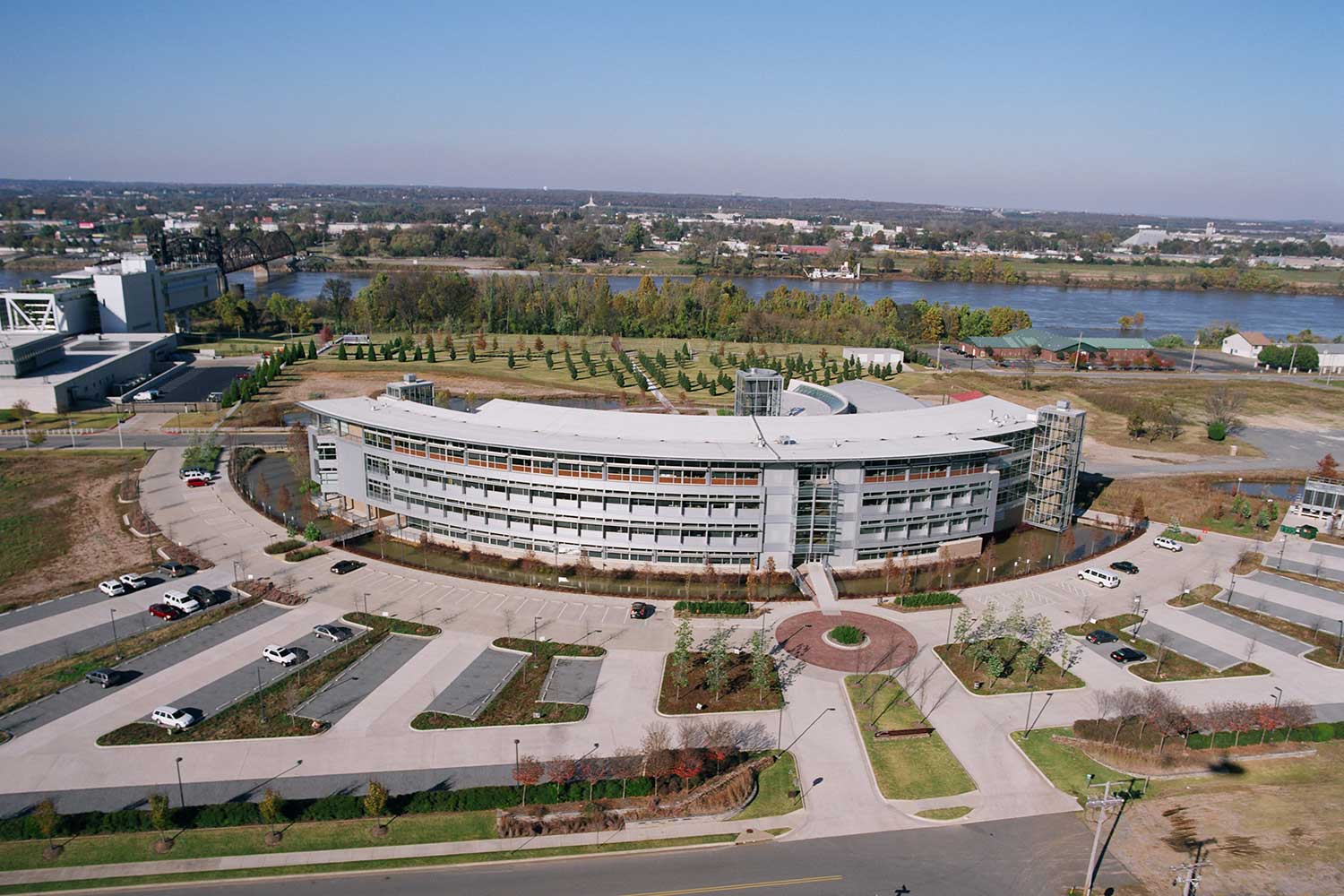
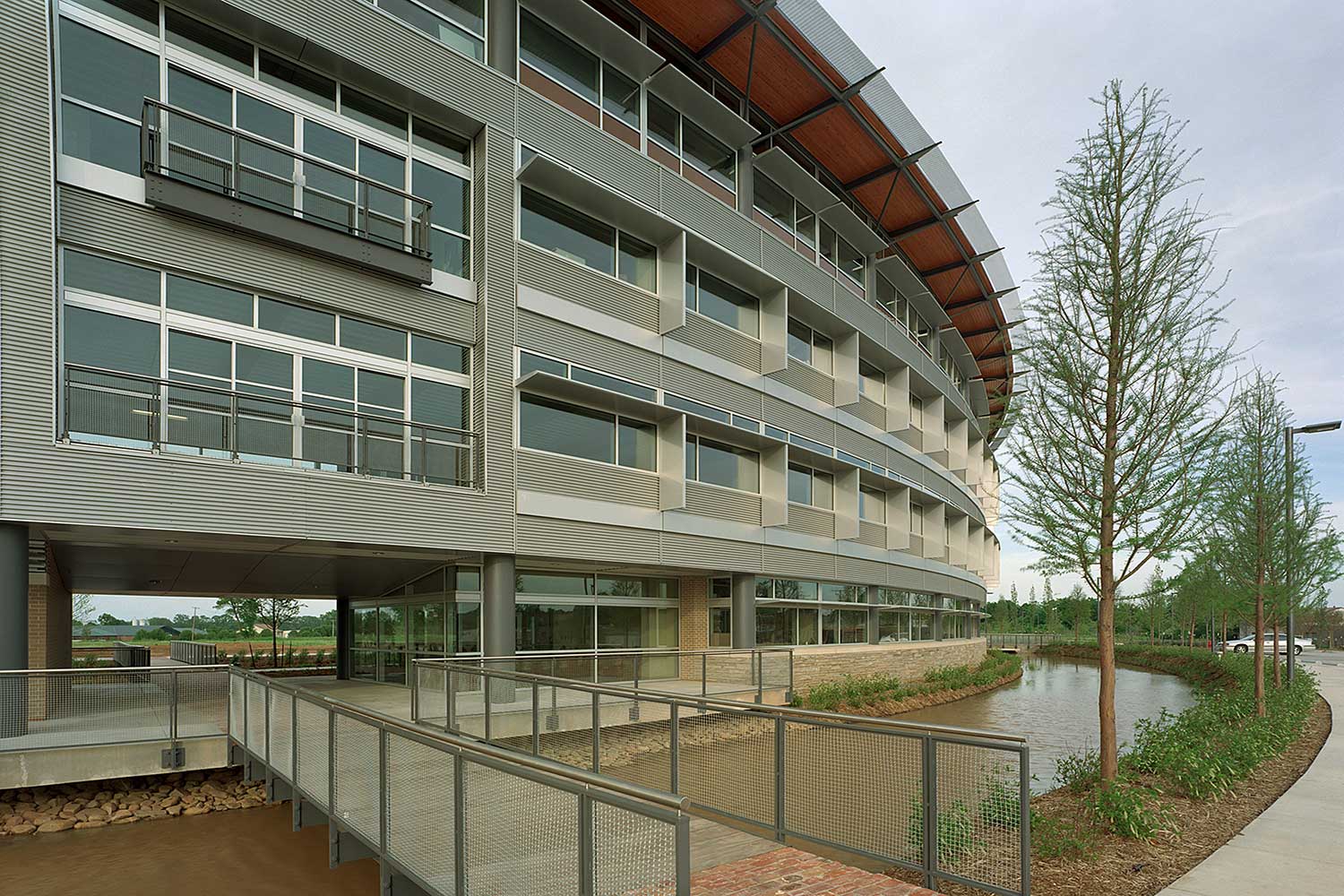
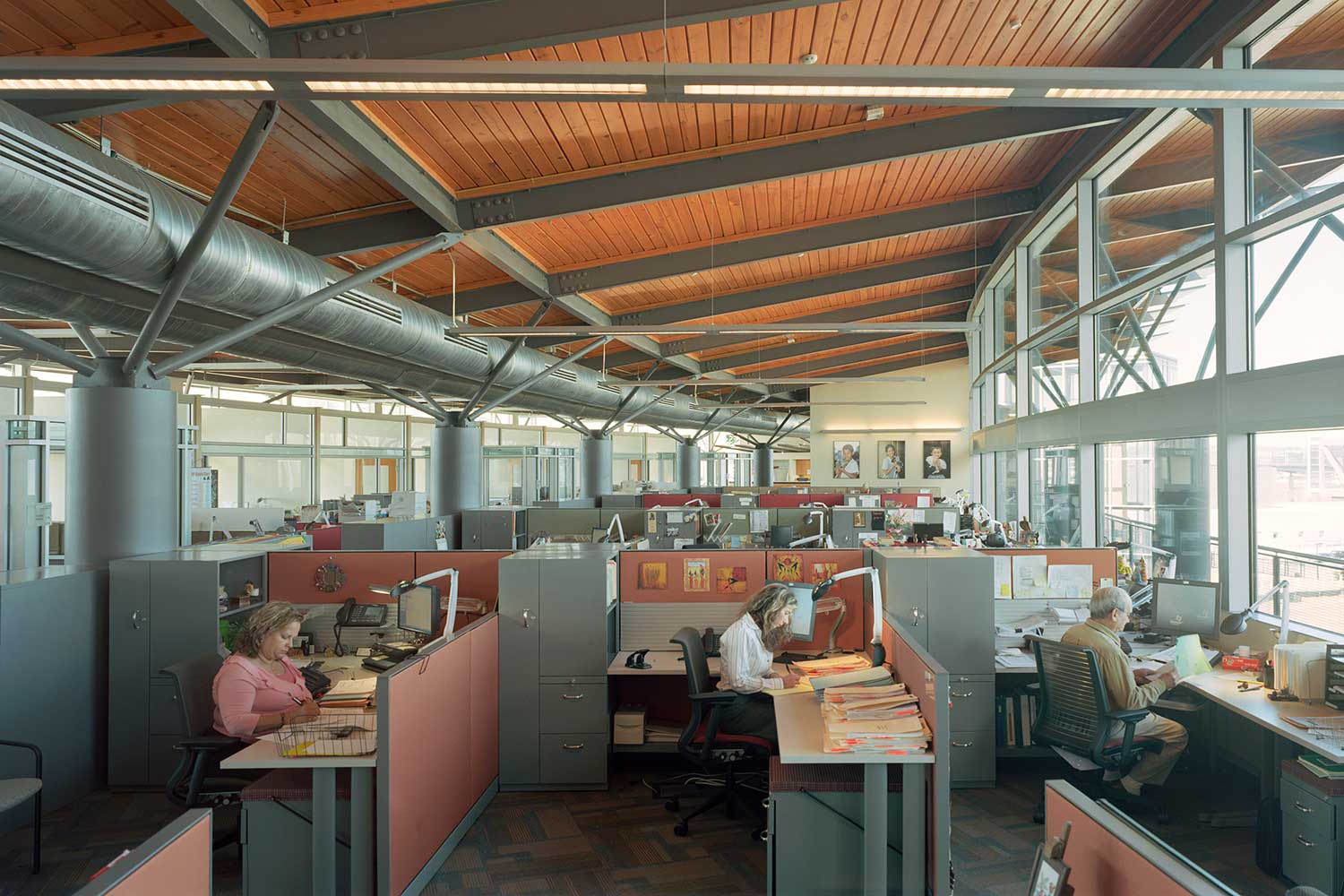
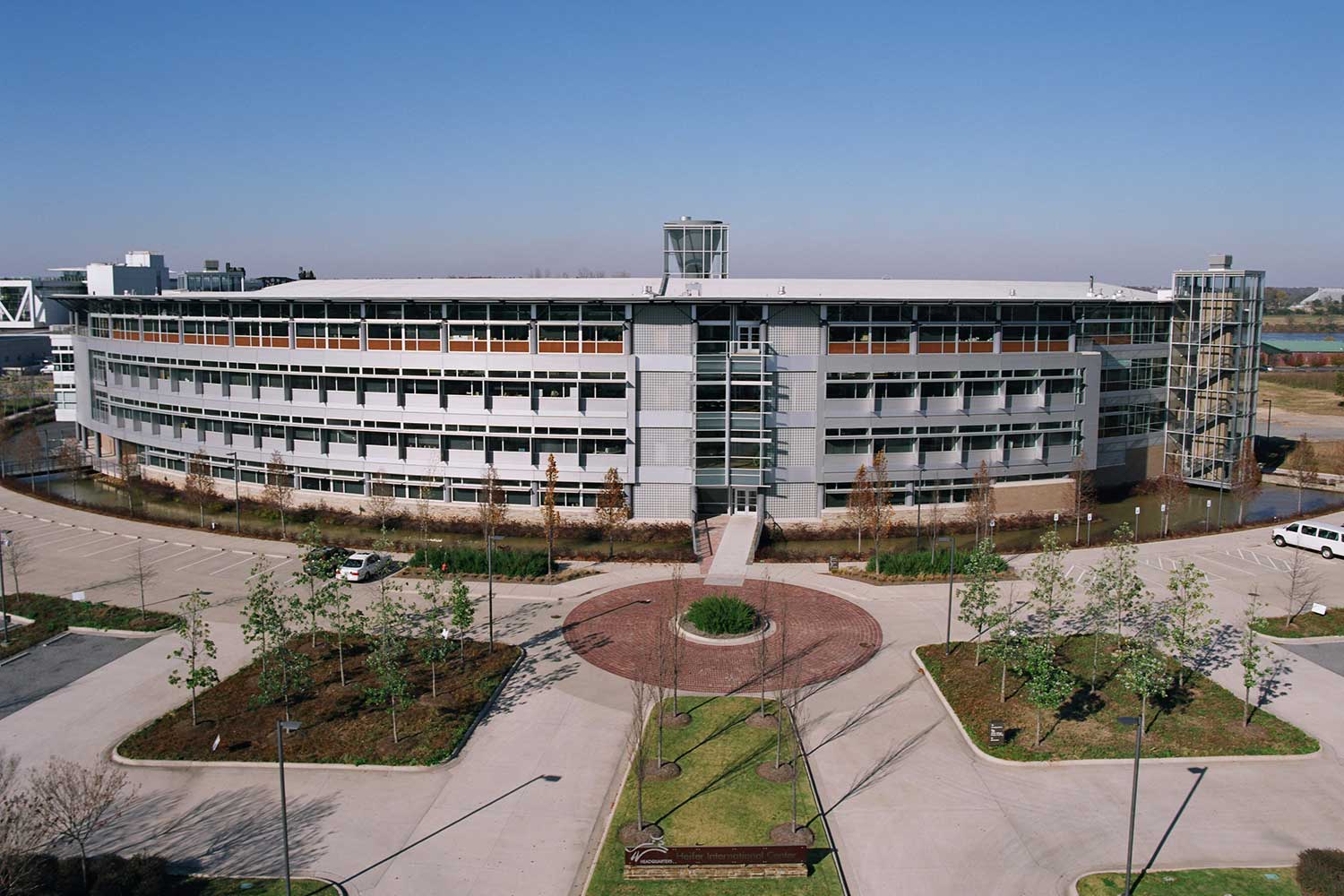
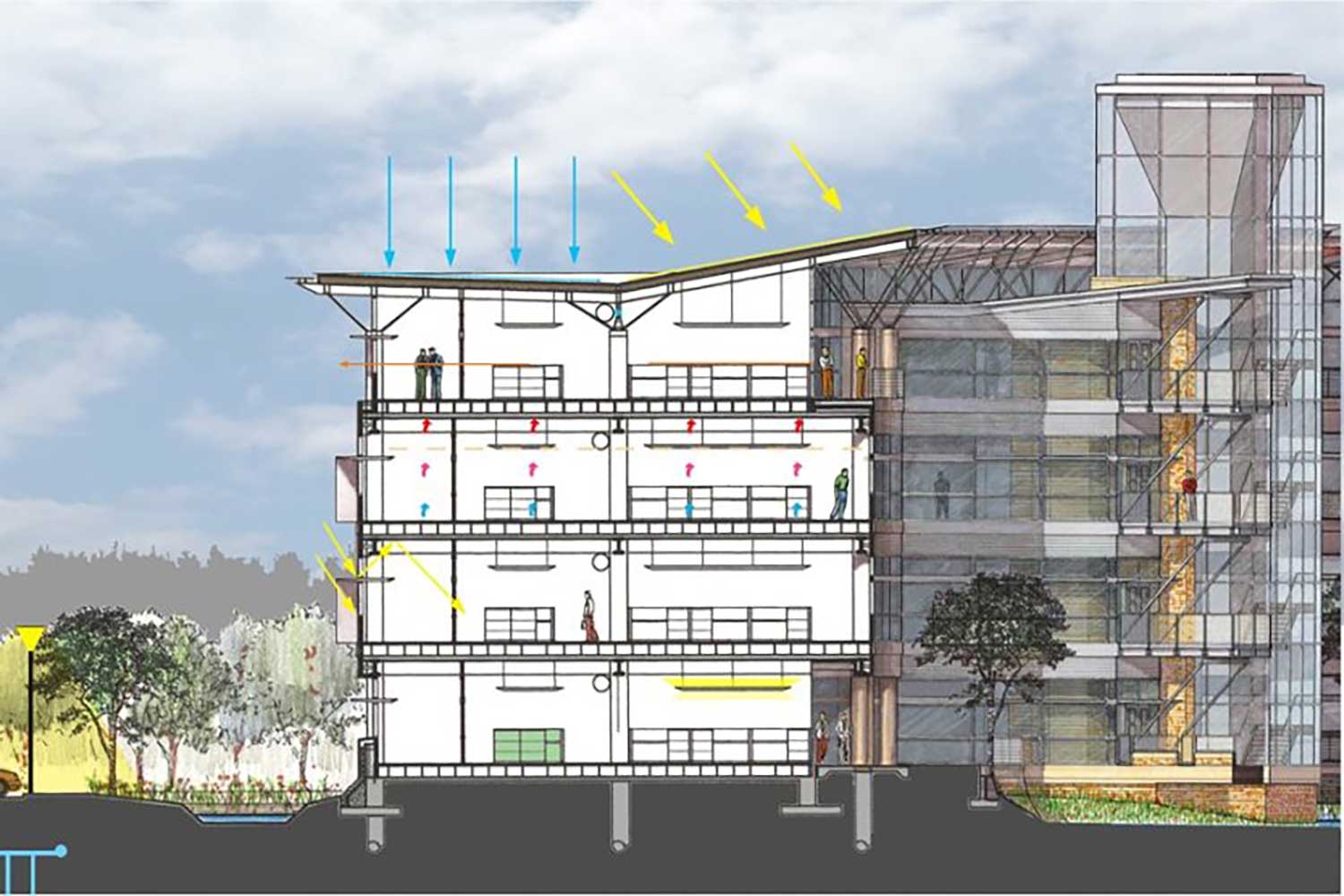
هر نما، واکنشی منحصربهفرد به جهتگیری خود دارد. سایهبانهای عمیق، نفوذ گرمای خورشیدی را بهشدت کاهش میدهند. بالکنهایی به وسعت اتاقهای جلسه، در دو انتهای شرقی و غربی ساختمان بهعنوان عناصر کنترل نور عمل میکنند. در طبقهی همکف، فضایی کاملاً روباز که مشابه اتاقهای کنفرانس بالایی طراحی شده، امکان برگزاری جلساتی در دل تالاب را فراهم میآورد. برای بهرهگیری از نسیم غالب جنوبغربی، فضاهای باز و کافهمانند هر طبقه به درهایی کشویی و بزرگ مجهز شدهاند. پلکانهای اضطراری، خارج از بدنهی اصلی ساختمان و شناور بر فراز تالاب، درون پوستهای شفاف از شیشه جای گرفتهاند. کفپوشهای مشبک با توریهای ضد حشره، جریان همرفت طبیعی را ممکن میسازند؛ هوای خنک تالاب به بالا کشیده میشود و در اثر گرمشدن، از بالای پلهها خارج میگردد—حرکتی آرام، بیصدا و همساز با طبیعت. بیشتر دفاتر باز در این ساختمان به گونهای جایگذاری شدهاند که از چشمانداز رودخانه و نور ملایم شمالی بهرهمند شوند. عرض ۶۲ فوتی بنا و جهتگیری شرقی–غربی آن، امکان نفوذ نور طبیعی به مرکز هر طبقه را فراهم میکند، بهگونهای که هر ۴۷۴ کارمند از نور و مناظر بهرهمند میشوند. اتاقهای کنفرانس در دو انتهای ساختمان قرار گرفتهاند و دیدهایی ارزشمند به مرکز شهر لیتل راک و نمایشگاههای «دهکده جهانی» هیفر فراهم میکنند.
تمامی فضاهای اصلی گردهمایی با فضای بیرونی در ارتباطاند: پنج بالکن در هر طبقه، که همچون اتاقهای کنفرانس روباز طراحی شدهاند، بر فراز تالاب معلقاند و بهعنوان سایهبان نیز ایفای نقش میکنند. شلفهای نوری، پرههای عمودی و سایهبانهای عمیق، خیرگی نور را کاهش داده و در عین حال نور پراکندهی دلپذیری به درون فضا هدایت میکنند. برای ارتقا کیفیت هوای داخلی، تیم طراحی از مصالحی با میزان اندک ترکیبات آلی فرّار (VOCs) استفاده کرده است. سیستم توزیع هوا از طریق کف کاذب، امکان تنظیم فردی شرایط دمایی را برای کاربران فراهم میسازد. به جای فضاهای بستهی استراحت، هر طبقه دارای فضاهای کافهمانند، روشن، با دید وسیع، امکان تعامل اجتماعی و دسترسی مستقیم به بیرون است—فضاهایی که نهتنها به آسایش جسم میاندیشند، بلکه روان کاربر را نیز در آغوش آرامش و نور جای میدهند. آب باران، پیش از استفادهی مجدد برای آبیاری، ابتدا از طریق گیاهان بومی در bioswale ها (آبراهههای زیستی) تصفیه میشود و سپس به تالاب مصنوعی هدایت میگردد. مصالح بازیافتی نظیر آجرهای پیشتر موجود در سایت و سیستمهای جدید سنگفرش نفوذپذیر، اکنون ۵۱٪ از سطح پارکینگ را پوشش میدهند. بامی وارونه به مساحت ۳۰٬۰۰۰ فوت مربع، آب باران را به برجی پنجطبقه با گنجایش ۴۲٬۰۰۰ گالن هدایت میکند؛ برجی که پلکان اضطراری شیشهپوش، همچون نواری شفاف بهدور آن پیچیده است. استفاده از اورینالهای بدون آب—که پس از مذاکرات فراوان، برای نخستین بار در سطح شهر اجرایی شد—در کنار توالتها و روشوییهای کممصرف، بهشدت مصرف آب شرب را کاهش میدهند.
آب خاکستری حاصل از روشوییها و آبخوریها، میعانات دستگاههای تهویه و نیز آب باران ذخیرهشده در برج، همگی در سیستم فلاش توالتها و برج خنککننده بازیافت میشوند. رطوبتی که از ساختمان به صورت میعان دفع میشود نیز، دوباره برای خنکسازی فضای داخلی مورد استفاده قرار میگیرد—چرخهای هوشمند، پیوسته، و هماهنگ با طبیعت. هدف بنیادین تیم طراحی، آفرینش سامانههایی یکپارچه بود که همزمان بیشینهی صرفهجویی انرژی و بیشینهی ظرفیت آموزشی را در خود جای دهند. آشکارسازی و عیانکردن سیستمهای مکانیکی، فرصتی آموزشی پدید آورد تا کاربران پیوندی عینی میان حرکت آب و هوا و شیوهی زیست و کار روزمرهی خود بیابند. ساختمان با بهرهگیری از نور طبیعی بهعنوان منبع اصلی روشنایی در ساعات کاری، موفق به کاهش ۵۵ درصدی مصرف انرژی نسبت به یک نمونهی پایهی قابل مقایسه شده است. محور شرقی–غربی بنا، امکان استفادهی حداقلی از نور مصنوعی را فراهم ساخته است. سیستمهای کنترل نور، شدت روشنایی را با توجه به میزان نور روز تنظیم میکنند و حسگرهای حضور، روشنایی را تنها در فضاهای مورد استفاده فعال نگه میدارند.
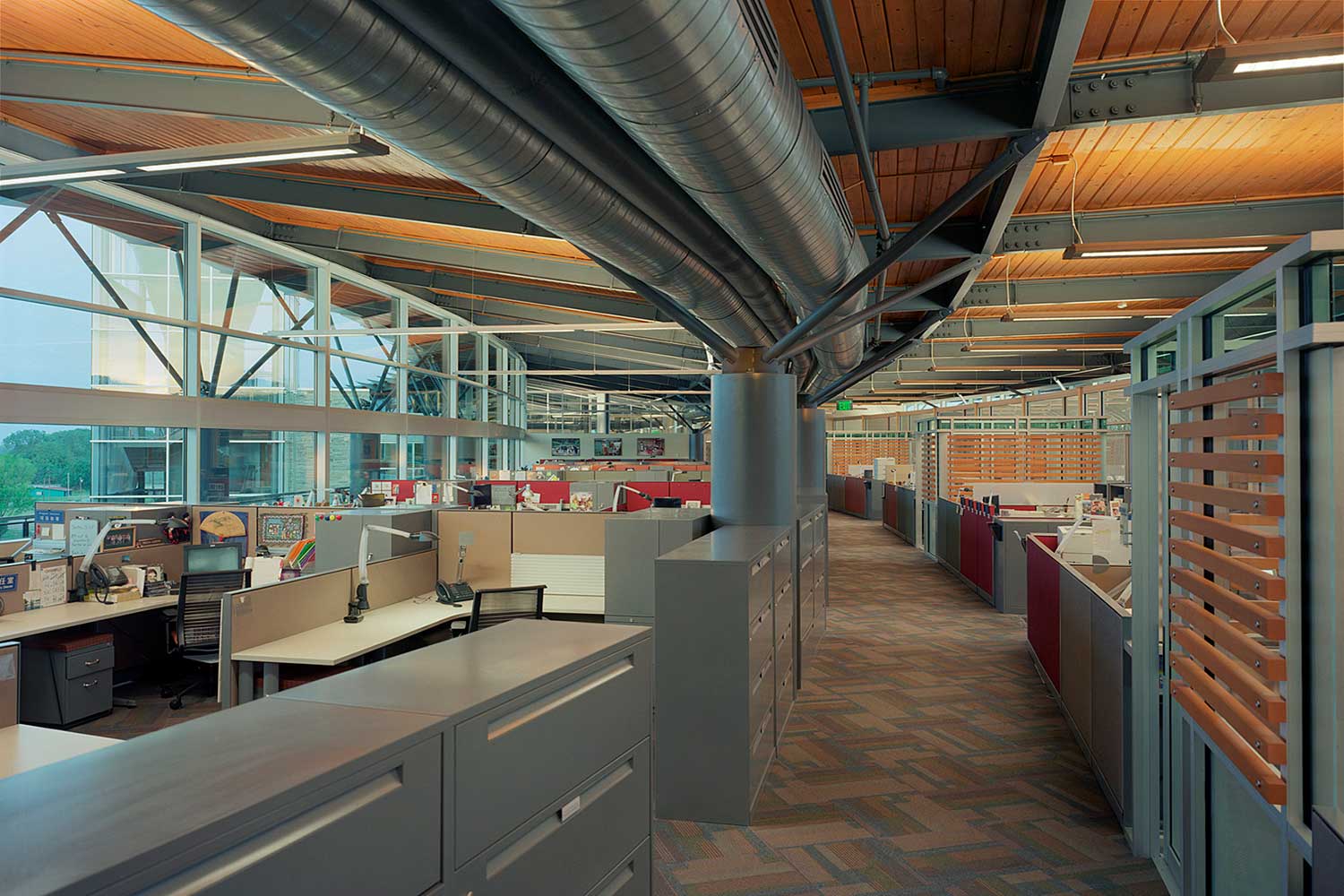
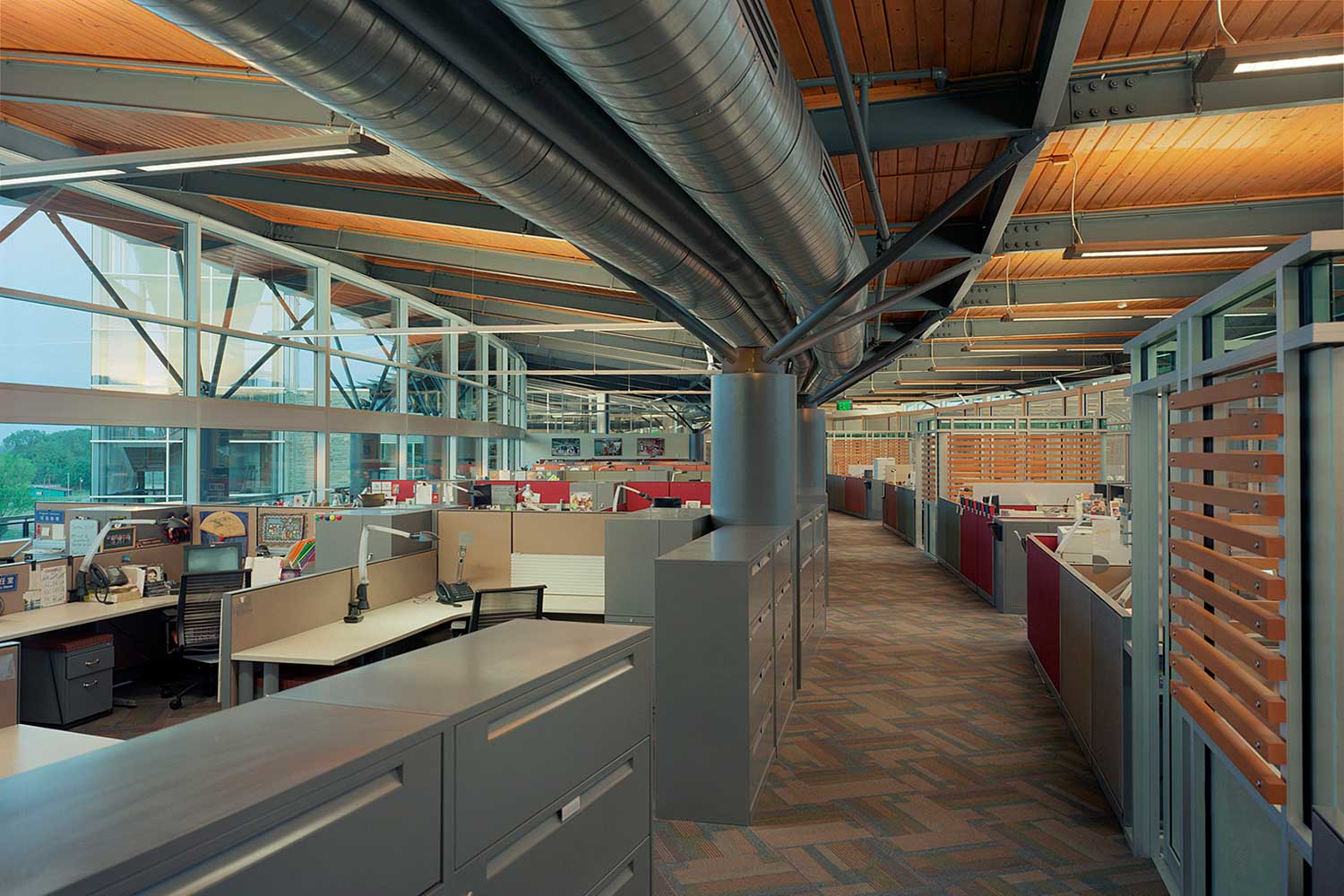
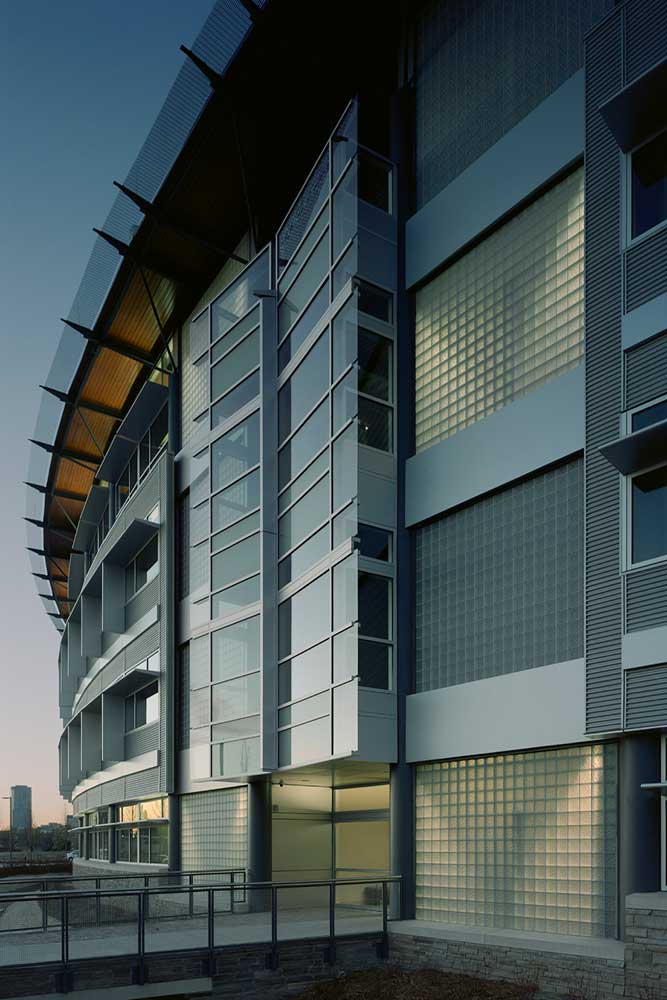
پرههای عمودی و سایهبانهای افقی، از نفوذ گرمای ناخواستهی خورشید جلوگیری کرده و همزمان نور طبیعی را به درون فضا هدایت میکنند. شیشههای بهکاررفته در نما دارای ضریب انتقال حرارت (U-value) برابر با ۰٫۲۹ هستند و پوستهی ساختمان دارای مقاومت حرارتی (R-value) معادل ۲۵ است. کفهای کاذب، امکان توزیع هوا را از سطح پایین فراهم میسازند؛ هوا بهصورت طبیعی به سمت کانالهای بازگشت در ارتفاع بالا حرکت میکند، و بدین ترتیب، نیاز به نیروی فن کاهش مییابد. این روش همچنین امکان سقفهای بلندتر و پنجرههای وسیعتر را فراهم کرده است. برای بهرهبرداری آتی از سیستمهای خورشیدی فتوولتائیک، بام بنا بهگونهای شیبدار طراحی شده تا بیشترین میزان نور خورشید را بر اساس موقعیت جغرافیایی لیتل راک دریافت کند.
شاخصهای عملکرد انرژی:
کل pEUI: 34 kBtu/ft²/yr
pEUI خالص: 34 kBtu/ft²/yr
یکی از اهداف اصلی این پروژه، استفاده از مصالح محلی در هر جایی بود که امکانپذیر باشد. سازهی فولادی بنا بر این اساس انتخاب شد که کارخانهی تولید فولاد تنها سه بلوک با سایت فاصله داشت و فولاد مصرفی حاوی ۹۷٪ مواد بازیافتی بود. سقف چوبی سنگین نیز از منابع محلی تهیه شد. بخش عمدهی نمای خارجی—بیش از ۹۰٪—از پوسته و دیوارهی آلومینیومی تشکیل شده که توسط یکی از شرکتهای بزرگ تولید شیشه، درست در آن سوی خیابان، ساخته شده است. در فضای داخلی پروژه، تیم طراحی مصالحی بادوام و کمسمیت را برگزید. این مصالح شامل پارتیشنهای سرویس بهداشتی ساختهشده عمدتاً از خاکارهی فشرده، کانترهای پذیرش و سرویسها از شیشهی بازیافتی، و سیستمهای پارتیشنبندی داخلی تولیدشده در منطقه بود که بهآسانی قابل تغییر و پیکربندی مجدد هستند. عرشههای فولادی کف بدون پوشش رنگ رها شدند که این تصمیم، ضمن صرفهجویی اقتصادی، درخشش طبیعی سطوح فلزی را نیز حفظ کرد—تصمیمی ساده اما همسو با منطق پایداری، صرفهجویی و زیبایی خام صنعتی. ساختمان با هدف نگهداری آسان و دوام بلندمدت—دستکم تا یک قرن—طراحی شده است. سیستم کف کاذب، امکان کنترل فردی بر توزیع هوا را فراهم میآورد و سازههای اداری درون آن بهسادگی قابل تغییر و پیکربندی مجدد هستند. از عرض ۶۲ فوتی بنا، ۵۰ فوت آن به سیستمهایی انعطافپذیر و قابل تفکیک اختصاص دارد که بهسوی نور شمالی گشودهاند. اتاقهای کنفرانس و فضاهای مکانیکی در دو انتهای ساختمان قرار گرفتهاند و بدینترتیب، فضای میانی هر طبقه آزاد، گشوده و منعطف باقی میماند. این چیدمان سبب شد تا فضاهای استراحت به کافههای باز بدل شوند—محیطهایی صمیمی که بهسرعت به فضاهای محبوب برای جلسات و گفتگوهای غیررسمی بدل شدند.
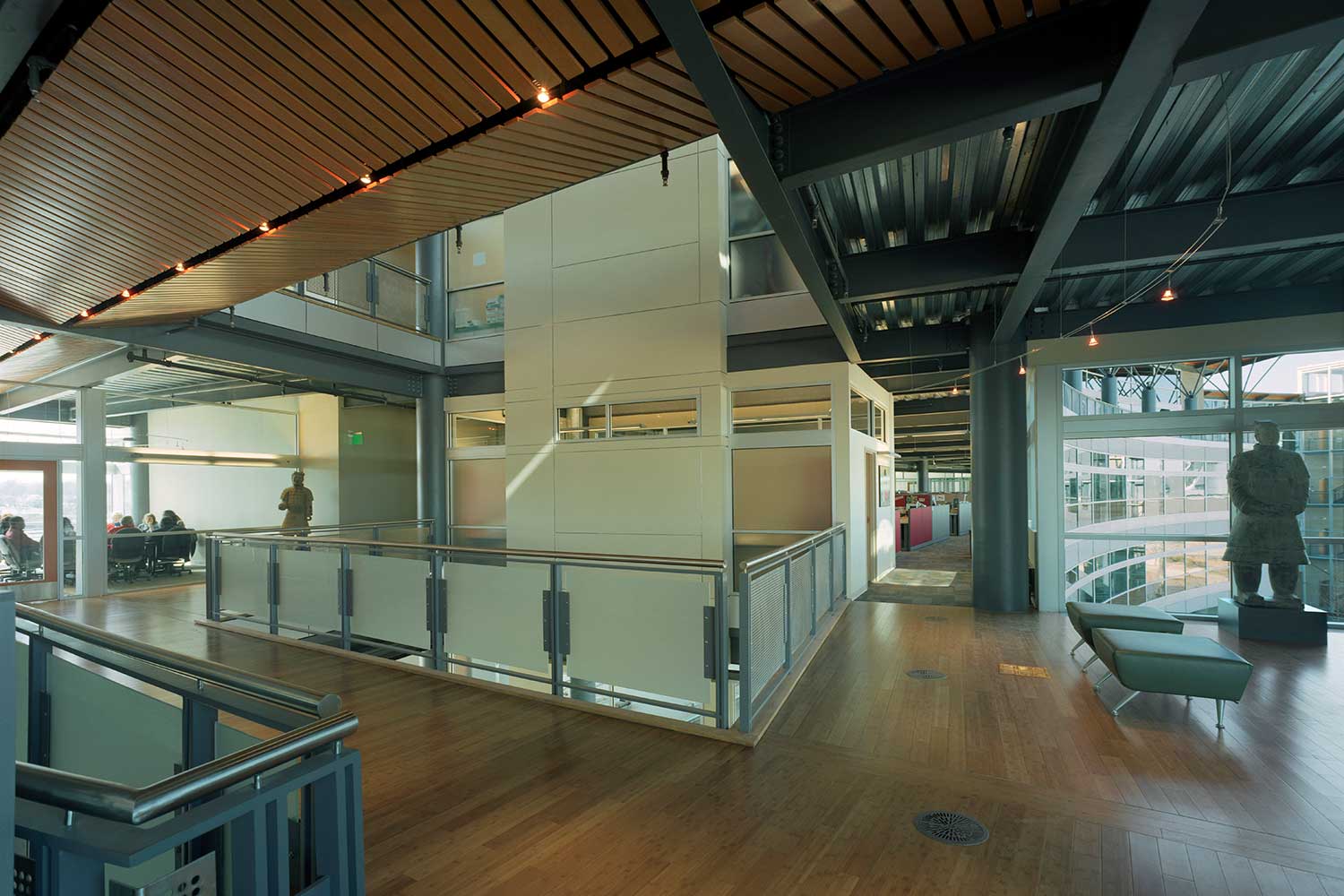
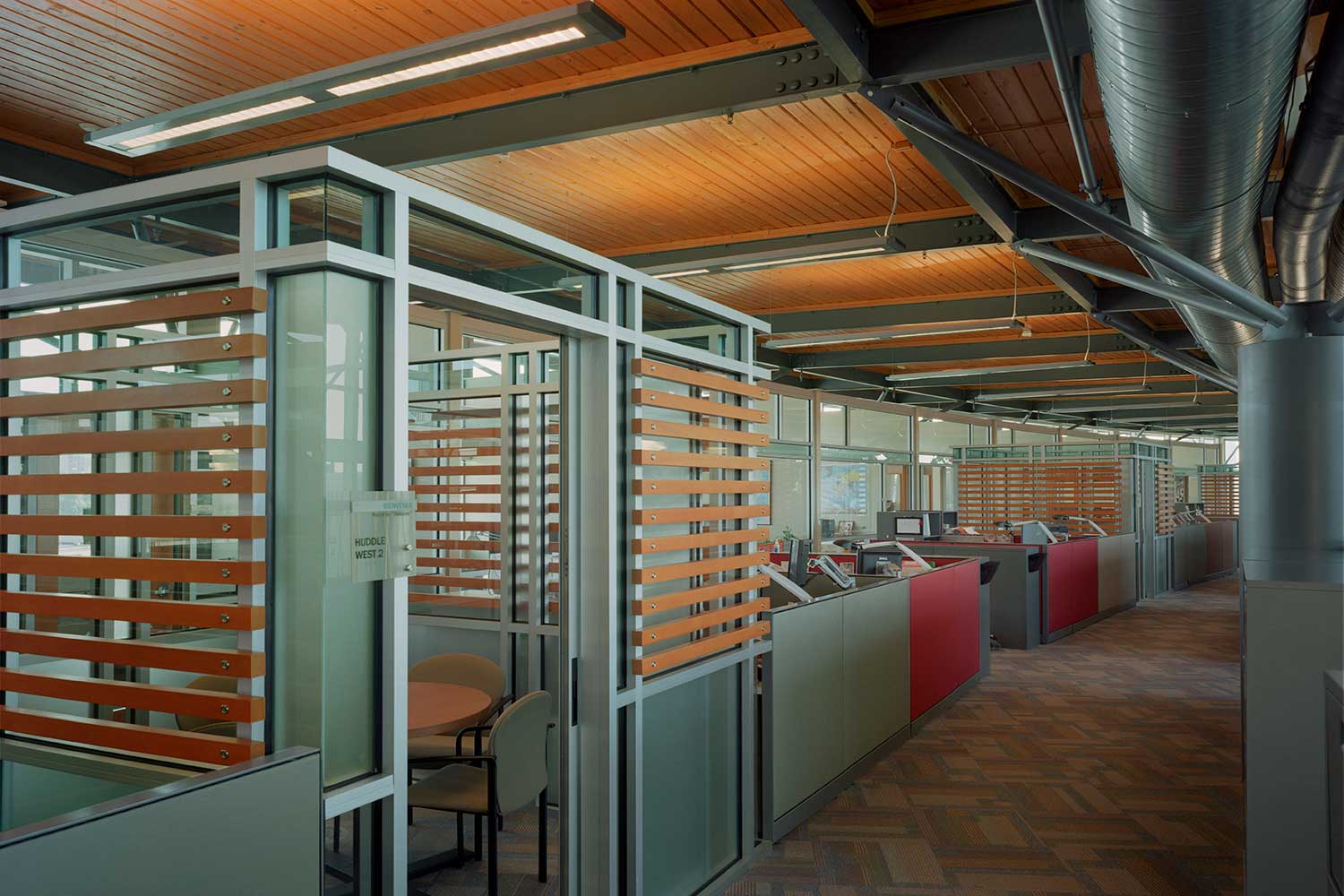
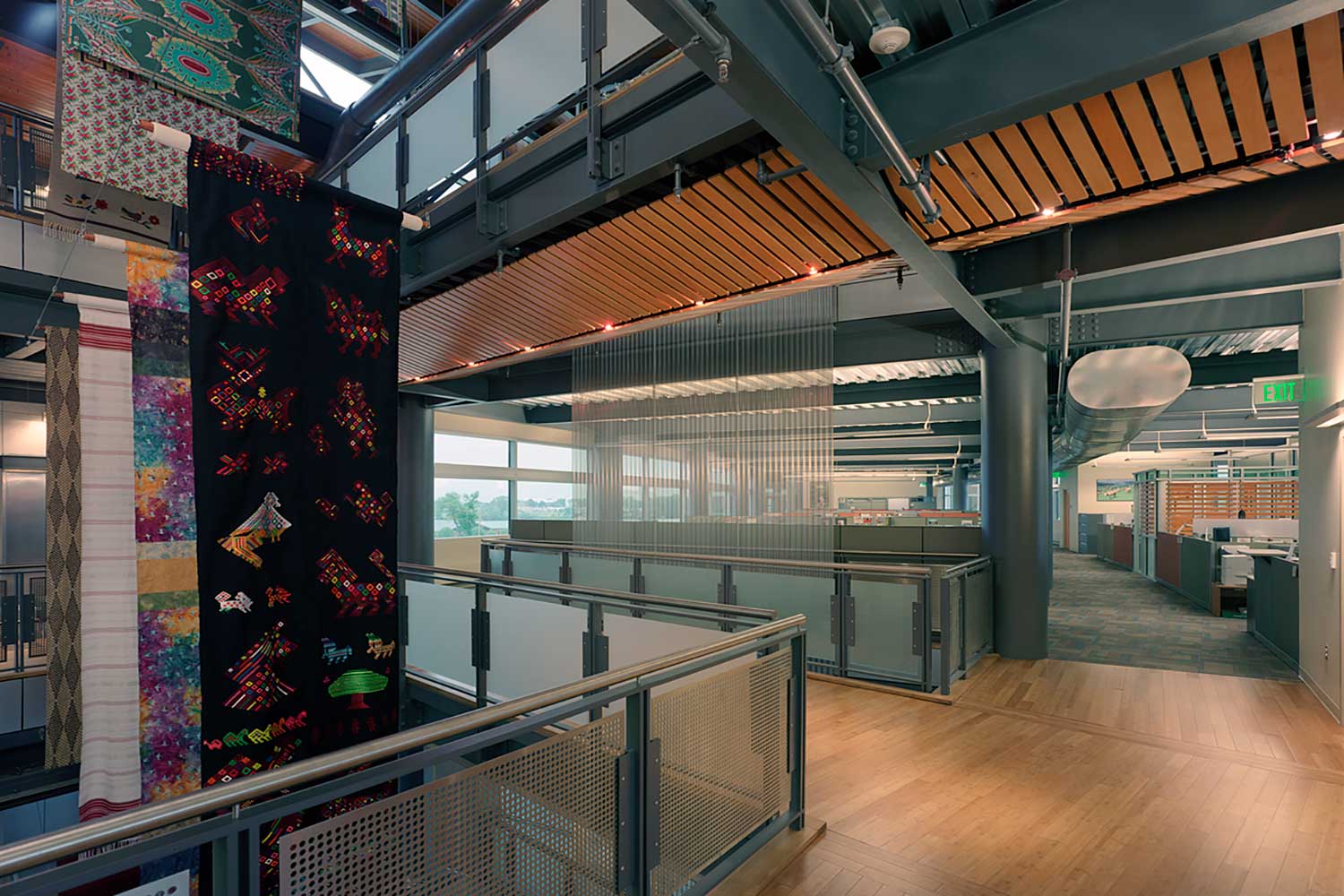
در مسیرهای حرکت، فضاهای کوچک و منعطفی برای تعاملات کوتاه طراحی شدهاند—جعبههایی از چوب و شیشهی قابل تفکیک که با الهام از آغلهای «بدون چرا» در طرحهای پرورش دام سازمان Heifer شکل گرفتهاند. این فضاها، روح تعامل و همافزایی را در بافت روزمرهی ساختمان جاری میسازند. با توجه به آنکه Heifer سازمانی غیرانتفاعی است که بر ارتباطات اجتماعی و مشارکت عمومی برای تأمین منابع خود متکی است، هم بنا و هم محوطهی آن به روی عموم مردم گشودهاند. در فرایند طراحی، تیم پروژه فرصتهایی را شناسایی کرد تا از دل معماری، آگاهیبخشی در حوزهی محیط زیست را نیز ممکن سازد. آتریومی که نور را به درون میپاشد، کارکردی دوگانه دارد: هم گذرگاهی عمودی و هم گالری روشنگری که در آن، اطلاعاتی دربارهی فعالیتهای سازمان و ویژگیهای زیستمحیطی خود ساختمان به نمایش گذاشته شده است—فضایی شفاف، روشنگر، و دعوتکننده به درک و مشارکت. فرایند طراحی این پروژه با بهاشتراکگذاری دانش، ارزشها و اهداف آغاز شد. بسیار اهمیت داشت که ساختمان نهتنها روایتگر مسئولیتهای زیستمحیطی باشد، بلکه داستان Heifer را نیز بازتاب دهد. پررنگترین بیان مشترک از دل سخنان دختر بنیانگذار سازمان برآمد—او به یاد داشت که پدرش از سفر به روستاهایی میگفت که در آنها، تصمیمگیریها در حلقهای انسانی صورت میگرفت؛ حلقهای که در آن، همه رو در روی یکدیگر مینشستند، برابر و شنوا. در فرایند طراحی دفتر مرکزی نیز، اعضای تیم پروژه، جامعه و کارفرما در چنین الگویی گرد آمدند؛ حلقهای که در آن، هر ایدهای با احترام شنیده و بیهیچ تقدم و تأخری سنجیده میشد. رویکرد طراحی یکپارچه، تمرکز خود را بر سنجههای واقعی—نه ظاهری—از مسئولیتپذیری زیستمحیطی نهاد. به این معنا که نتایج قابل اندازهگیری زیستمحیطی، محرک اصلی تصمیمگیریها بودند، و زیبایی نه در تزئینات، بلکه در خود این کارکردها آشکار میشد. البته این مسیر، بیچالش نبود. طراحی نیازمند صرف زمان و تلاش بیشتر از حد متعارف بود. در مرحلهی ساخت، تهیهی زودهنگام بستههای سایت و سازهی فولادی، امکان یکپارچهسازی کامل طراحی را تا حدی محدود کرد. با این حال، پروژه دستاوردی موفقیتآمیز بود: جرقهای از اندیشههای نو در صنعت ساختوساز محلی، که دریچهای گشود برای پروژههای آینده تا از درسهای این تجربهی پیشگام بهره بگیرند—پروژهای که بهراستی معمارانه بود: همدلانه، زیستمحور، و رو به آینده.
تحلیل هزینه و بازگشت سرمایه:
از طریق فرایند طراحی یکپارچه، تیم پروژه توانست از همان مراحل اولیه، در گفتگوهایی گسترده از شیوههای تأمین مالی تا انتخاب سایت مشارکت کند. سازمان Heifer در سالهای اخیر رشدی چشمگیر داشته و در حال اجارهی دو طبقهی کامل از یک برج مرتفع در مرکز شهر و همچنین فضاهایی در دو ساختمان دیگر بود. تحلیل هزینههای اجاره نشان داد که مبلغی معادل با آن میتواند صرف مالکیت ملکی شود؛ از این رو، Heifer تصمیم گرفت پروژه را از طریق ترکیبی از وامهای متداول و کمپین جذب سرمایه (سرمایهی اهدایی) تأمین مالی کند. برای پاکسازی سایت brownfield، سازمان حفاظت محیطزیست ایالات متحده (EPA) کمکهزینهای اعطا کرد. Heifer هشت قطعه زمین مجزا را خریداری کرد و به شهر اجازه داد تا برای کاهش ترافیک پروژههای مجاور، یک جادهی پیرامونی بسازد. این اقدام باعث بهبود دسترسی به سایت شد و امکان استفاده از زمینهای مجاور شهری را برای پروژههای آیندهی Heifer فراهم ساخت.
مکانیزمهای تأمین مالی:
کمکهزینه (Grant): از سوی نهاد عمومی (سازمان EPA)
وامها (Loans): خصوصی (بانک، شرکت بیمه)
اطلاعات مالی (براساس دلار آمریکا در زمان تکمیل):
هزینهی کل پروژه (بدون احتساب زمین): 17,900,000 دلار
با توجه به بودجهی محدود پروژه، تیم طراحی تحلیلهایی بر مبنای هزینهی چرخهی عمر برای سیستمهای اصلی انجام داد و هر ایدهای را با معیارهای ایدئولوژیک Heifer سنجید. برای هر هزینهای که خارج از ساختار مرسوم یک ساختمان اداری بود، دورهی بازگشت سرمایهی ۷ تا ۱۰ سال بهعنوان معیار سنجش استفاده شد. برای نمونه، ایستگاههای شارژ خودروهای برقی—با وجود آنکه از منظر زیستمحیطی ارزشمند بودند—استفادهی اندکی داشتند و پیشبینی نمیشد که در این بازهی زمانی به صرفهجویی منجر شوند. این تحلیل، تیم پروژه را ترغیب کرد تا روشهای کمهزینهتر را برای ترویج حملونقل پایدار به کار گیرد؛ از جمله اختصاص فضای پارکینگ ویژه به خودروهای هیبریدی و اتصال بهتر به سیستم حملونقل عمومی. این رویکرد مالی، معمارانه بود؛ بر مبنای آیندهنگری، نه فقط در حفظ منابع، بلکه در همنوایی با رسالت انسانی، زیستمحور و مشارکتجوی Heifer.
فرایند و نتایج:
پیشطراحی (Predesign)
طرحهای اولیه، ساختمانی را نشان میدادند که حدود ۴۰٪ کوچکتر از نتیجهی نهایی بود و بر نیمی از زمینی که در نهایت مورد استفاده قرار گرفت قرار داشت. با این حال، به دلیل افزایش چشمگیر کمکهای مالی، رشد سریع تعداد کارکنان، و تمایل به گسترش ظرفیت نمایشگاههای آموزشی، سازمان Heifer برآوردهای رشد خود را بازنگری کرد و تیم پروژه تشخیص داد که هم ساختمان و هم سایت باید وسعت بیشتری داشته باشند. بهموازات این تصمیم، اهداف زیستمحیطی پروژه نیز بازبینی شدند تا بنا بتواند بازتابی دقیقتر از آرمانهای Heifer باشد. گفتوگویی آزاد از طریق یک نشست طراحی تعاملی (charrette) با حضور تمامی مشاوران و گروهی گسترده از نمایندگان Heifer آغاز شد. شرکتکنندگان دریافتند که پارامترهای پروژه چنان دگرگون شدهاند که طراحی اولیه دیگر قابل اجرا نیست. این نقطه، سرآغاز فرایندی تازه شد که در نهایت به طرح نهایی انجامید. در این مسیر، تیم طراحی فهرستی از اهداف زیستمحیطی قابل دستیابی تدوین کرد. تیم پروژه در جلسات ماهانهی کمیته محیط زیست شرکت میکرد تا درک عمیقتری از مأموریت اصلی سازمان به دست آورد و فرصتهای آموزشی خاصی را در دل طراحی شناسایی کند. تلاشهای تیم برای خلق طراحیای با بهرهوری انرژی بالا، با هدف آزادسازی منابع مالی از بخش زیرساخت و هدایت آن به برنامههای بشردوستانه در سطح جهان انجام گرفت.
طراحی (Design)
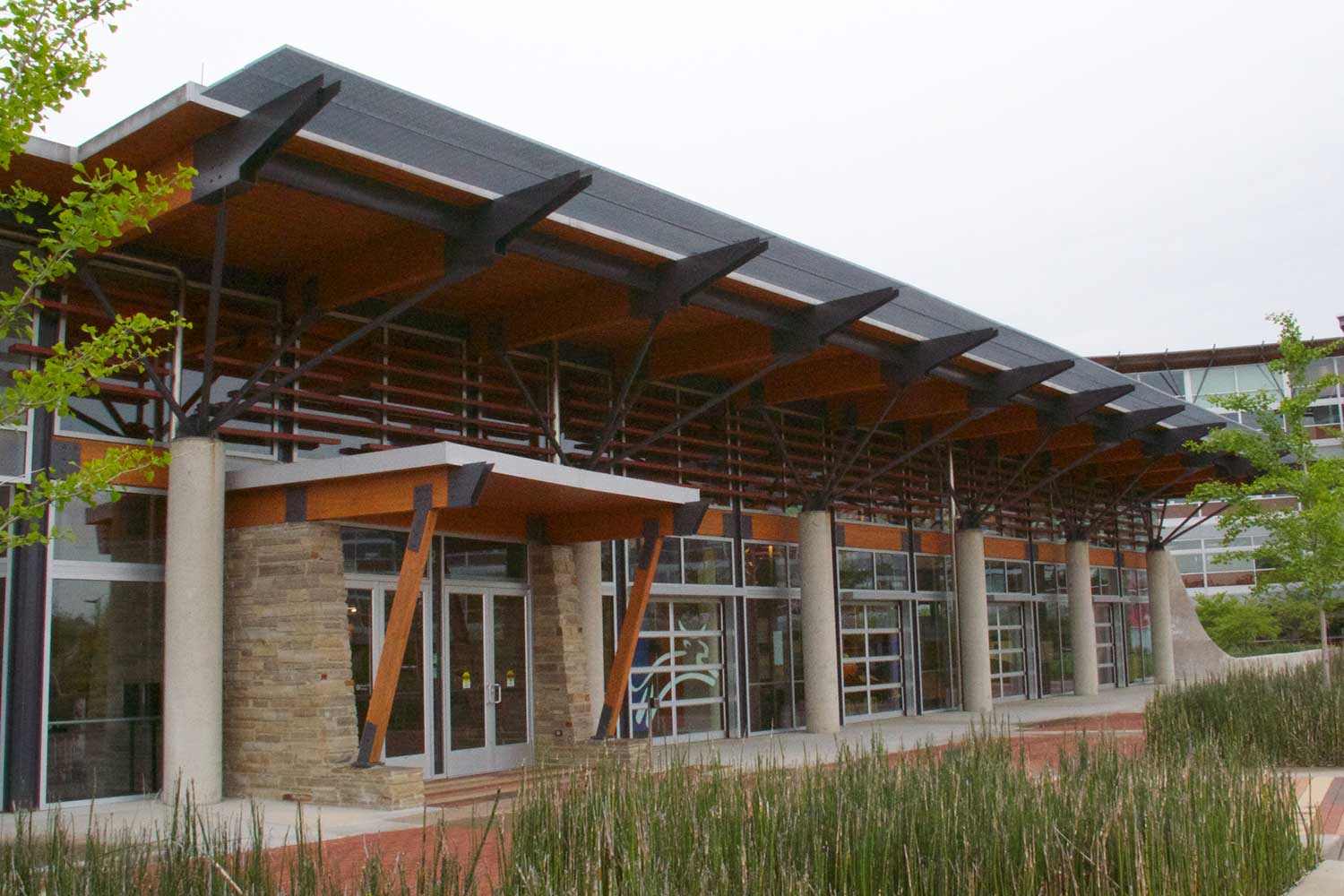
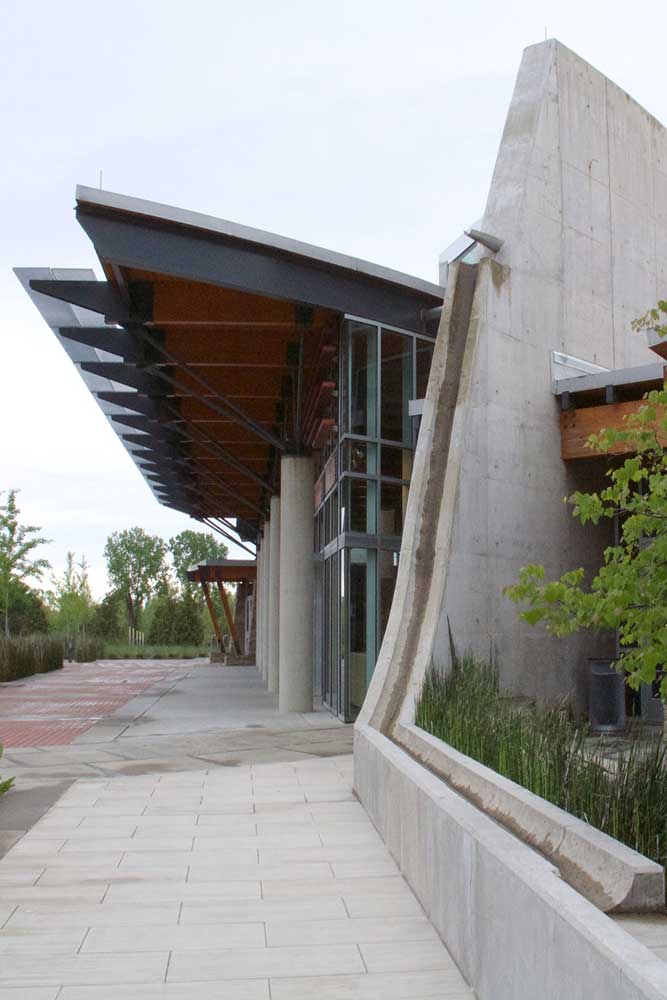
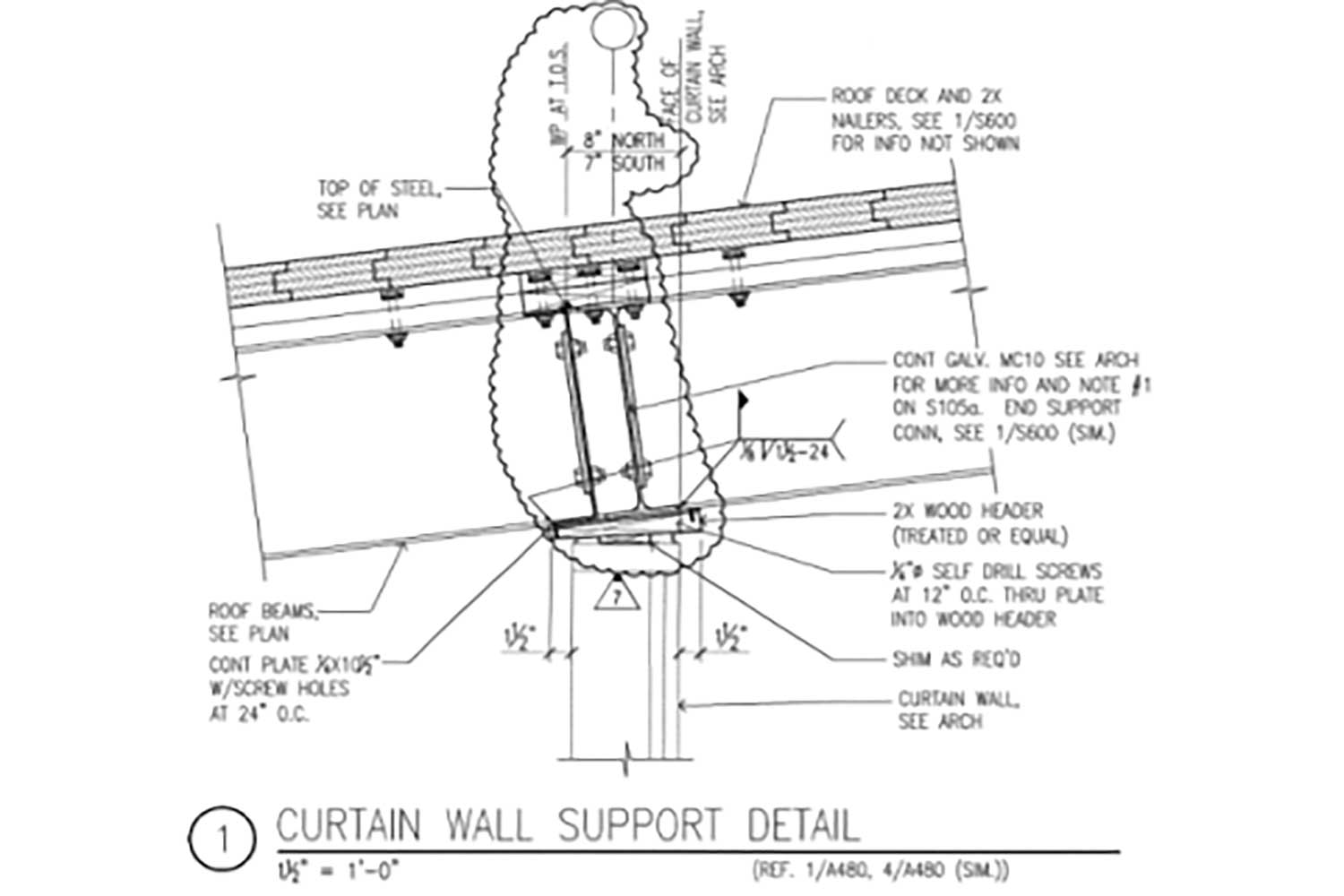
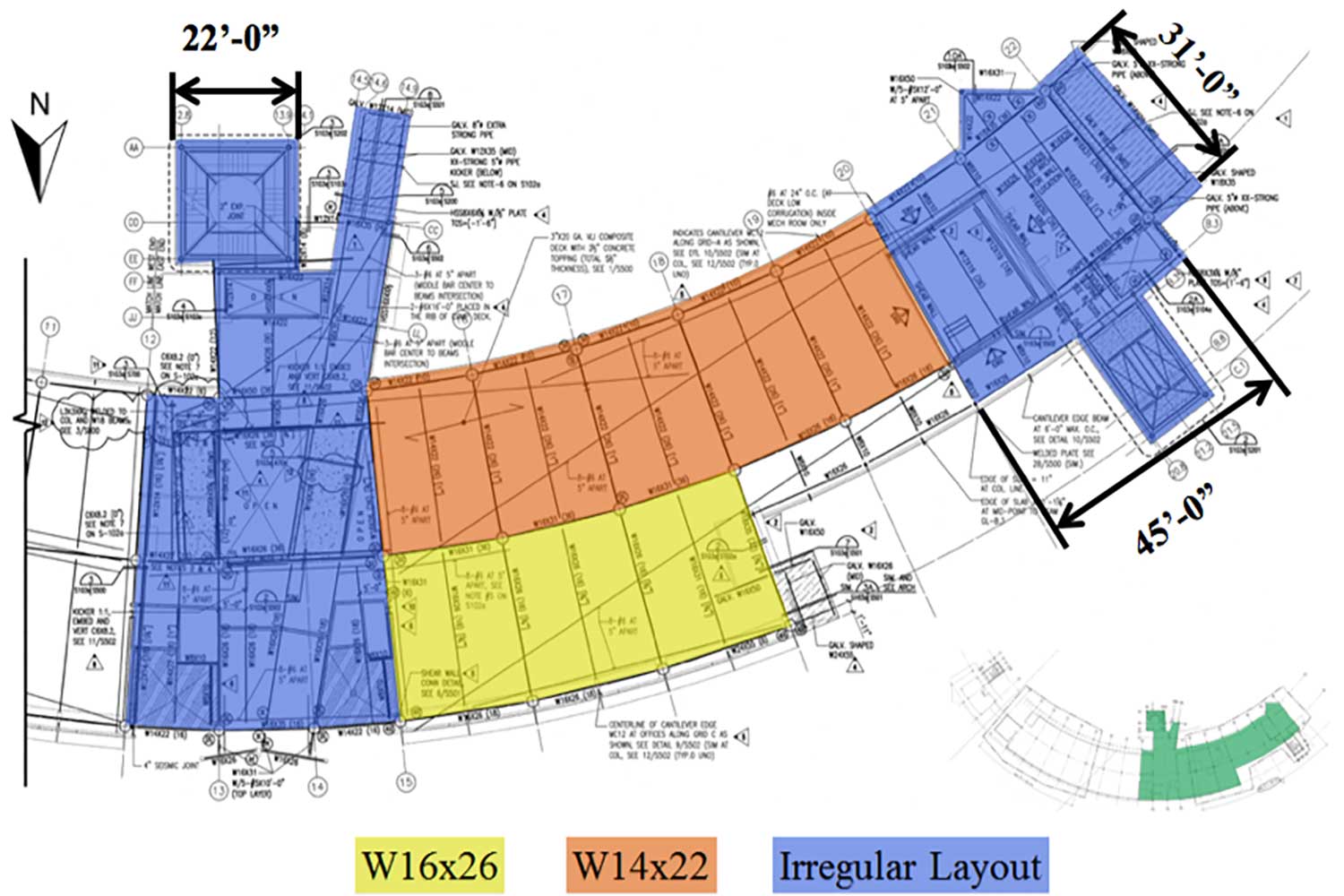
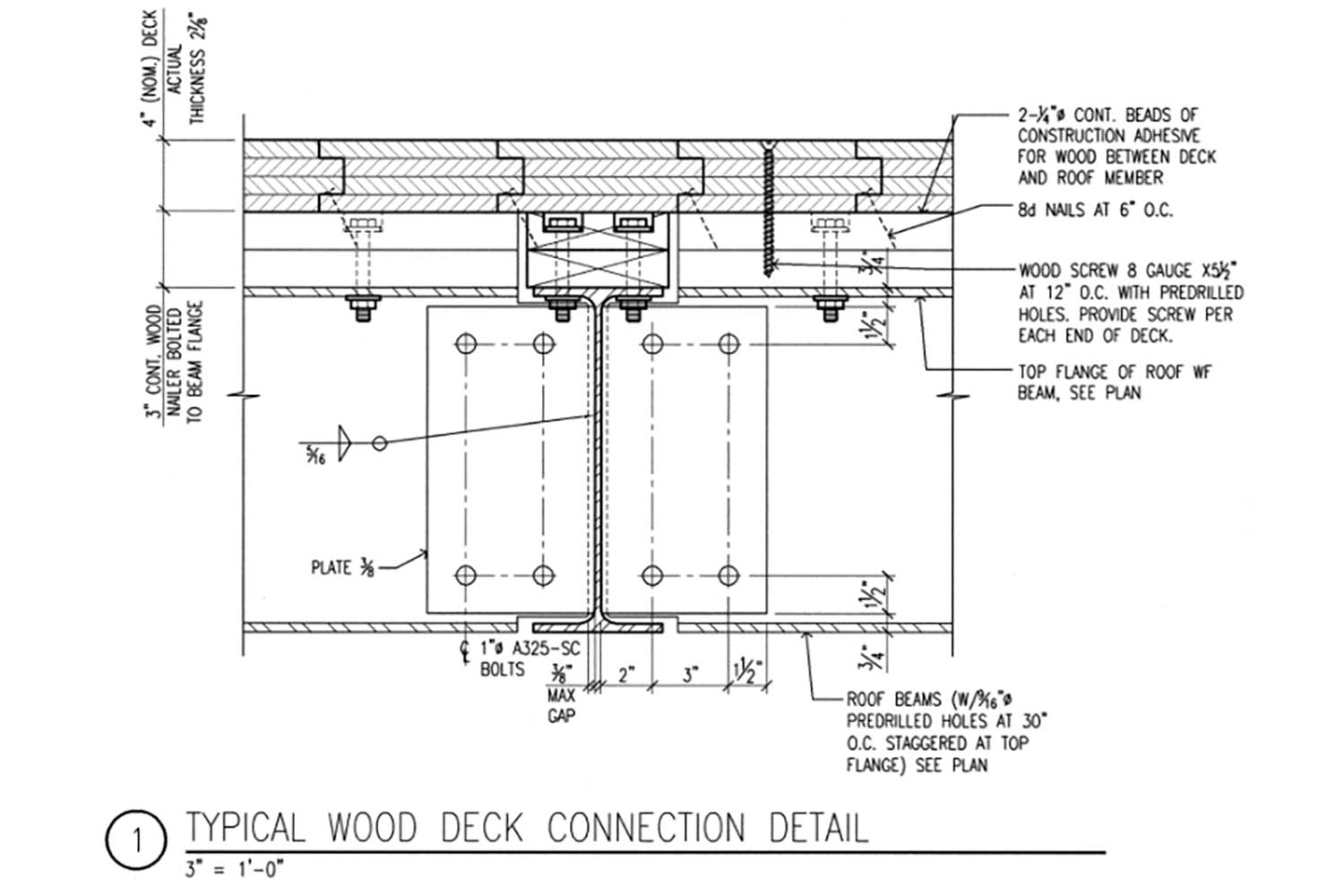
برای شکلدادن به مفهوم سازهای پروژه، تیم طراحی بررسی کرد که Heifer چگونه در نقاط مختلف جهان اقدام به ساخت و ساز میکند. سادگی شکوهمند این سازهها—که تنها آنچه ضروری است را در بر میگیرند—الهامبخش هدفی شد: پرهیز از تزئینات متداول در این نوع بناها و در عوض، نمایاندن جزئیات کارکردی سازهی فولادی با بیانی زیباشناسانه. تیم پروژه میخواست سازه به گونهای باشد که گویی بهنرمی بر زمین نشسته است. این رویکرد منجر به طراحی سطوح نازک در لبهی طبقات و بام شد. هر ستون درختیشکل، بهصورت یک لولهی یکپارچه با ارتفاعی برابر چهار طبقه طراحی شد و در انتها به شاخههایی لولهای و باریک ختم میشود که همچون انگشتانی سبک در آسمان میدرخشند. تمامی سیستمها درون این «انگشتان» درختی ادغام شدهاند و بهصورت بصری در آغوش آنها قرار دارند. بام وارونه طراحی شده تا آب باران را به لولههای نمایانشده در مسیرهای حرکتی هدایت کند. تیرهای فولادیِ بلند در لبهی بام با توریهای فولادی گالوانیزه پوشیده شدهاند تا سایهاندازی را گسترش دهند و در عین حال لبهی سقف را با جلوهای شبیه تاج، سبک و درخشان کنند.
ورودی (Lobby)
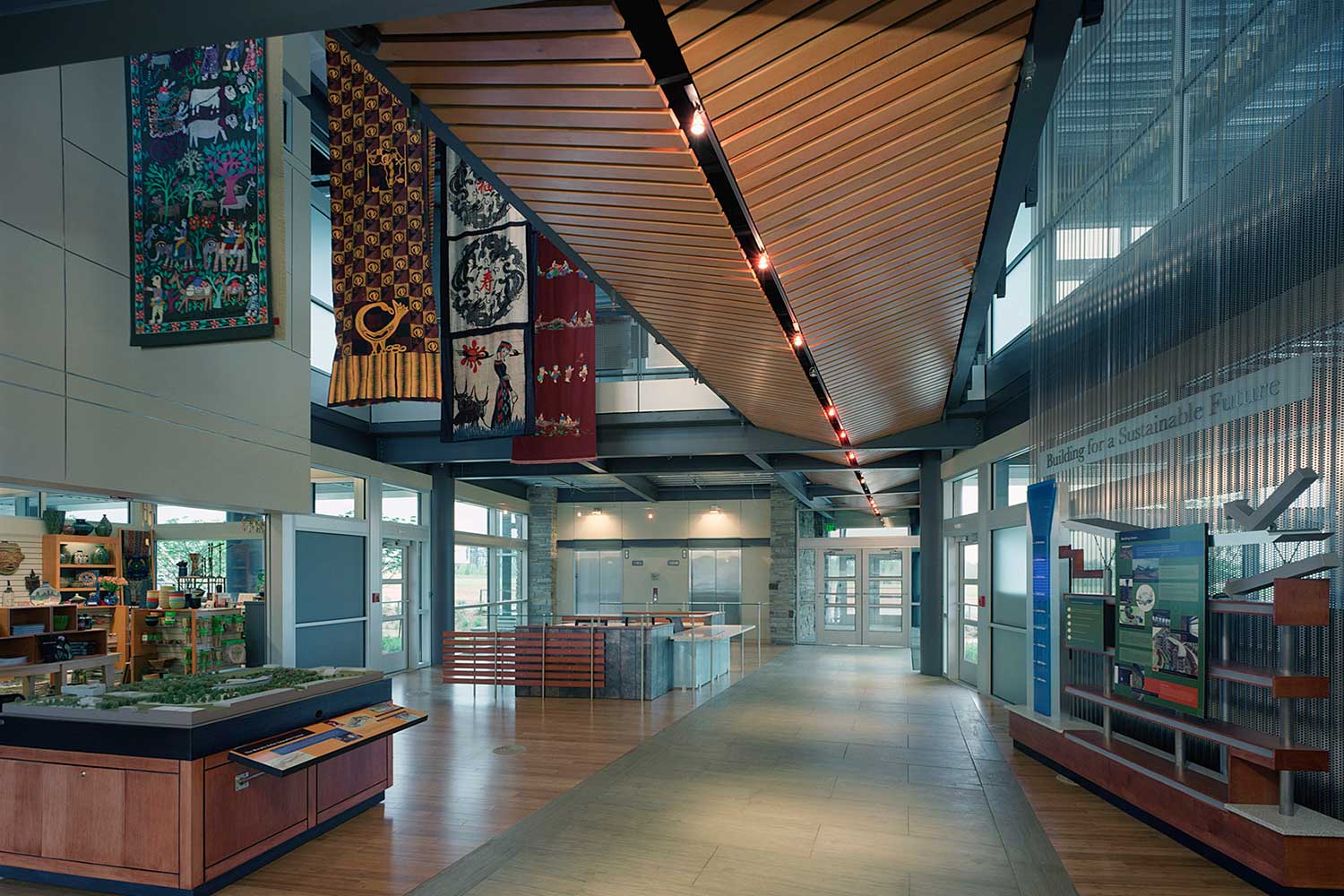
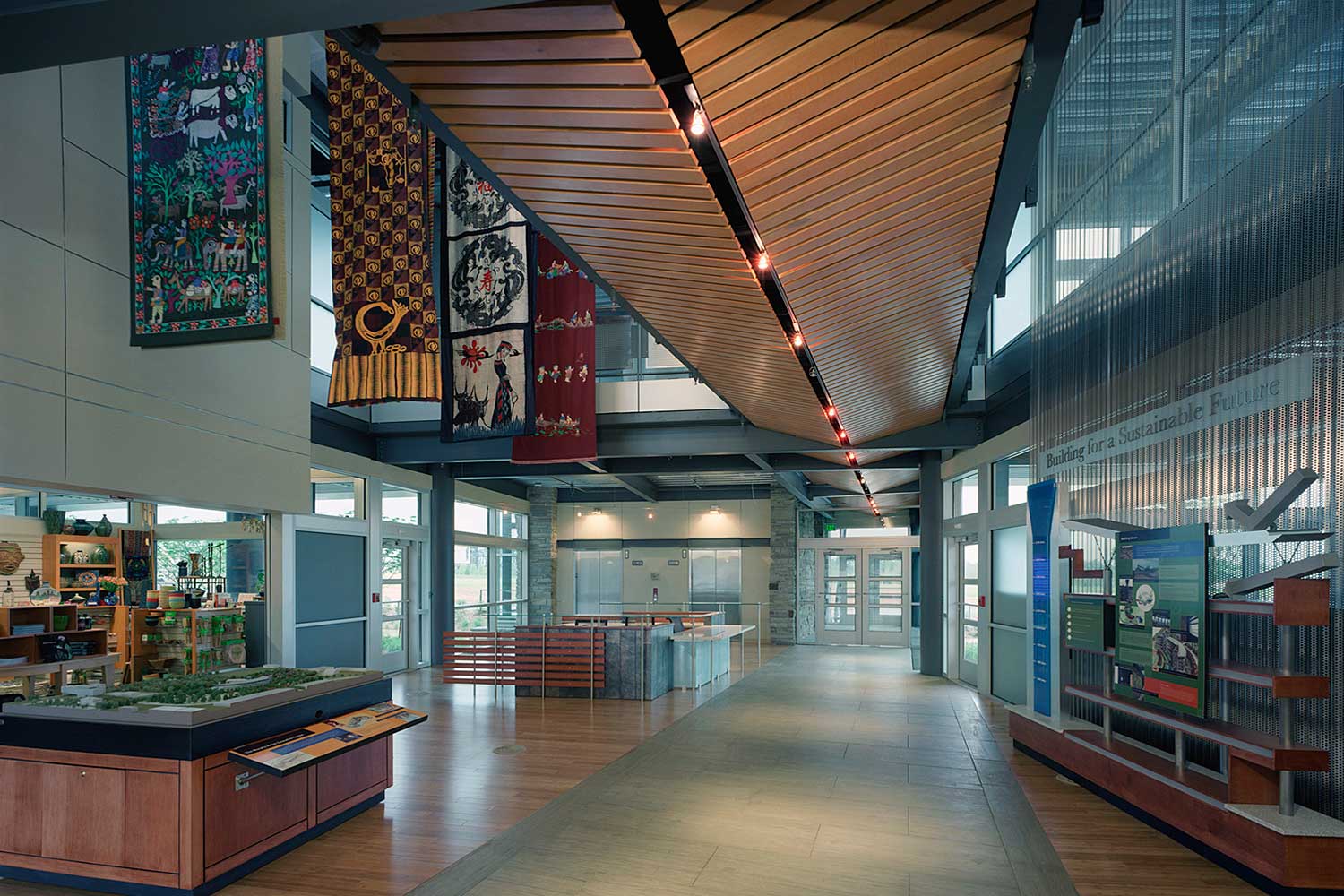
در فضای لابی، مدلی مجسمهگونه از مقطع ساختمان به نمایش گذاشته شده است که همراه با نمایشگرهای تعاملی، ویژگیهای سبز و پایداری ساختمان دفتر مرکزی را—نظیر سیستم جمعآوری آب باران و شلفهای نوری—برای بازدیدکنندگان توضیح میدهد و پیوند این فناوریها با مأموریت Heifer را روشن میسازد.
ساخت (Construction)
تیم طراحی باور داشت که جلب همراهی کامل تیم اجرایی از اهمیت حیاتی برخوردار است تا اطمینان حاصل شود که طراحی بهدرستی و شفافیت به واقعیت بدل میشود. از این رو، جلسات متعددی با تیم ساخت برگزار شد که نه تنها فرایند مستندسازی معیارهای LEED را منتقل کند، بلکه تصویر کلیتری از چشمانداز پروژه را نیز به اشتراک گذارد. پیمانکاران مصالح جایگزین فراوانی را بررسی و پیشنهاد دادند تا با الزامات کیفیت محیط داخلی و در دسترس بودن منابع محلی مطابقت داشته باشند. بسیاری از فروشندگان و تولیدکنندگان، برای نخستین بار محصولات پایدار خود را در این بازار به نمایش گذاشتند و تبلیغ کردند. در هر جلسهی هفتگی ساخت، معیارهای LEED و مدارک مربوطه توسط تیم بررسی میشد.
بهرهبرداری و نگهداری (Operations / Maintenance)
در انتخاب مصالح و سیستمها، توجه جدی به بهرهبرداری و نگهداری بلندمدت صورت گرفت. ساختمان اداری برای عمری ۱۰۰ ساله طراحی شد، با تعویضهای دورهای مورد انتظار. مصالح داخلی و خارجی با توجه به دوام بالا و نیاز اندک به نگهداری برگزیده شدند. سیستمهای مکانیکی و روشنایی، گرچه بهسبب الزامات کنترل و گزارشگیری LEED پیچیده بودند، با رابطهای کاربرپسند ارائه شدند تا استفادهی روزمره آسان باشد.
راهاندازی و کنترل کیفیت (Commissioning)
یک عامل تخصصی کمیسیونینگ (commissioning agent) در تمامی مراحل طراحی پروژه حضور فعال داشت. این ناظر متخصص، بازبینی همسطح و مشاوره در هر فاز طراحی ارائه کرد، برنامهی کمیسیونینگ را تنظیم نمود، در جلسات گزارشگیری ساخت شرکت کرد و تمامی وظایف لازم برای تست، نصب، و تأیید عملکرد سیستمها و تجهیزات را انجام داد. همین عامل، پس از تکمیل پروژه، برای نظارت بر عملکرد ساختمان در نخستین سال بهرهبرداری نیز به خدمت گرفته شد.
ارزیابی نهایی پروژه بر اساس سیستمهای رتبهبندی:
سیستم ارزیابی: شورای ساختمان سبز ایالات متحده (USGBC) –LEED-NC، نسخهی ۲ / ۲.۱
تاریخ ارزیابی: ۲۰۰۷
امتیاز نهایی: پلاتینیوم (Platinum) با کسب ۵۲ امتیاز
این موفقیت گواه آن است که پروژه نه تنها به یک نماد معمارانه و عملکردی بدل شد، بلکه به بالاترین معیارهای پایداری دست یافت—معیاری که بهحق زیبایی، کارایی، و تعهد را در معماری به هم میآمیزد.
Heifer International Headquarters: An Architecture of Empathy, Sustainability, and Education
Abstract
The headquarters of *Heifer International* in Little Rock, Arkansas, is not merely a functional office building; it stands as a tangible manifestation of the organization’s humanitarian, ecological, and educational mission. Through integrated design, use of locally sourced materials, and climate-responsive strategies, the building not only achieved LEED-NC Platinum certification but also established a new paradigm for responsible, community-oriented urban architecture.
Introduction: Architecture in Service of Values
Heifer International is a nonprofit organization with a global mission to end hunger and poverty through the empowerment of local communities. The organization’s headquarters had to go beyond administrative functionality to reflect its cultural and social values. As such, the project was conceived from the outset as a participatory, ecologically sensitive, and educational endeavor.
Site and Design Vision
Located adjacent to the Clinton Presidential Library and at the terminus of a major city avenue, the site grants the building a prominent and symbolic urban presence. Built on a former railroad brownfield, the site was remediated with support from the U.S. Environmental Protection Agency (EPA). With access to pedestrian pathways, light rail, bike routes, and even canoe access via the nearby river, the project embodies a deeply integrated approach to ecological urban connectivity.
Architectural Concept and Formal Structure
The building’s circular design draws inspiration from traditional village gatherings, where decisions are made collectively and equitably. The arced form, wrapped around a constructed wetland, is oriented along an east-west axis and spans a width of 62 feet—optimized for daylight penetration into the building’s core. Windows, vertical fins, overhangs, and balconies extending over the wetland gently diffuse sunlight and minimize solar heat gain.
Environmental Sustainability and Energy Performance
Designed for a 100-year lifespan, the building incorporates systems such as greywater recycling, rainwater harvesting from an inverted roof, waterless urinals, underfloor air distribution, and smart lighting controls—resulting in a 55% energy savings compared to similar office buildings. The building’s pEUI is 34 kBtu/ft²/year. A sloped roof further prepares the building for future photovoltaic installations.
Materials and Construction
Materials were selected for durability, low toxicity, local availability, and recycled content. The steel structure—containing 97% recycled material—was sourced from a plant just blocks away. The timber roof came from regional sources, and the aluminum curtain wall was fabricated across the street. Interior partitions made of compressed sawdust and reception counters crafted from recycled glass illustrate a commitment to ecological materiality.
Functional Planning and Spatial Flexibility
The building’s interior layout was developed with long-term adaptability in mind. Of its 62-foot width, 50 feet are dedicated to flexible, demountable systems. Conference rooms are located at either end of the building, while open café-like areas and transparent wooden boxes for informal interaction—reminiscent of Heifer’s zero-grazing pens—foster a dynamic, participatory work environment.
Education and Public Engagement
The project is fully open to the public and functions as a learning environment in itself. The lobby features an interactive sectional model, while the atrium serves as a vertical gallery displaying information about both Heifer’s mission and the building’s sustainable systems—making the architecture an active participant in the organization’s educational mission.
Evaluation and Conclusion
In 2007, the project was awarded LEED-NC Platinum certification with 52 points. The success of the Heifer International Headquarters lies not only in its environmental and functional achievements but also in its realization of a participatory, meaningful, and didactic architecture—where form and function, technology and ecology, beauty and responsibility, are inseparably interwoven.
An organization dedicated to alleviating world hunger, Heifer International begins its interaction with communities by delivering one animal to one family. Like a drop of water generates ripples flowing outward from the impact point, the animal creates concentric rings of influence through a village, allowing knowledge and opportunity to be passed to others as the animal’s offspring are gifted. Part of a four-phase master plan, the Headquarters building was conceived as a series of concentric rings expanding from a central commons. The architecture was designed to expand environmental stewardship into the public realm while serving as a beacon of hope. Located next to the Clinton Presidential Library, the Heifer International Headquarters is in walking distance of busses, a new light-rail system, and a pedestrian entertainment district. A restored wetland that wraps around three sides of the building collects stormwater for reuse as irrigation water. Rainwater collected from the roof is stored in a five-story water tower wrapped with a fire stair. Graywater collected from sinks and drinking fountains, condensate from outside air units, and rainwater from the water tower are reused in the toilets and cooling tower. Moisture removed from the building as condensate is reused to cool the building. Waterless urinals and low-flow toilets and lavatories further reduce potable water use.
The narrow, semicircular floor plan provides daylight and views for all employees. The majority of open offices in the building offer river views and northern light, and all major gathering spaces access the exterior: five balconies on each floor, designed as outdoor conference rooms, hang over the wetland and act as sunscreens. The building was designed to use up to 55% less energy than a conventional office building and to last for at least 100 years. Materials were selected for their durability, maintainability, low toxicity, recycled content, and regional availability. Among the potential project sites, the one selected posed the greatest environmental challenge as well as the greatest opportunity to communicate Heifer’s mission to the public. The site is located directly adjacent to the Clinton Presidential Library, at the terminus of a major avenue. This prominent location allows access to busses, a new light-rail system, and a pedestrian entertainment district. Employees bike, walk, carpool, and even canoe to work. The site also takes advantage of the neighboring building’s 30-acre park setting by blurring the property edges, allowing both projects to sit in a combined 60-acre greenbelt.
As an extension of a riverfront park, the Heifer grounds work in harmony with the natural ecology, while paths connect the river environment to the building. Splayed parking areas paved with a permeable surface radiate out from the building with bioswales between the rows, allowing native trees and vegetation to dominate the parking area. The building’s arced shape, wrapped on three sides by the constructed wetland, shields the main pedestrian commons from the cars. The project sits on a former brownfield site—a railroad switching yard previously bisected the site. Originally, 60% of the 22-acre site was paved. The site is now a thriving ecosystem, however; ducks and other wildlife appeared in the wetland within months of the project’s completion. The site provided excellent opportunities to take advantage of climatic conditions. From a solar standpoint, a building that stretches from east to west was easily attained; however, further study of the building’s position within the concentric ringed master plan offered the opportunity to arc and articulate a layered footprint, allowing more light into the building later in the day. Light modeling confirmed the best arrangement of vertical fins to redirect light, even in late afternoon. The southern facade of the arc is longer, tracking the sun. The northern facade cups the commons, offering a shaded wetland area.
Each elevation is distinct to its orientation. Significant overhangs reduce solar heat gain. Balconies large enough for meetings act as sun control on the east and west ends of the building. A first floor area, completely outdoors, mimics the conference rooms above, offering meetings in the wetland. To capture prevailing southwestern breezes, each floor’s cafe-like open break areas have large sliding doors. Fire stairs are outside the building envelope, floating over the wetland in glass. Open grates with insect screens allow natural convection to pull cooled air off the water to exhaust at the stair top as it heats. The majority of open offices in the building are positioned to take advantage of river views and northern light. A 62-foot building width and east-west orientation enable natural light to penetrate to each floor’s center, giving all 474 employees access to light and views. Conference rooms anchor the building’s ends, offering views of downtown Little Rock and Heifer’s global village exhibits. All major gathering spaces access the exterior: five balconies on each floor, designed as outdoor conference rooms, hang over the wetland and act as sunscreens. Lightshelves, vertical fins, and deep overhangs minimize glare while increasing diffuse light. To promote indoor air quality, the project team selected materials with low levels of volatile organic compounds (VOCs). Air distribution through a raised access floor offers individual control over thermal conditions. As an alternative to break rooms, each floor’s open café areas offer light, views, community, and exterior access.
Stormwater is filtered by indigenous plants in bioswales that feed a constructed wetland before being reused for irrigation. Brick preexisting on the site and new gravel paving systems cover 51% of the parking area. A 30,000 ft2 inverted roof directs rainwater to a five-story, 42,000-gallon water tower wrapped with a glass-enclosed fire stair. Waterless urinals, a city first after much negotiation, and low-flow toilets and lavatories minimize potable water use. Graywater collected from sinks and drinking fountains, condensate from outside air units, and rainwater from the water tower are reused in the toilets and cooling tower. Moisture removed from the building as condensate is reused to cool the building. The fundamental goal of the design team was to create integrated building systems that maximized both energy savings and educational potential. Exposing the systems offered an excellent educational opportunity by connecting how the air and water moves with how we move and work.
The building achieved 55% energy savings over a comparable base case, due in large part to the use of daylight as the primary source of ambient light during work hours. The building’s east-west axis allows for minimal electric lighting. Dimming systems adjust lighting according to natural light levels, while occupancy sensors manage light for only spaces in use. Vertical fins and horizontal sunshades limit unwanted solar heat gain while redirecting daylight into the building’s interior. Glazing on the building has a U-value of 0.29, and the R-value of the envelope is 25. Raised floors offer air distribution that naturally rises to high return ducts, minimizing horsepower for fan units, while allowing for higher ceilings and windows. To maximize and plan for a future photovoltaic system, the roof is angled to receive the most sunlight for the Little Rock solar orientation.
Metrics
One of the goals for the project was to use locally sourced materials whenever feasible. A steel structure was chosen because the steel factory was three blocks from the site and the material included 97% recycled content; the heavy timber roof was also sourced locally. An aluminum curtainwall and skin, making up more than 90% of the exterior, was fabricated at a major glass company located directly across the street. The project team selected durable, low-toxicity materials for the project interior. These included toilet partitions made largely of sawdust, reception and toilet countertops made of recycled glass, and easily reconfigurable, locally manufactured storefront systems. Exposed-steel floor decks were left unpainted, which saved money while maintaining their reflectivity. The building was designed to be easily maintained and to last for at least 100 years. A raised floor offers individual control of air distribution, and the office systems can be easily reconfigured. Of the building’s 62-foot width, 50 feet consists of flexible, demountable systems, open to northern light. Conference rooms and mechanical rooms are located at each end of the building, allowing open and flexible arrangements on the entire floor in between. This approach allowed the break areas to become open café areas that have become popular for meetings. Huddle spaces for small interactions—designed as demountable wood and glass boxes that reference the design of Heifer’s zero-grazing livestock pens—are located along the circulation path.
Because Heifer is a nonprofit organization that relies on community connections and outreach for funding, the facility and site are open to the public. During the planning process, the project team identified opportunities within the design to educate the public about environmental issues. The light-filled atrium doubles as a vertical gallery where Heifer displays information about both its work and the building’s environmental attributes. This design process began with sharing knowledge and goals. It was important that the building speak of its environmental responsibility as well as Heifer’s story. The strongest shared statement came from the founder’s daughter, who remembered her father speaking of village visits where a community would make decisions sitting in a circle, all facing each other as equals. During the Headquarters design process, members of the project team, the community, and the client made collaborative decisions in that same arrangement: all ideas were considered equally worthy of consideration. The integrated design approach focused on actual, not perceived, measures of environmental responsibility, meaning that the anticipated environmental results drove the design and that beauty was found in those features. This design approach did offer challenges. The process required additional time and effort from a design standpoint. In construction, early site and steel packages hindered efforts to fully integrate the design. The project was very successful, however, in its introduction of new thinking into the construction industry, opening the door for future local projects to take advantage of the lessons learned here.
Through the integrated design process, the project team was able to participate in early discussions ranging from methods of finance to site selection. Heifer had grown rapidly over recent years and was renting two full floors of a downtown high-rise as well as space in two other buildings. An analysis of rent expenditure showed that an equal amount would be spent on an ownership payment, and Heifer chose to finance the project through a combination of conventional loans and a capital campaign. A grant from the U.S. Environmental Protection Agency financed brownfield cleanup. Heifer purchased eight individual land tracks and allowed the city to build a perimeter road to alleviate congestion from the adjacent project. This opened new access to the site and will provide for the use of adjacent City land for future Heifer projects.
Financing Mechanisms
-Grant: Public agency
-Loans: Private (bank, insurance)
Cost Data
Cost data in U.S. dollars as of date of completion.
-Total project cost (land excluded): $17,900,000
Because of the tight budget, the design team performed life-cycle cost analyses for major systems and tested every idea against Heifer’s ideology. For any cost that would not be part of a conventional office building, the team used a payback period of seven to ten years as a baseline to determine its viability. For example, vehicle recharging stations, while environmentally responsible, would get very little use and were not projected to meet the acceptable payback period. This analysis encouraged the project team to pursue inexpensive means of encouraging alternative transportation, such as providing preferred parking for hybrid vehicles and connections to public transportation.
Predesign
Initial sketches showed a building that was 40% smaller than the final result, on roughly half the amount of land. Because of tremendous increases in donations and staff and a desire to increase the potential for educational exhibits, however, Heifer revised its projected growth figures, and the project team determined that the project and site needed to be larger. At the same time, the team reassessed its environmental goals to allow the building to more accurately reflect the aspirations of Heifer. An open dialogue began with a goal-setting charrette that included all consultants and a large Heifer contingent. The participants determined that the project parameters had changed to the point that the initial design was no longer viable, opening a process that led to the final design. From this process, the team established a list of attainable environmental goals. The project team participated in monthly environmental committee meetings to better comprehend the organization’s core mission and identify specific educational opportunities within the design. The team’s efforts to create an energy-efficient design were geared toward freeing up funding from the infrastructure for use in promoting programs around the world.
Design
To formulate the structural concept for the building, the project team studied how Heifer would build around the world. The simple elegance of these structures—including just what is needed—led to a goal to minimize the ornamentation common in this building type and to express the functional detailing of the steel in a beautiful way. The project team wanted the structure to sit lightly on the land, which led to the creation of thin planes at floor edges and the roof. Each tree column was designed as one tube, four stories tall, capped with light, fingerlike tube branches. All systems were integrated and visually cupped within the fingers of the trees. The inverted roof was designed to direct rainwater to exposed pipes above circulation paths. Extended steel beams at the roof edge were capped with galvanized steel grates to extend the sun protection and lighten the edge in a crown-like fashion. The lobby hosts a sculptural building-section model with interactive displays that highlight the Headquarters’ green attributes, such as the rainwater collection system and the lightshelves, and explain how they are connected to Heifer’s work.
Construction
The design team felt that it was important to get buy-in from the construction team to ensure the best and clearest translation from the design to reality. The design team held numerous meetings with the construction team in an effort to communicate not only the process of documenting LEED criteria but also the larger picture. The contractors researched and submitted many alternate materials to ensure compliance with indoor environmental quality needs and local availability. Many vendors and suppliers showcased and promoted products that were being used for the first time in this market. The team reviewed LEED criteria and submittals during each weekly construction meeting.
Operations/Maintenance
Long-term operations and maintenance were critical considerations in the selection of materials and systems. The office building was designed for a 100-year life with normal replacement of items at anticipated intervals. Exterior and interior materials were selected for their durability and low maintenance needs. Mechanical systems and lighting systems, while complicated due to the level of control and reporting required for LEED, were supplied with user-friendly interfaces.
Commissioning
A commissioning agent was involved in every aspect of the design process. The agent provided peer review and input during each phase of the project, produced a commissioning plan, attended construction update meetings, and performed all the required commissioning duties during the installation, testing, and acceptance of the identified and required systems and equipment. The same agent was hired to monitor and report on the building’s performance during the first year of occupancy.
مدارک فنی
مشخصات
کارفرما: Heifer International
مکان پروژه: 1 World Avenue
Little Rock، آرکانزاس 72201، ایالات متحده
معمار ارائهدهنده: Polk Stanley Rowland Curzon Porter Architects, Ltd.
تاریخ اتمام پروژه: فوریه 2006
بافت/موقعیت سایت: شهری – محل بازسازیشده (Brownfield)
نوع پروژه: اداری – بین 10٬001 تا 100٬000 فوت مربع
مساحت ناخالص ساختمان: 94٬000 فوت مربع
نوع ساخت: نوساز
هزینه کل پروژه در زمان تکمیل (بدون احتساب زمین): 17٬900٬000 دلار آمریکا
Project Specifications
Project Owner: Heifer International
Location: 1 World Avenue
Little Rock Arkansas 72201, United States
Submitting Architect: Polk Stanley Rowland Curzon Porter Architects, Ltd.
Project Completion Date: February, 2006
Project Site Context/Setting: Urban, Brownfield Site
Project Type: Office – 10,001 to 100,000sf
Building or Project Gross Floor Area: 94,000 square feet
Other Building Description: New
Total project cost at time of completion, land excluded: $17,900,000.00
منابع:
U.S. Green Building Council, LEED-NC documentation
Official Heifer International Reports
Architectural Record, Project Case Studies
EPA Brownfield Redevelopment Guidelines
aiatopten.org
Green Source, Magazine of Sustainable Design
مطالب مرتبط