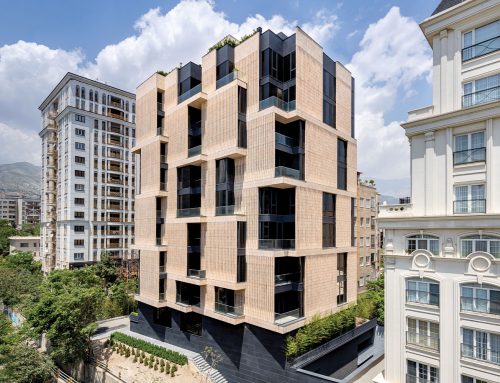
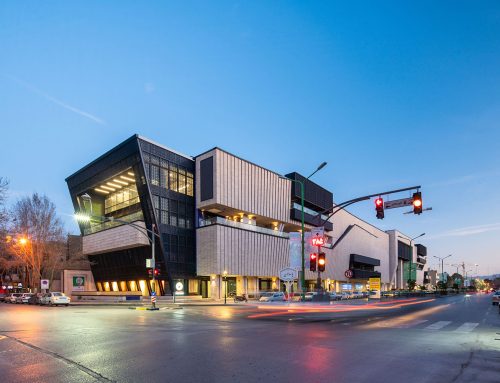
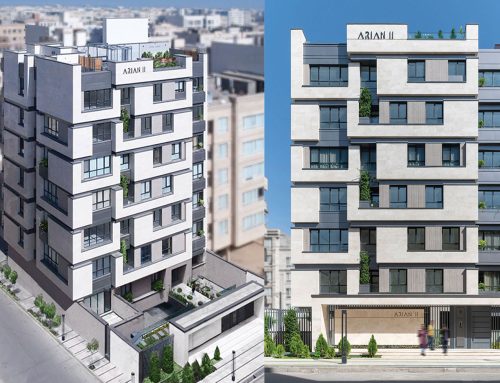
 پروژهی تجاری ارغوان اثر محمدرضا عالمرجبی، سجاد جعفریگلویک، سیما عظیمیپور، فینالیست هشتمین ساختمان سال ایران بخش عمومی، 1403
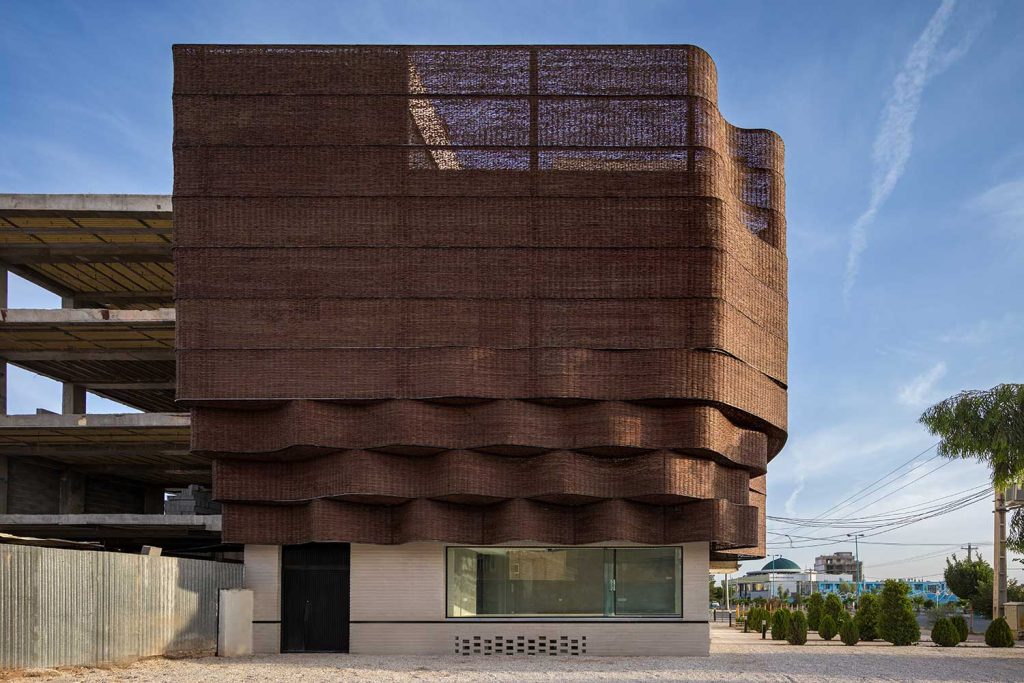
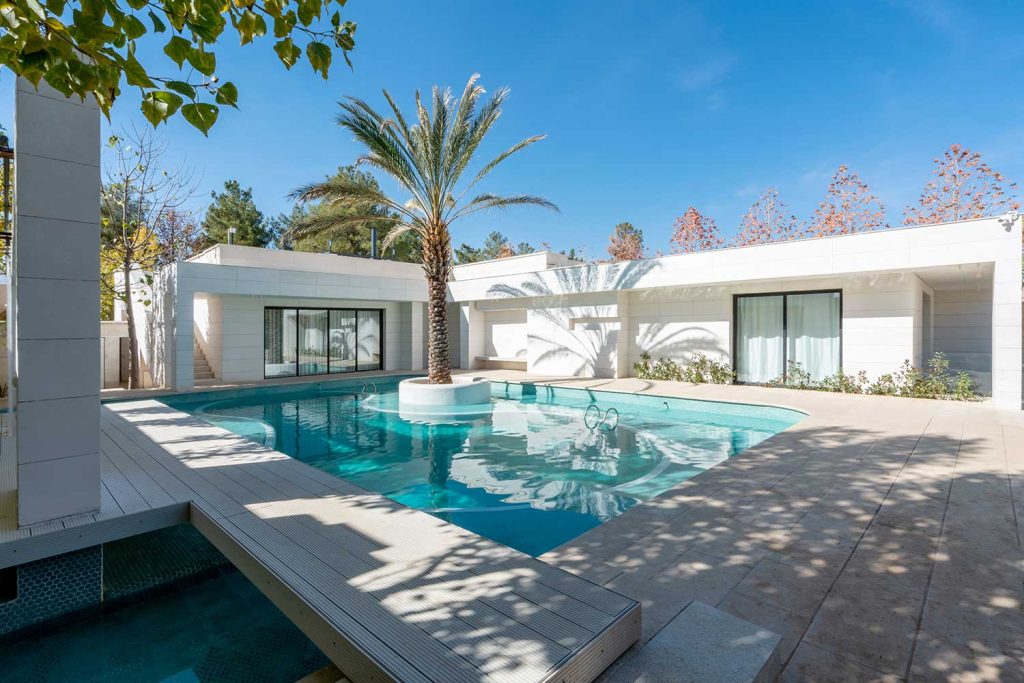 خانهی پیرامون خور اثر مجتبی هوشنگیان شیرازی، فینالیست و راه یافته به مرحلهی دفاع از آثار هشتمین ساختمان سال ایران بخش ویلایی و دوازدهمین طراحی داخلی ایران بخش ویلایی، 1403
آسمانخراش افقی، مرکز وانکه اثر دفتر معماری استیون هال
Vanke Center / Steven Holl Architects
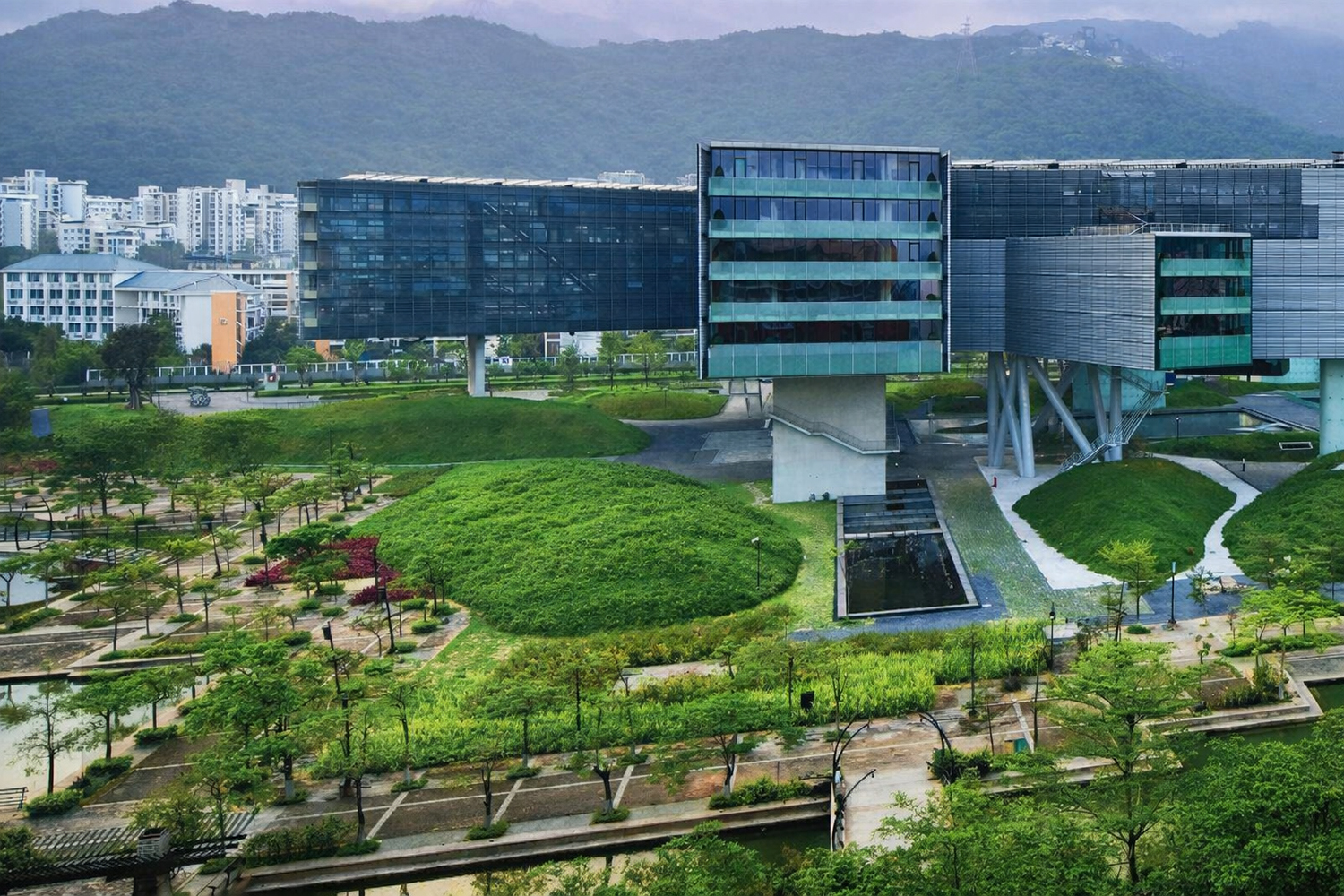
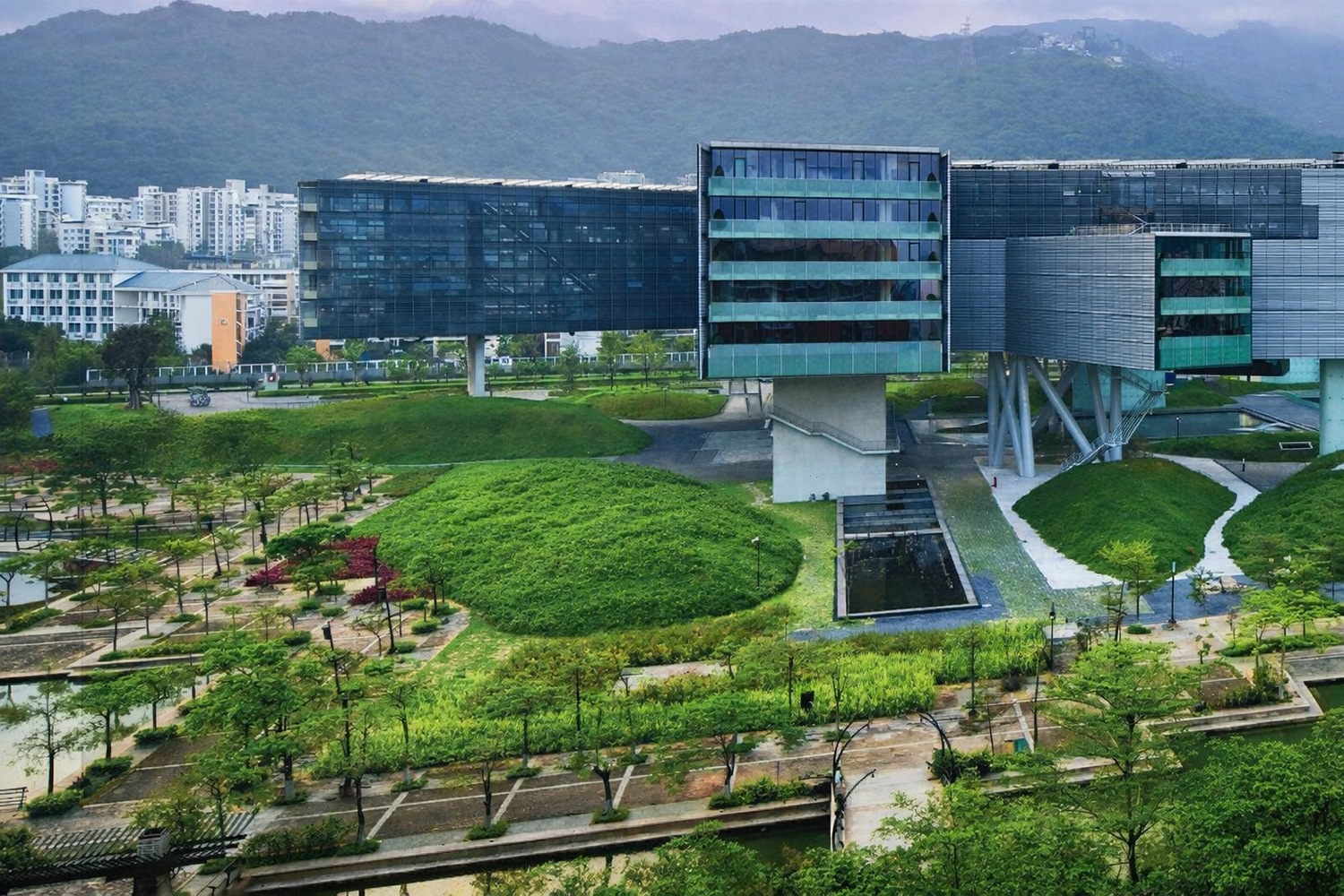
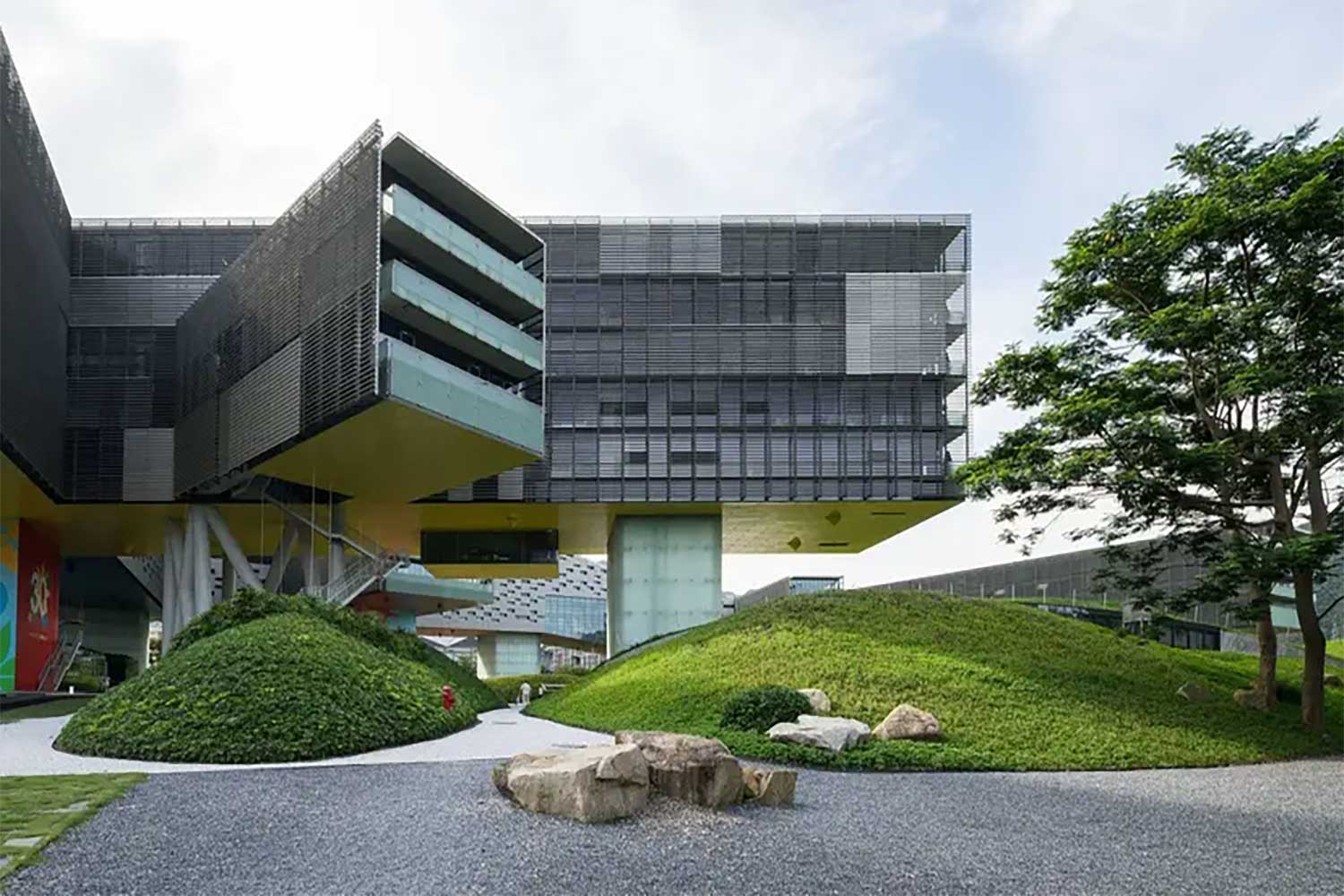
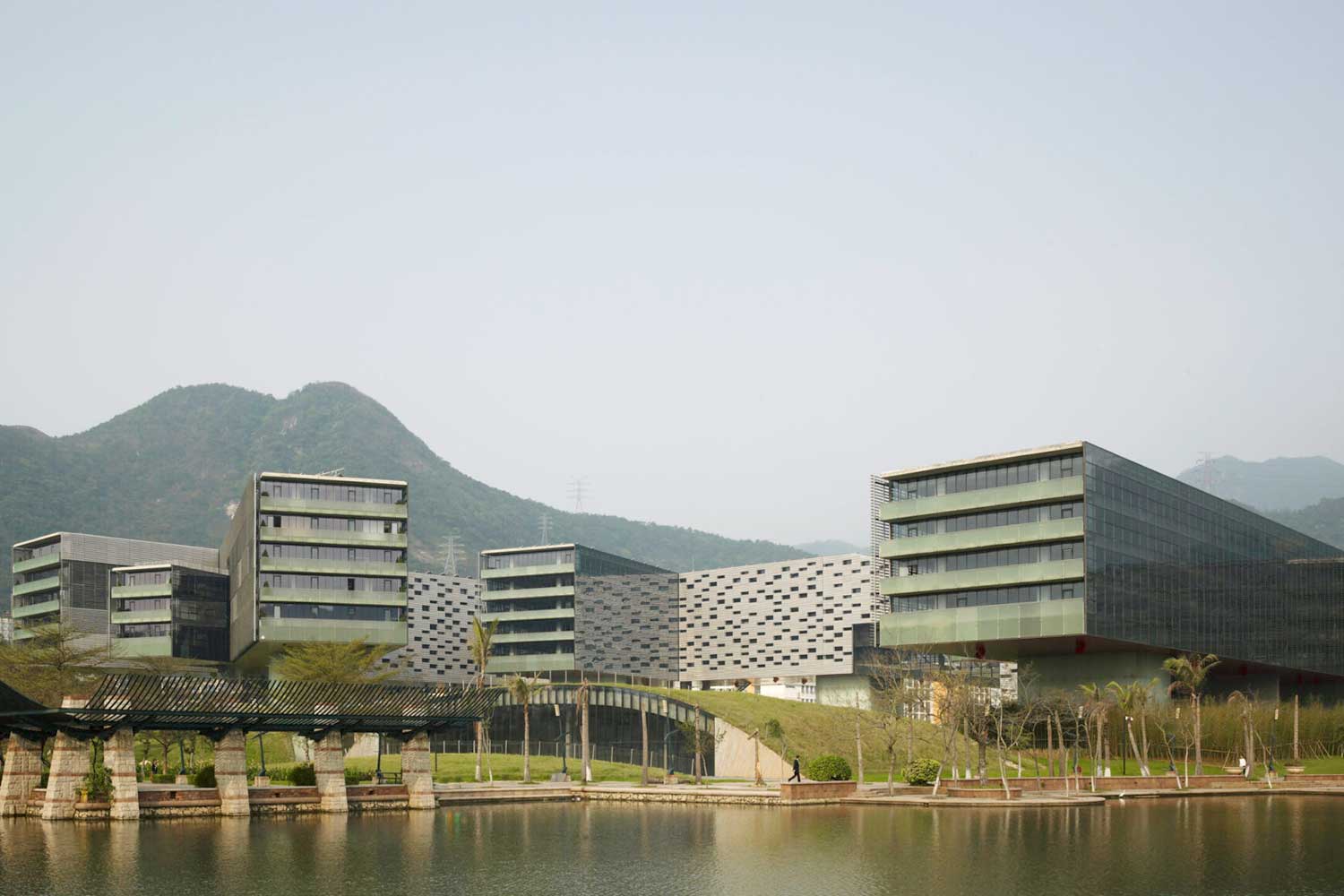
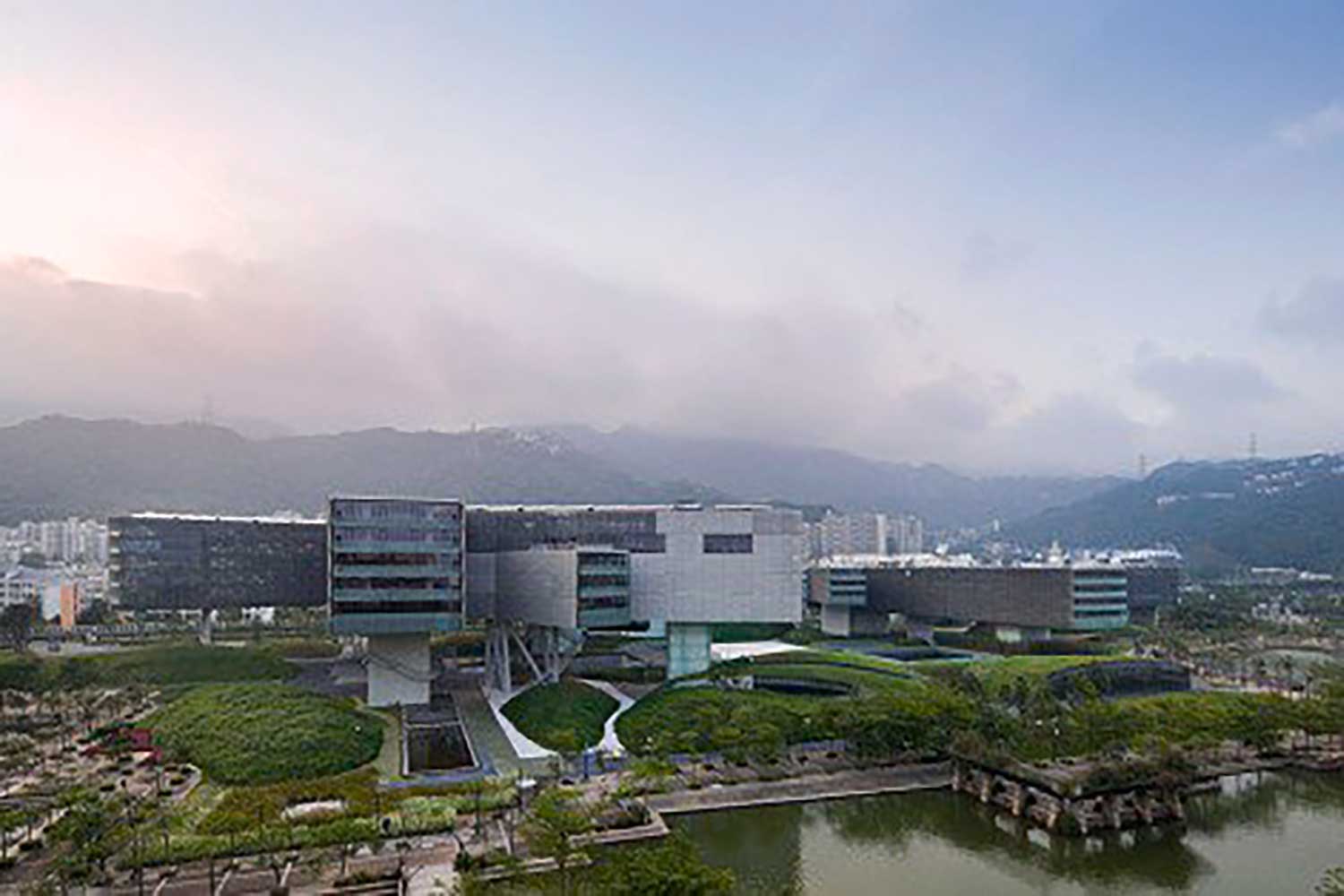
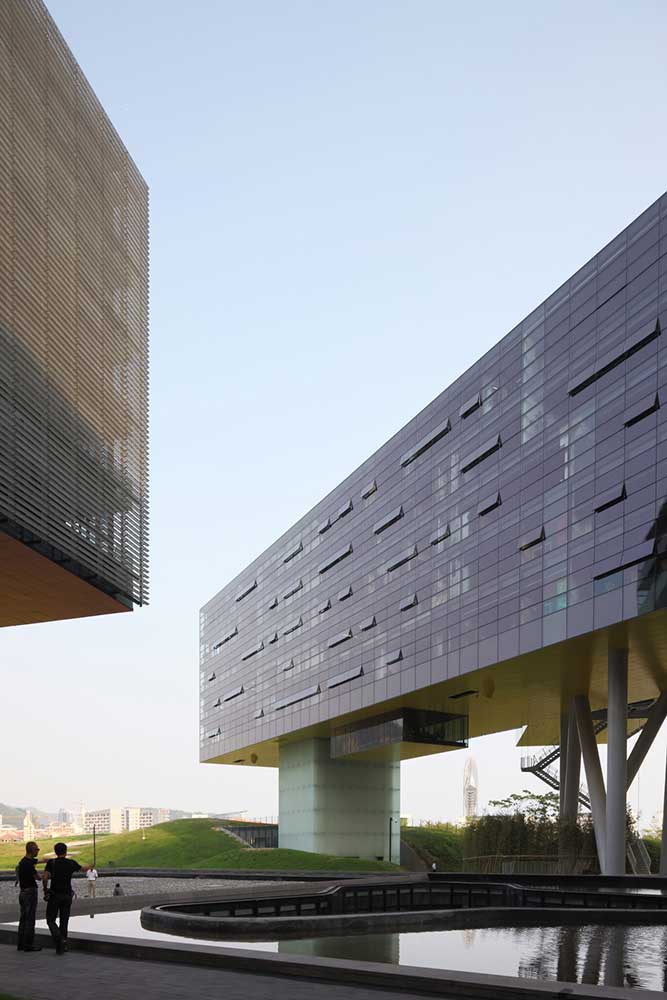
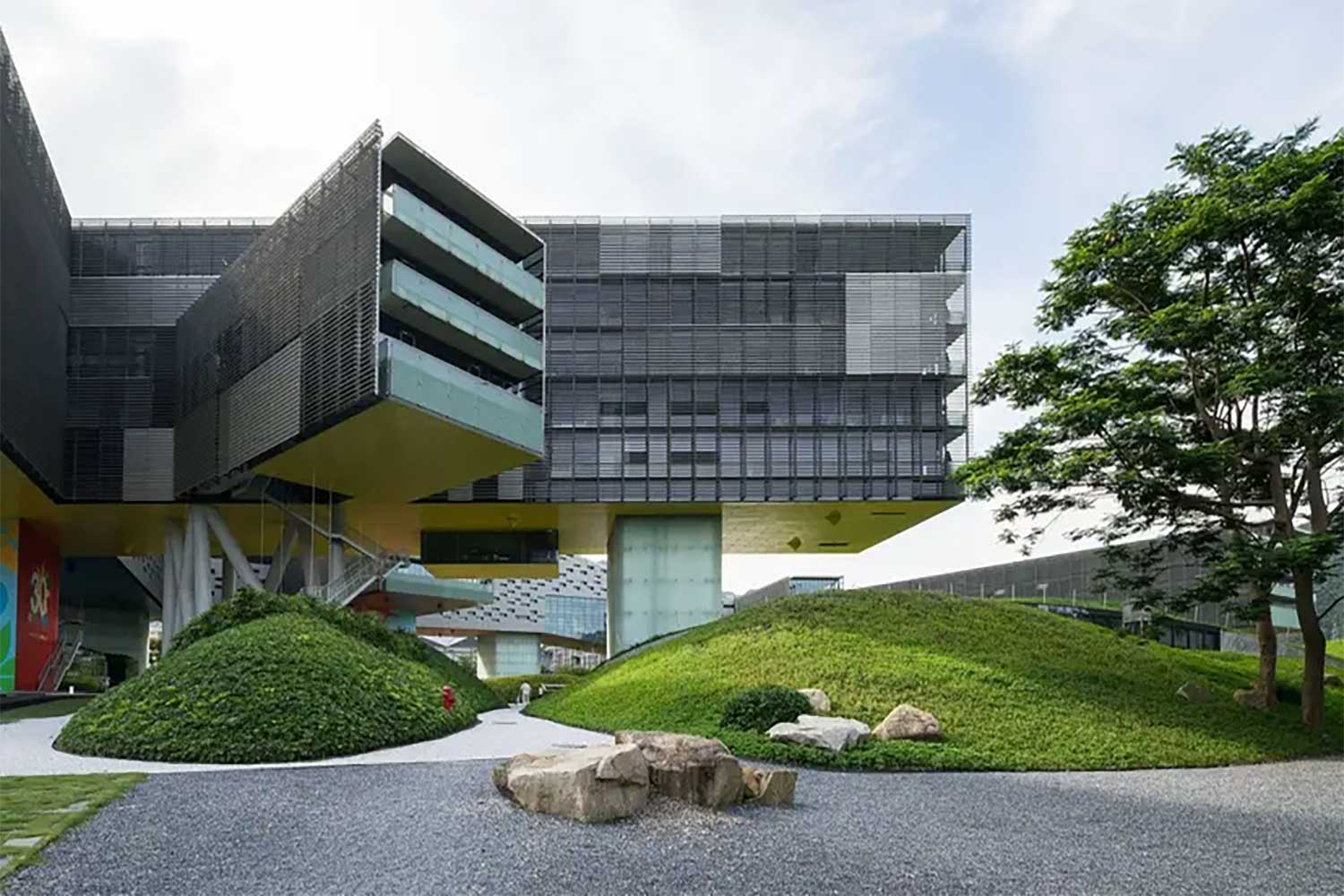
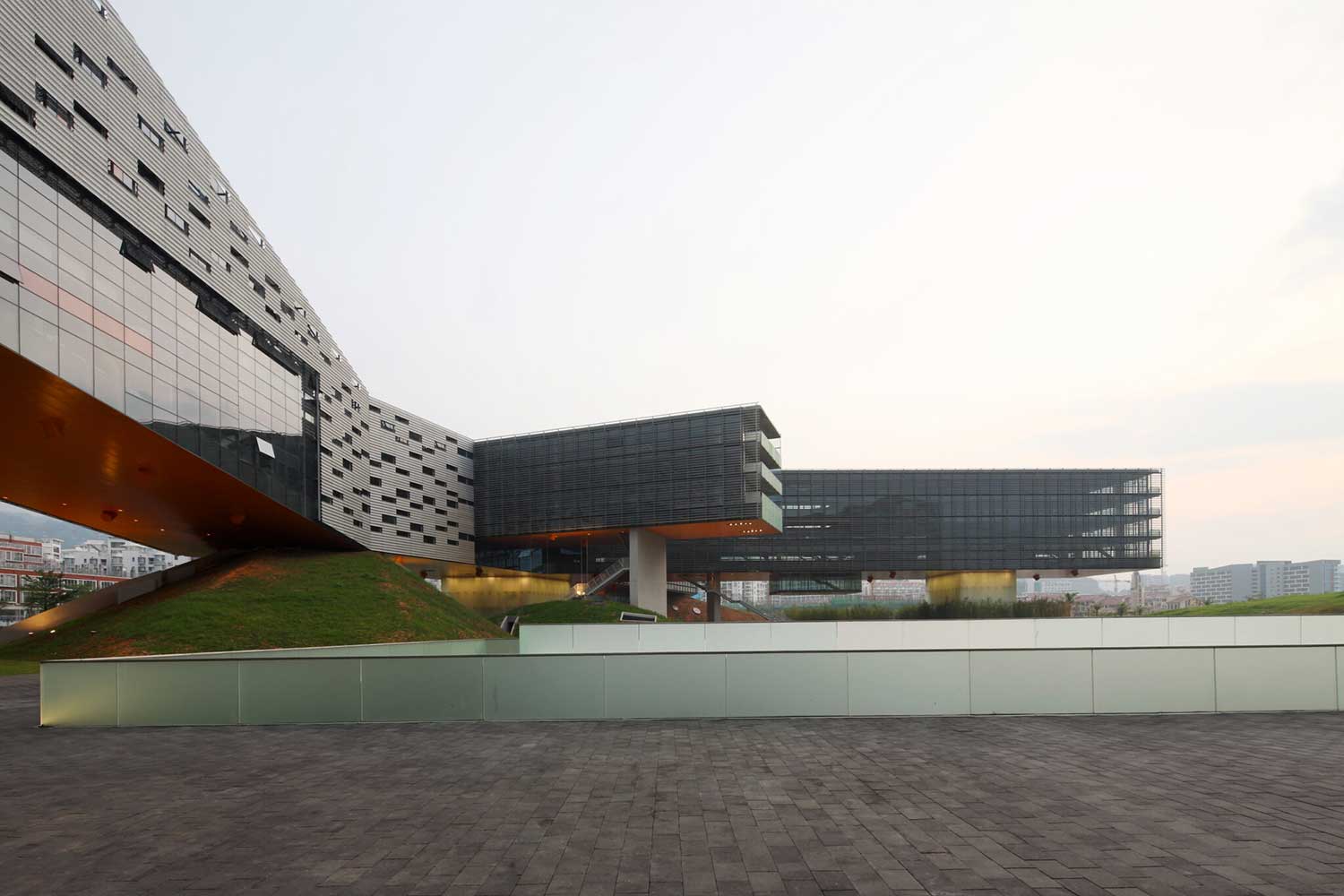
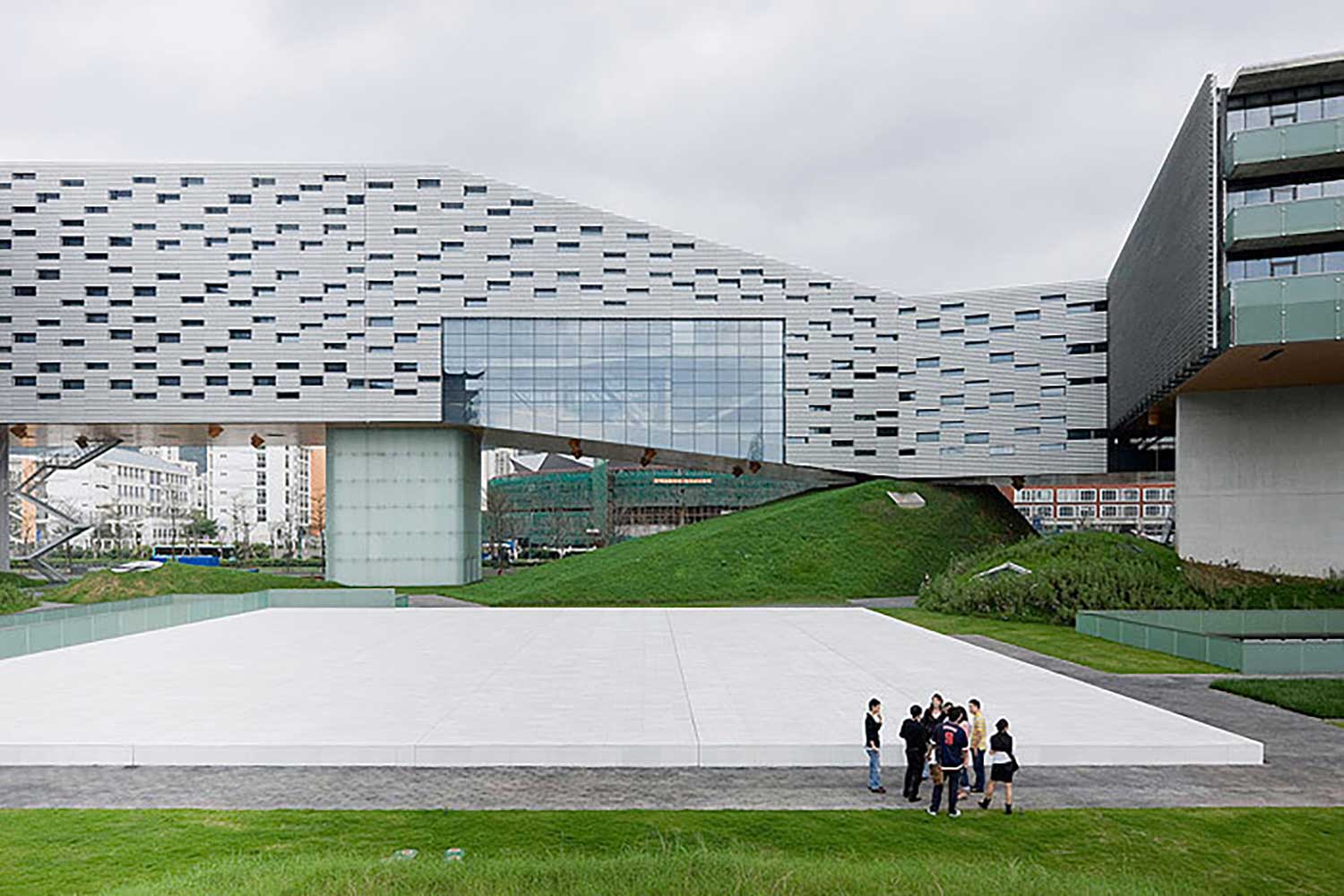
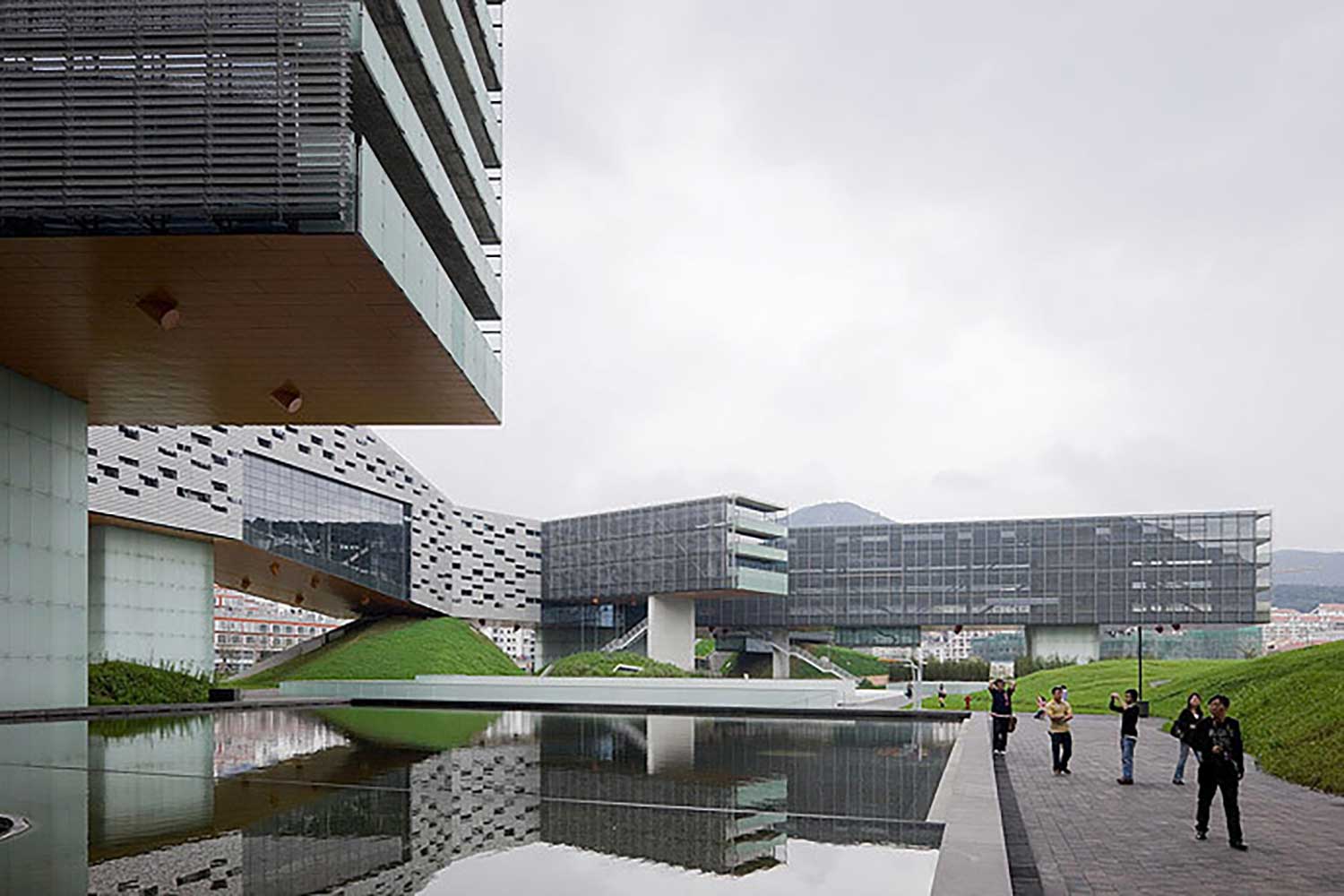
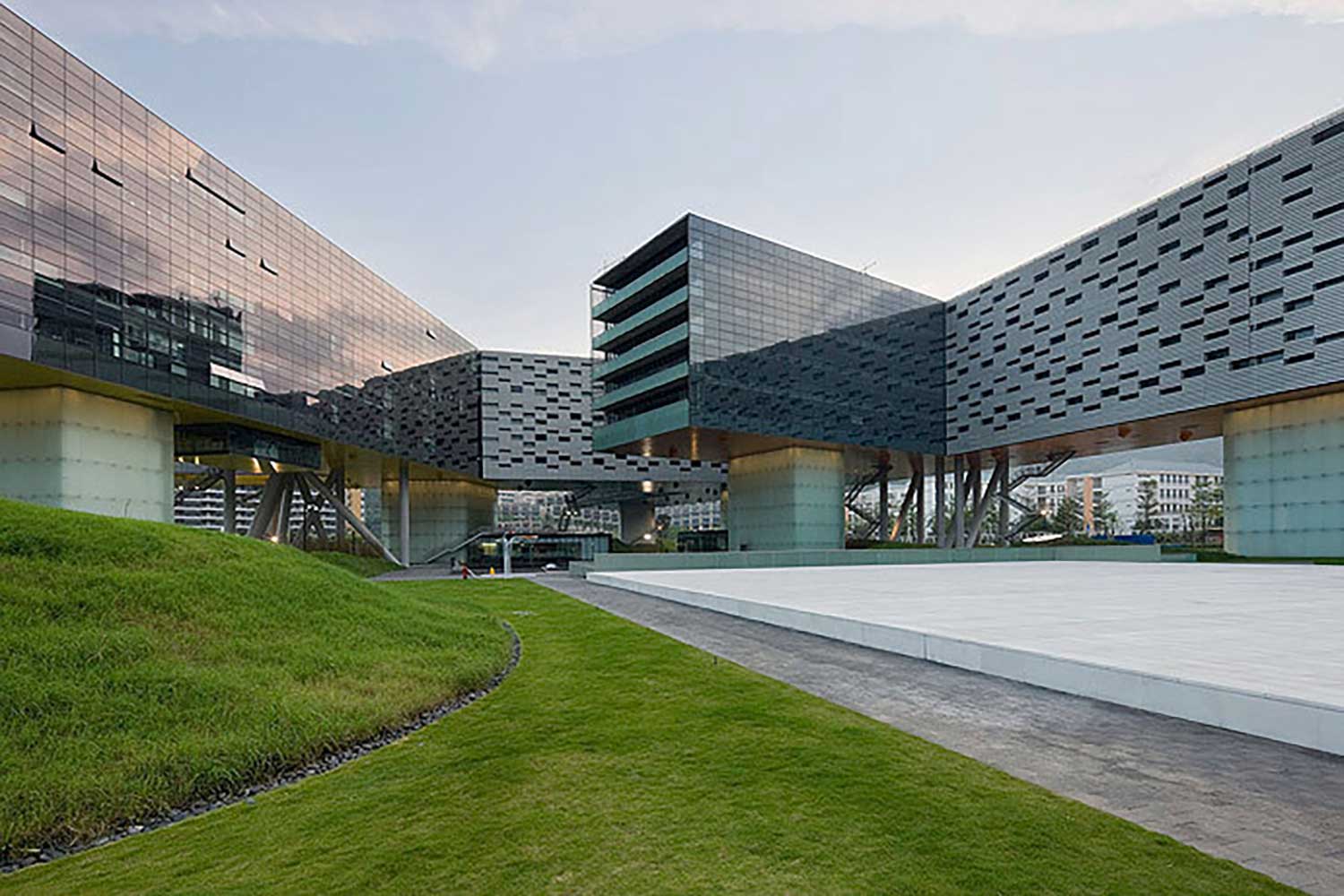
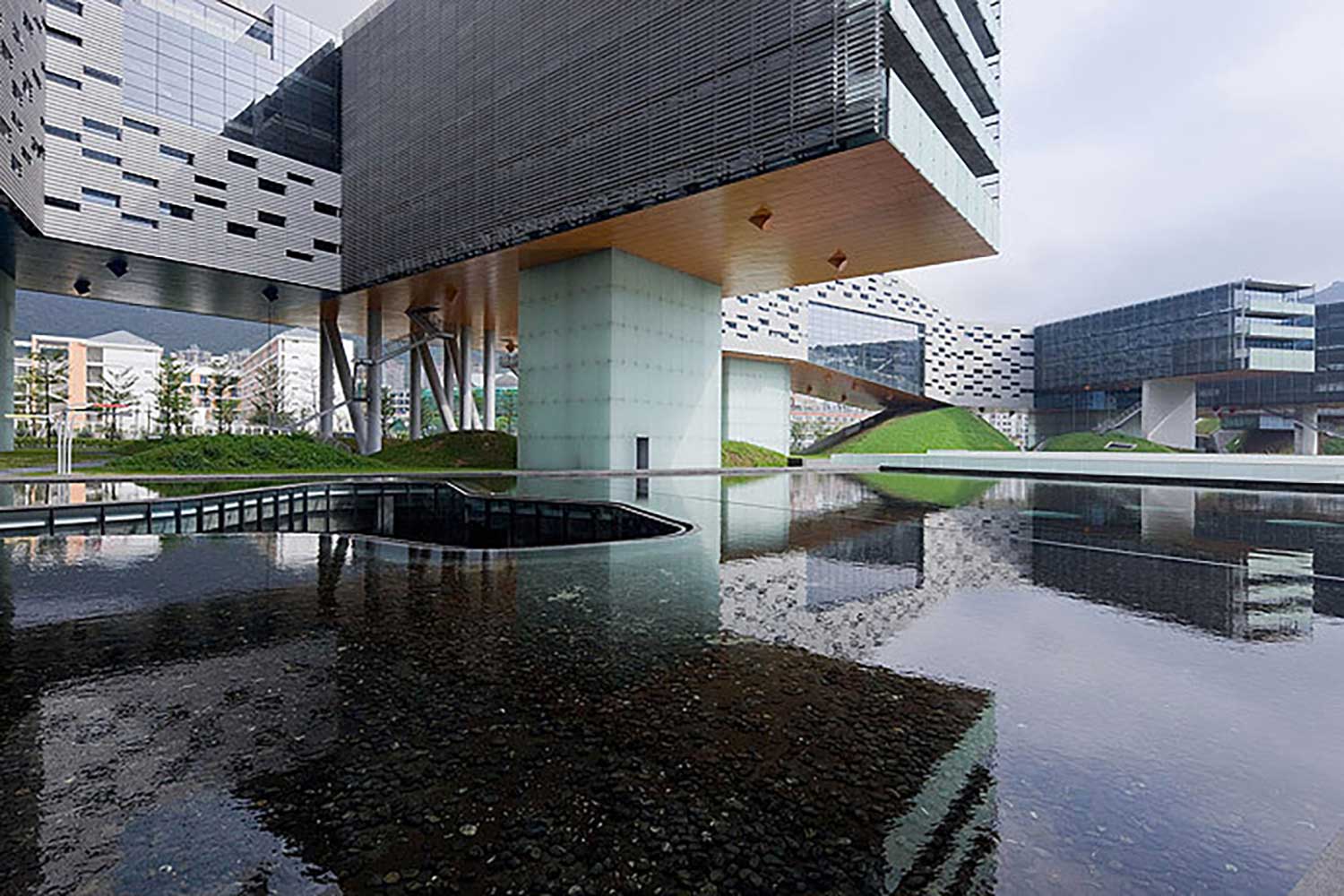
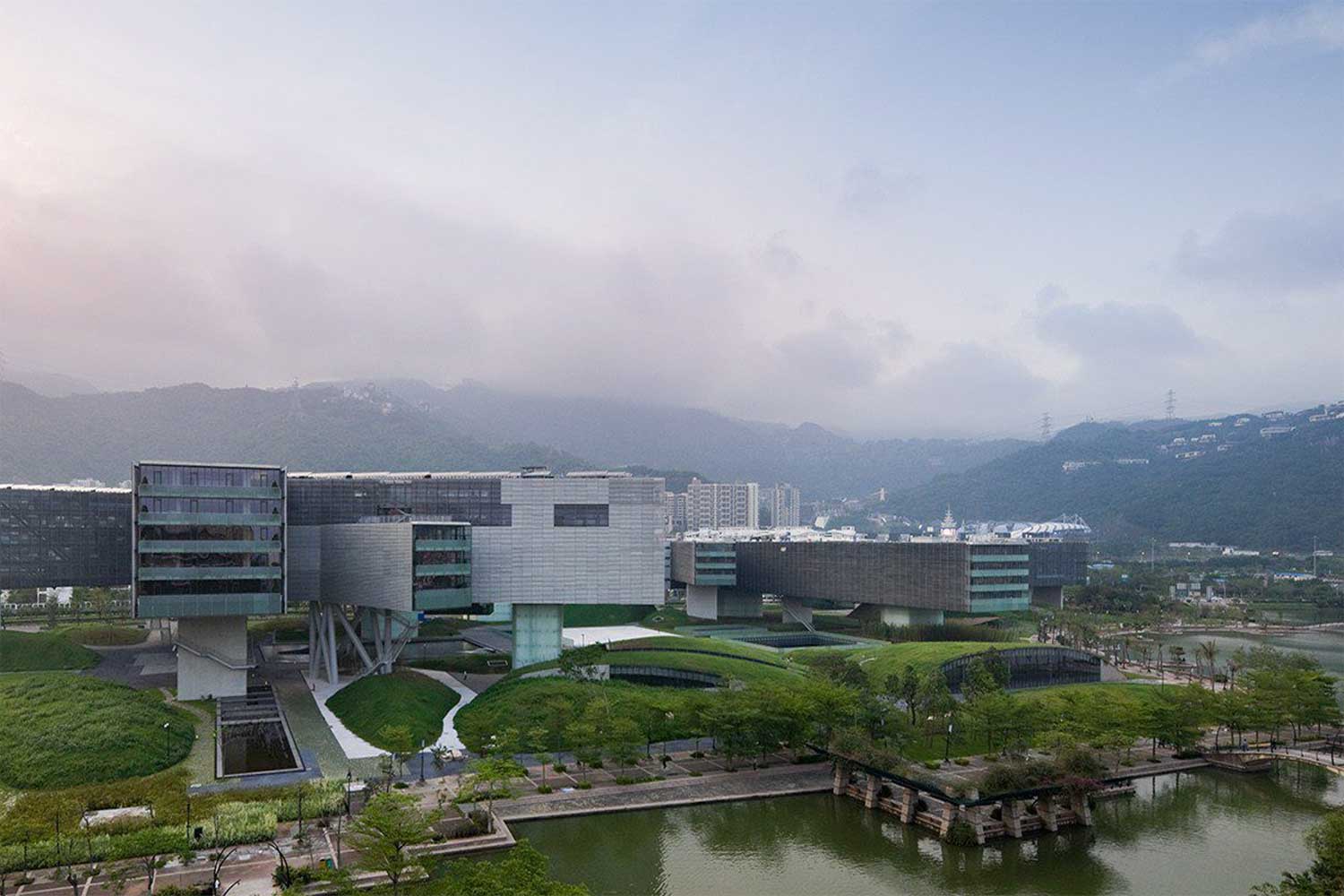
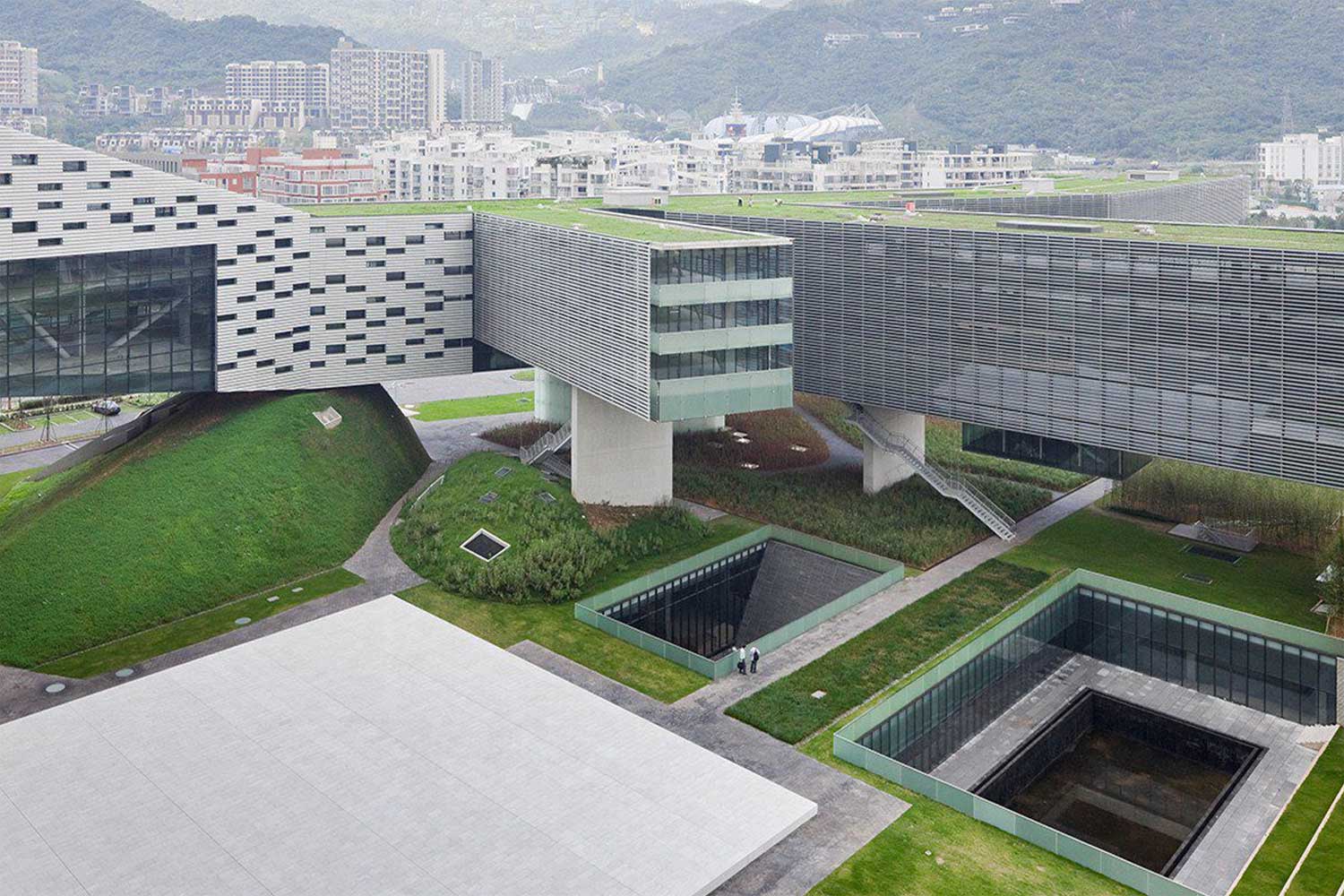
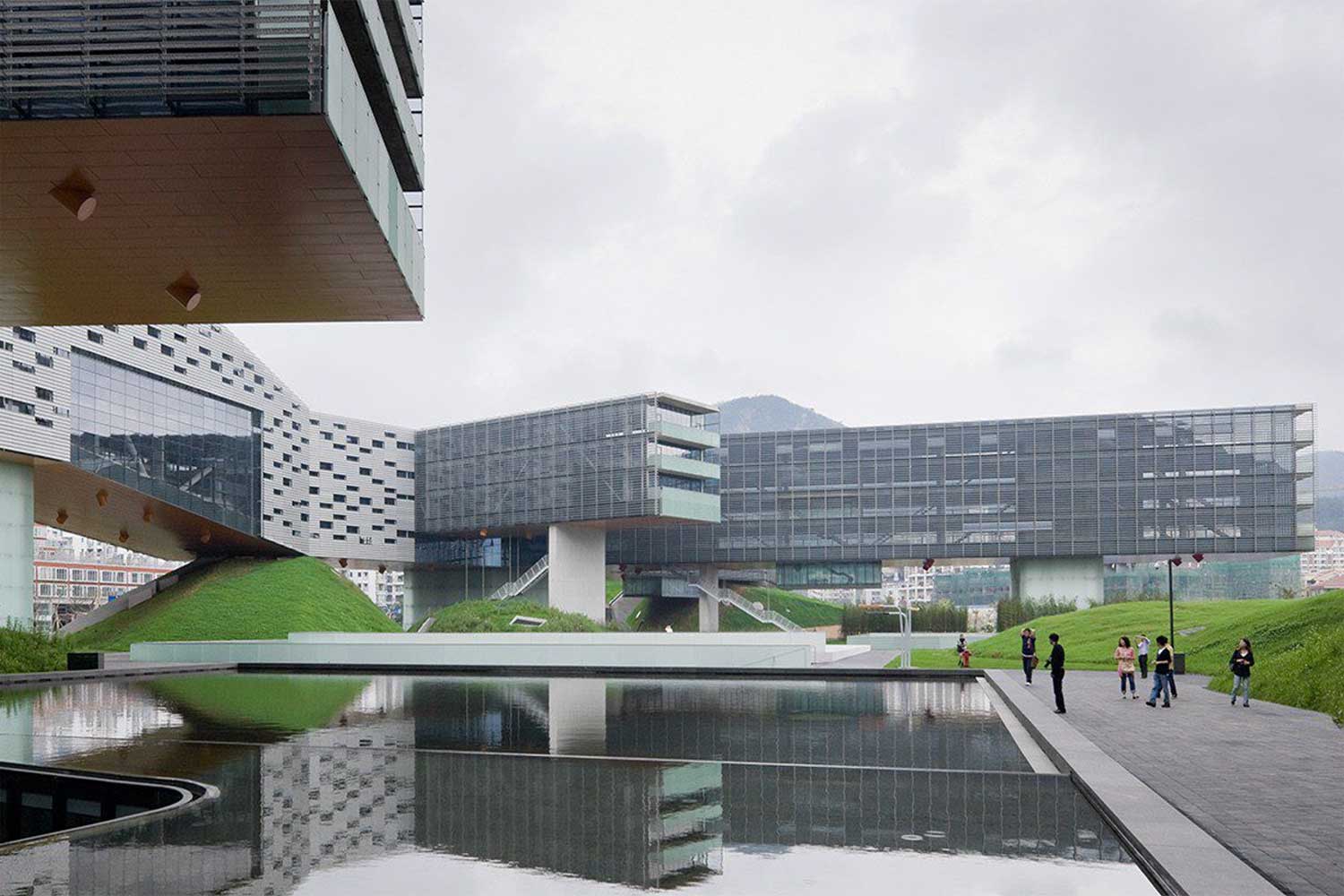
در این رقص شاعرانهی معماری، Vanke Center در شنژن، با نام مستعار «آسمانخراش افقی»، شاهکاری از ترکیب هنر و مهندسیست؛ جایی که ساختمان سر به فلک کشیده و بر هشتی از ستونهای پُرصلابت قرار دارد، تا هزاران متر مربع فضای سبز در زیرش نفس بکشد. این اثر زیبا در طرحی از Steven Holl Architects خلق شدهاست. ساختمان ۴۴۰ متری بهاندازه بلندی امپایر استیت، روی هشت ستون بتنی و با فناوری پل کابلی قرار گرفتهاند؛ ستونها تا ۵۰ متر از هم فاصله دارند تا فضای عمومی قابلتوجهی را زیر خود فراهم کنند. پنجرههایی که بهصورت مکعبهای شیشهای در سقف داخلی تعبیه شدهاند، چشمانداز ۳۶۰ درجهای از باغ گرمسیری را به داخل امکانپذیر میسازند. سقفهای شیبدار و سرسبز به همراه برکه و مسیرهای گردش عمومی، با الهام از باغهای برزیلیِ Roberto Burle Marx، برای پیادهروی شبانه و حس عطر یاسمین طراحی شدهاند. منطقهای به وسعت ۶۰٬۰۰۰ مترمربع، با ۴۵٬۰۰۰ مترمربع کاشت و ۱۵٬۰۰۰ مترمربع سقف سبز ایجاد شده است. سیستمهای متعدد آب و خاک مانند سوراخهای فرورفته، پوشش متخلخل و تالابهای مصنوعی برای بازگرداندن آب باران و تولید زیستبوم طراحی شدهاند. پروژه نخستین پروژه LEED Platinum در جنوب چین است. بهرهگیری از لولهکشی بدون مصرف شهری، سیستم خاکستری بازیابی، پنلهای خورشیدی ۱٬۴۰۰ متری و فناوری منطبق بر اقلیم (پنجرههای دوجداره Low‑E، سایبانهای متحرک، تهویه طبیعی) همه ارج نهادن به معماری پایدارند.
برنامهها شامل هتل، آپارتمان، دفاتر مرکزی Vanke، سالن همایش، اسپا و پارکینگ است. تمامی این فضاها در دل ساختار خشک و معلق، اما در هوای آزاد باغ تعبیه شدهاند. مسیرهایی از هتل شروع میشوند و تا دفاتر امتداد مییابند، با منظرههای دلانگیز به سمت دریا و تپههای اطراف. ارتفاع و ساختار فوقالعاده آن، امکان عبور آب را فراهم میآورد و سیستم کابلکشی و بتن مستحکم، قابلیت چرخش برابر با بار ۳٬۲۸۰ تن را دارد. سایبان شبکهای فلزی همراه با شیشههای کمگسیل، جریان طبیعی هوا را بهبود میبخشد، تا ۶۰٪ تهویه مکانیکی در فصول سرد تعطیل شود، و بهرهوری انرژی را بالا ببرد. پنلهای خورشیدی، خنکسازی زمینگرمایی و خاکطبیعی سیستم مراقبت آبی، دیگر ابزارهای سبز این شاهکارند. Vanke Center بیش از یک ساختمان است؛ این یک «آسمانخراش افقیِ معلق» است – ترکیبی از معماری انتزاعی، منظر بادگیر و پایداری فراگیر. ساختاری که نه فقط متن شهری را شکل میدهد، بلکه سرود طبیعت را مسرورانه طنین میاندازد.
با چنان نگاه شاعرانهای، شنژن در دامان خود «آسمانخراش معلق» را به خانه آورد؛ جایی که ساختار و منظر، روح یک سرود دائمیاند.
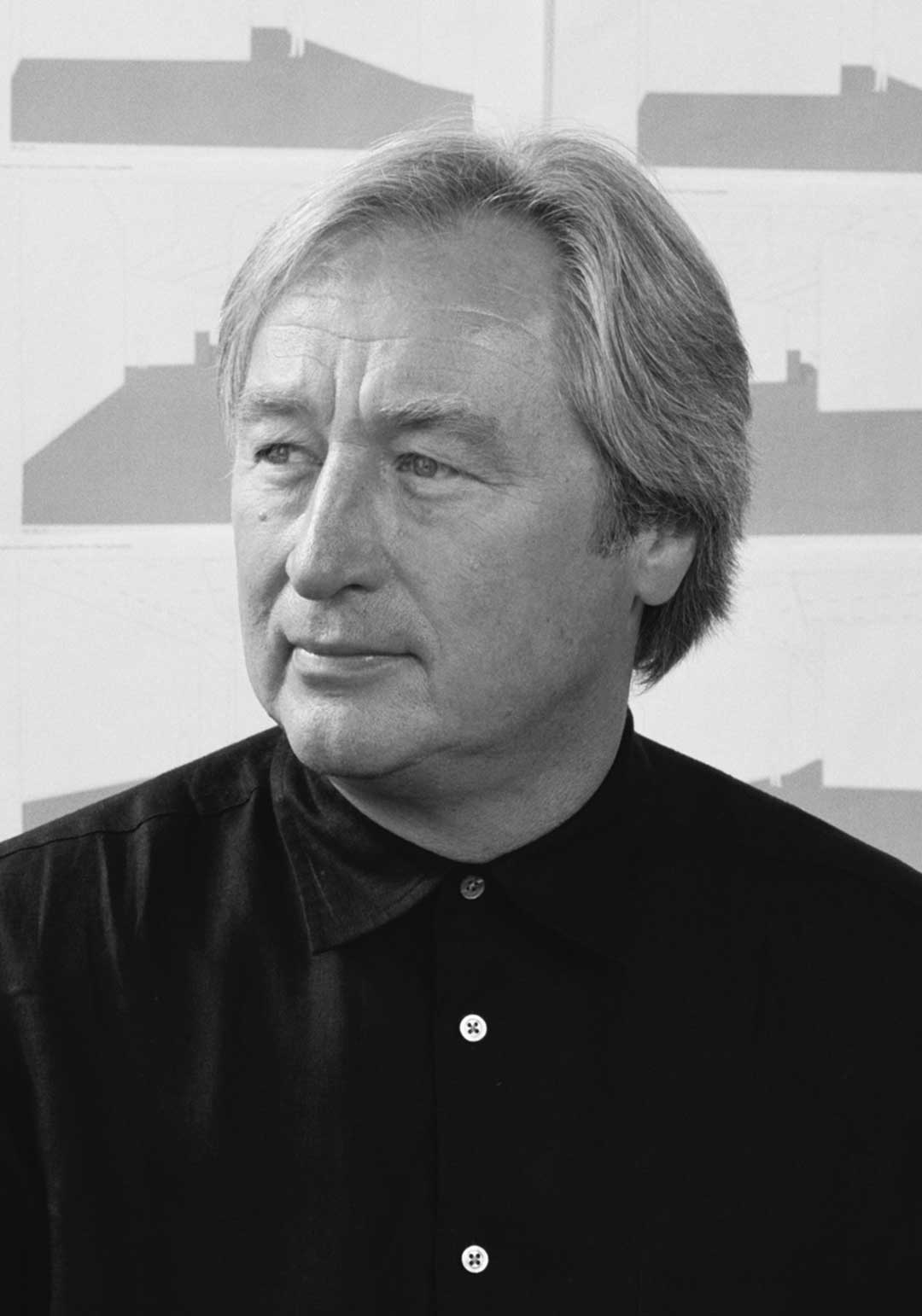
وَنکِه سنتر، معماری آیندهنگر بر فراز زمین، ترجمه و تدوین بر اساس گفتار استیون هال
در حاشیهی شنژن، شهری رو به دریا در جنوب چین، سازهای سر برآورده که بهجای صعود به آسمان، در آغوش افق گسترده شده است: پروژهی «Vanke Center» طراحیشده توسط استیون هال و شریک پکننشین او لی هو. این آسمانخراش افقی، ترکیبی شاعرانه از معماری، چشمانداز، فناوری پایدار و آیندهنگری زیستمحیطیست.
افقیبودن، نه تنها استعاره
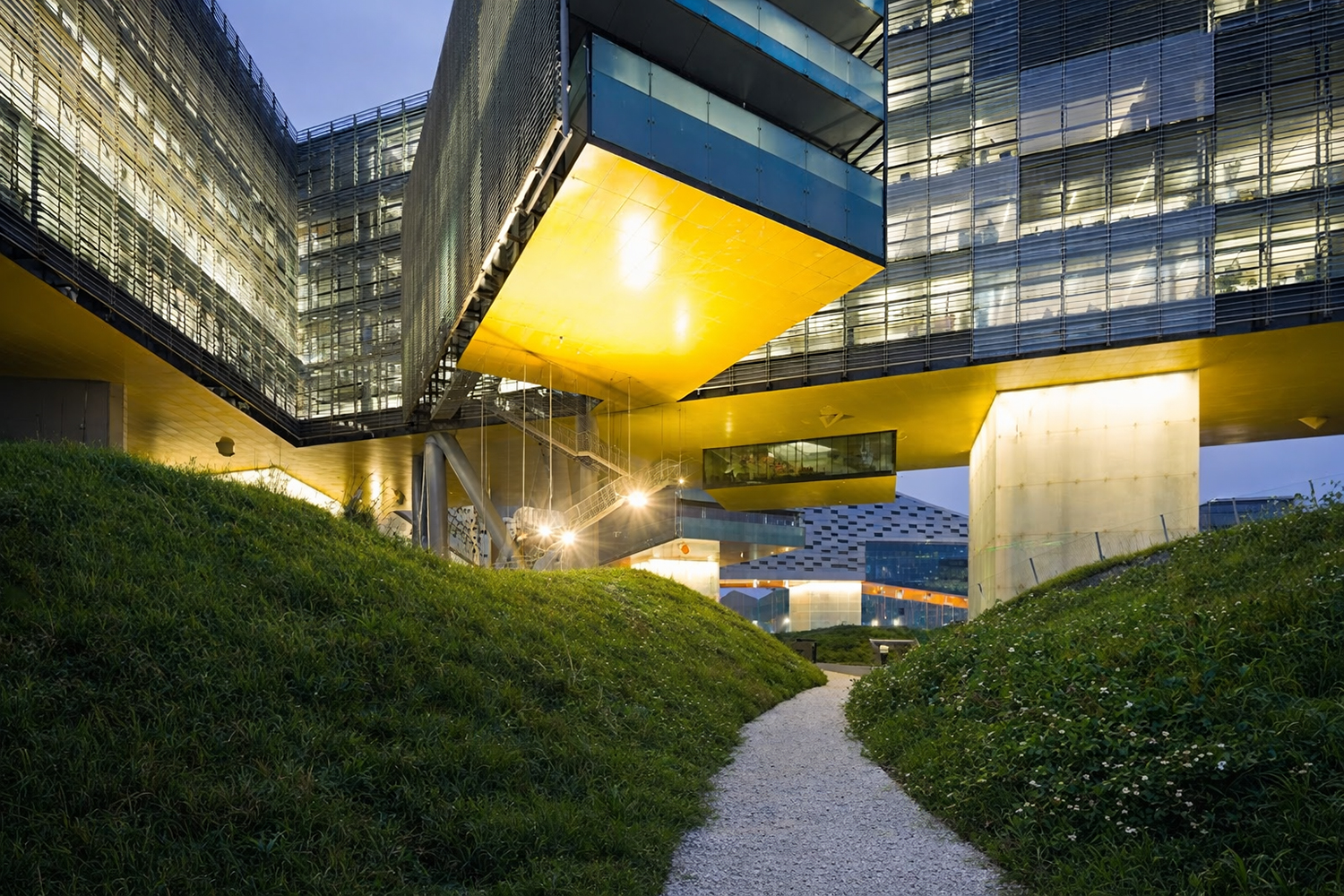
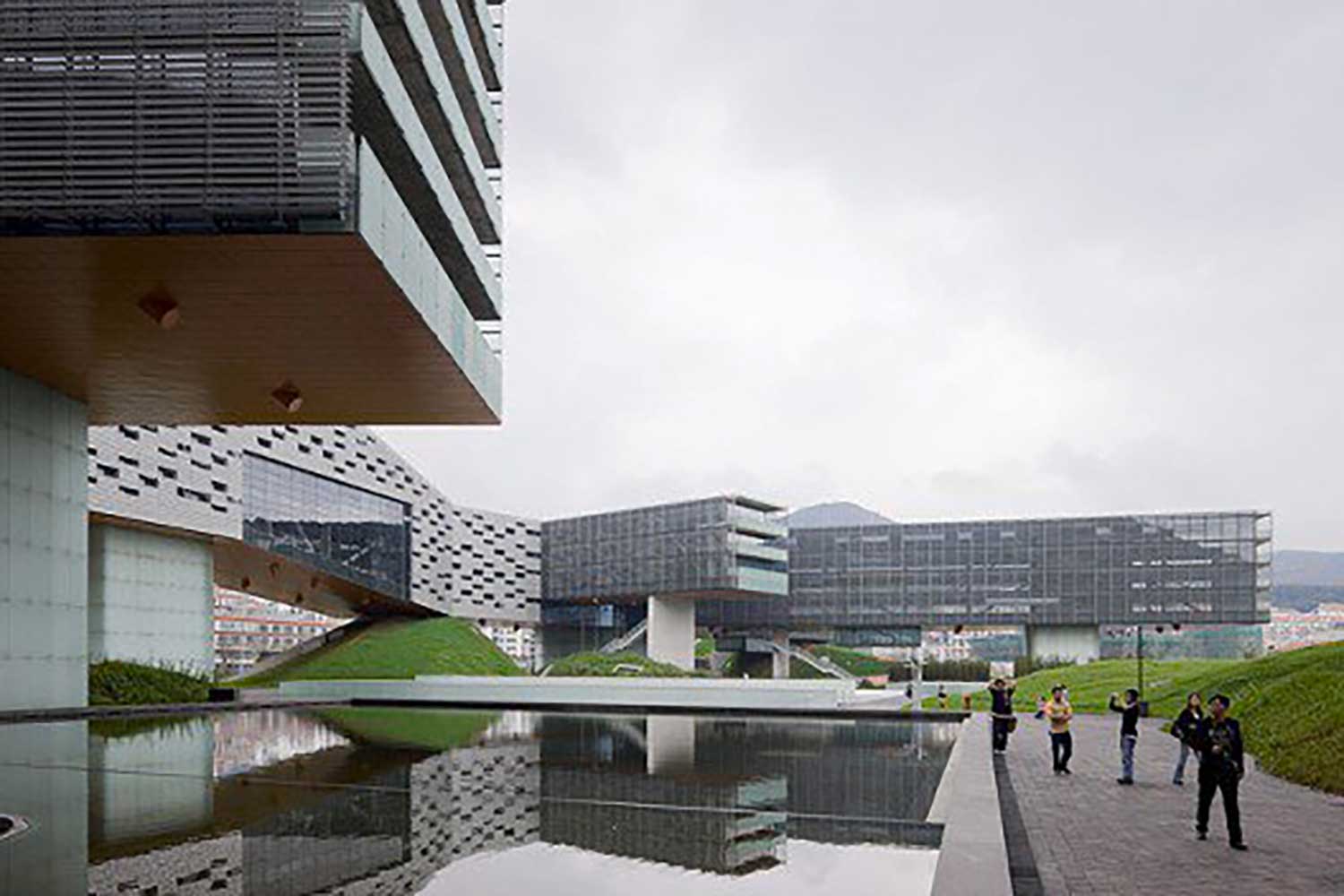
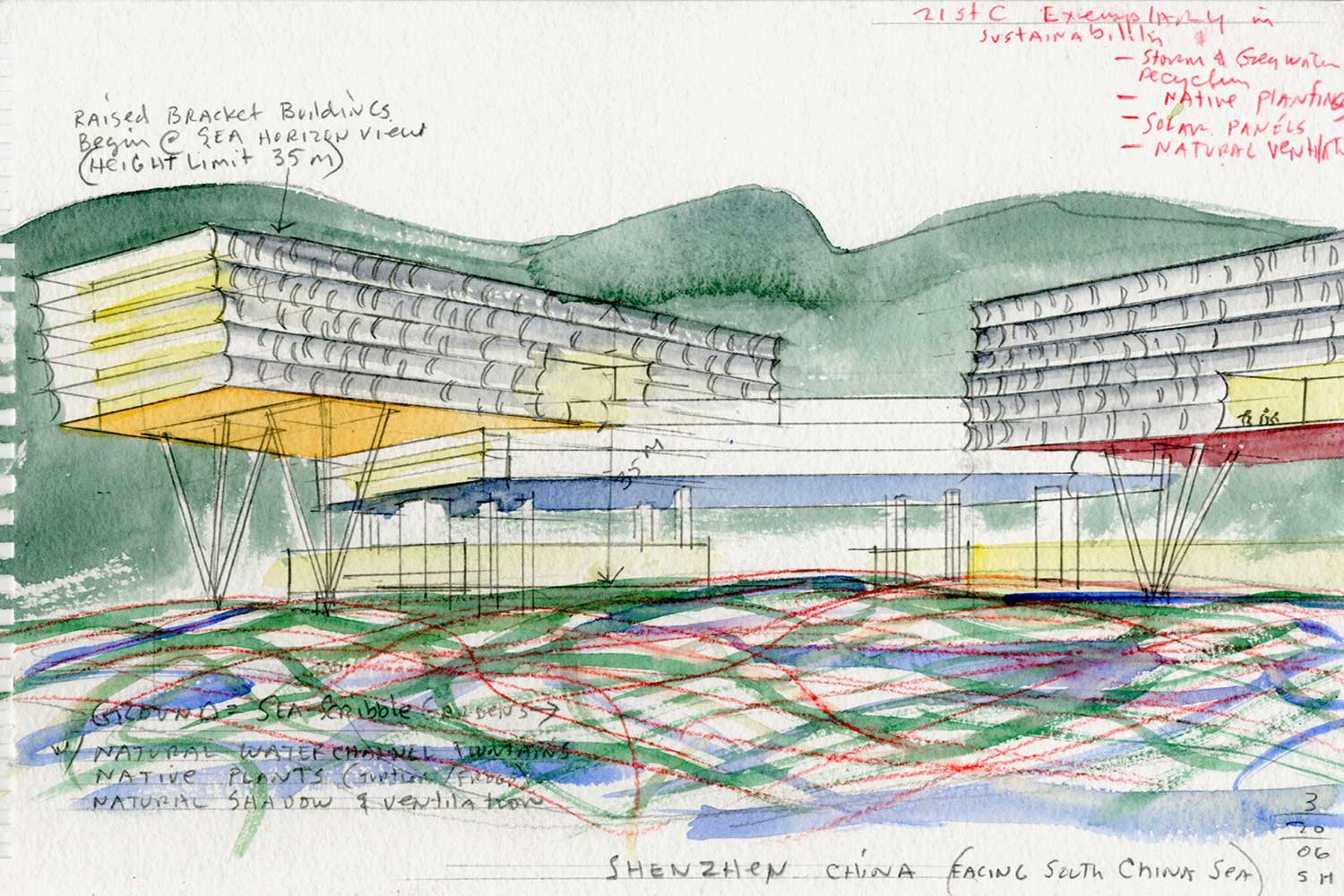
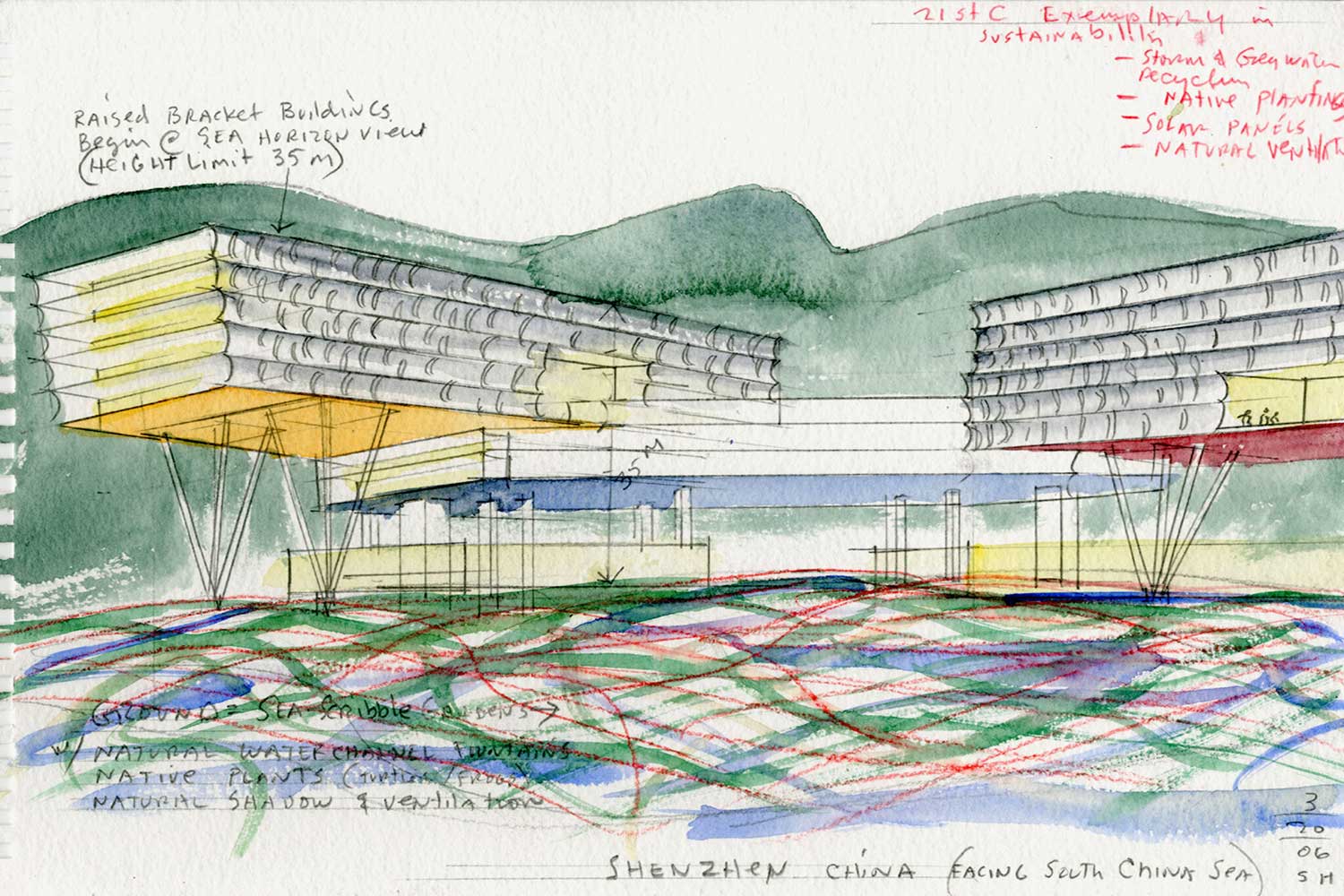
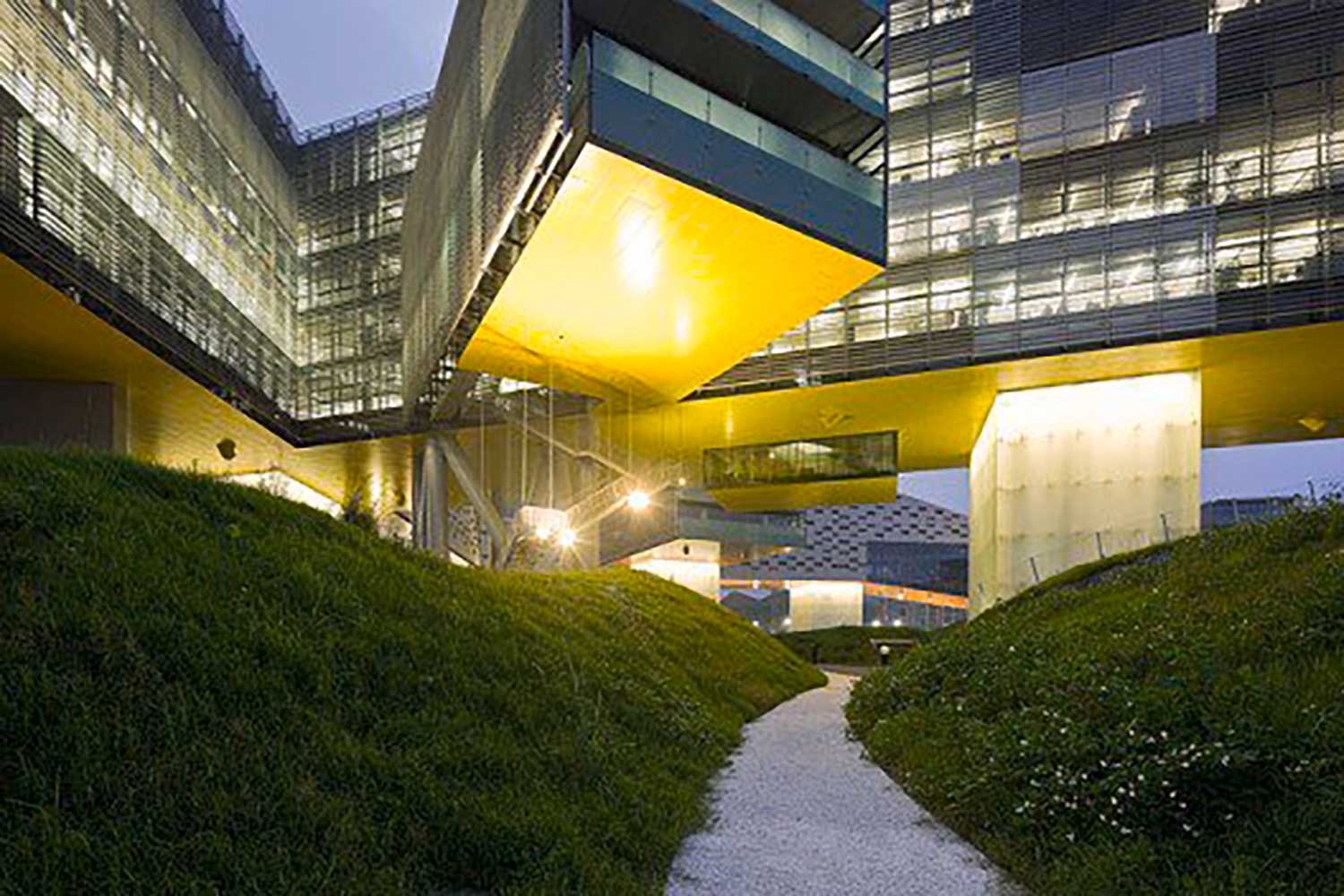
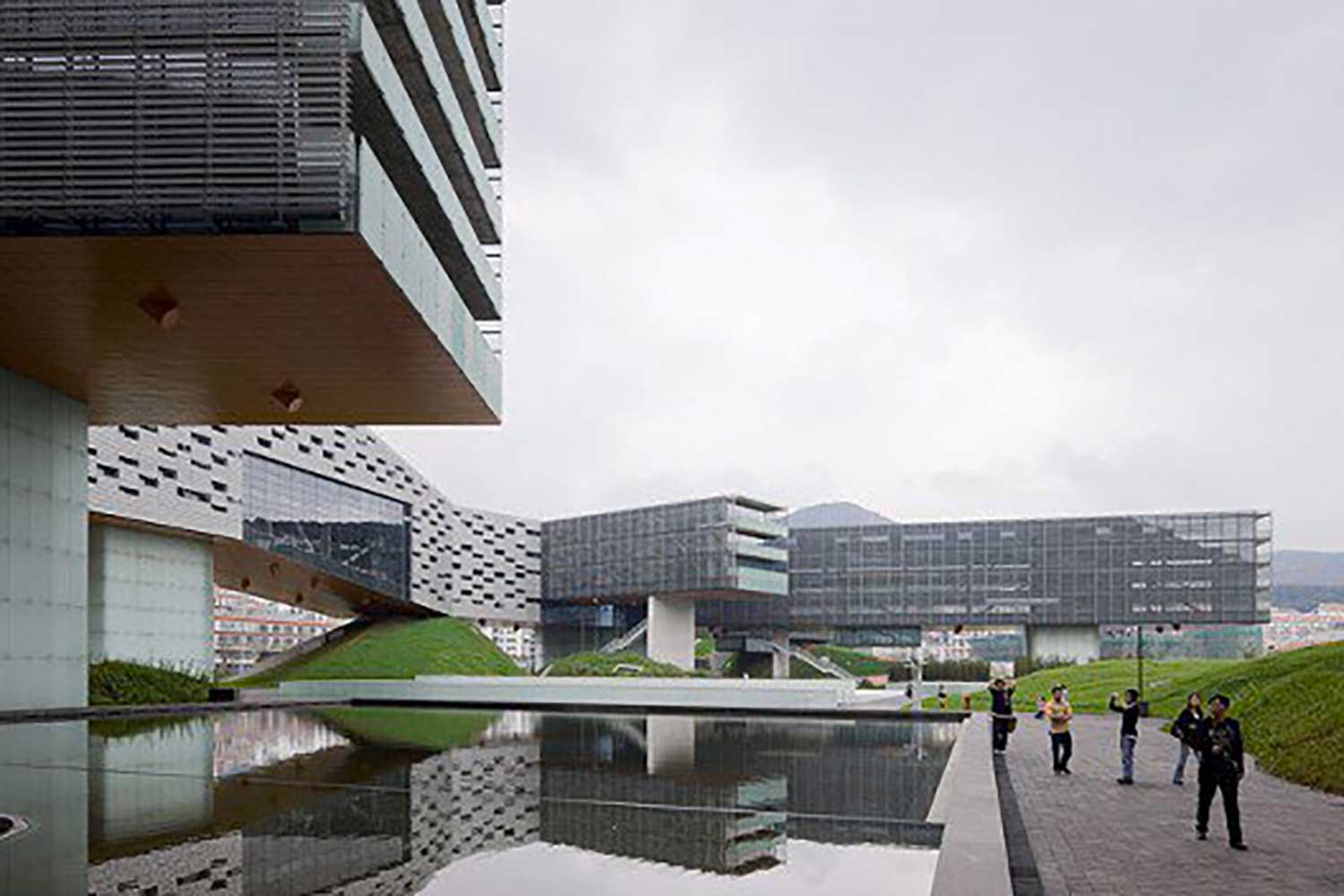
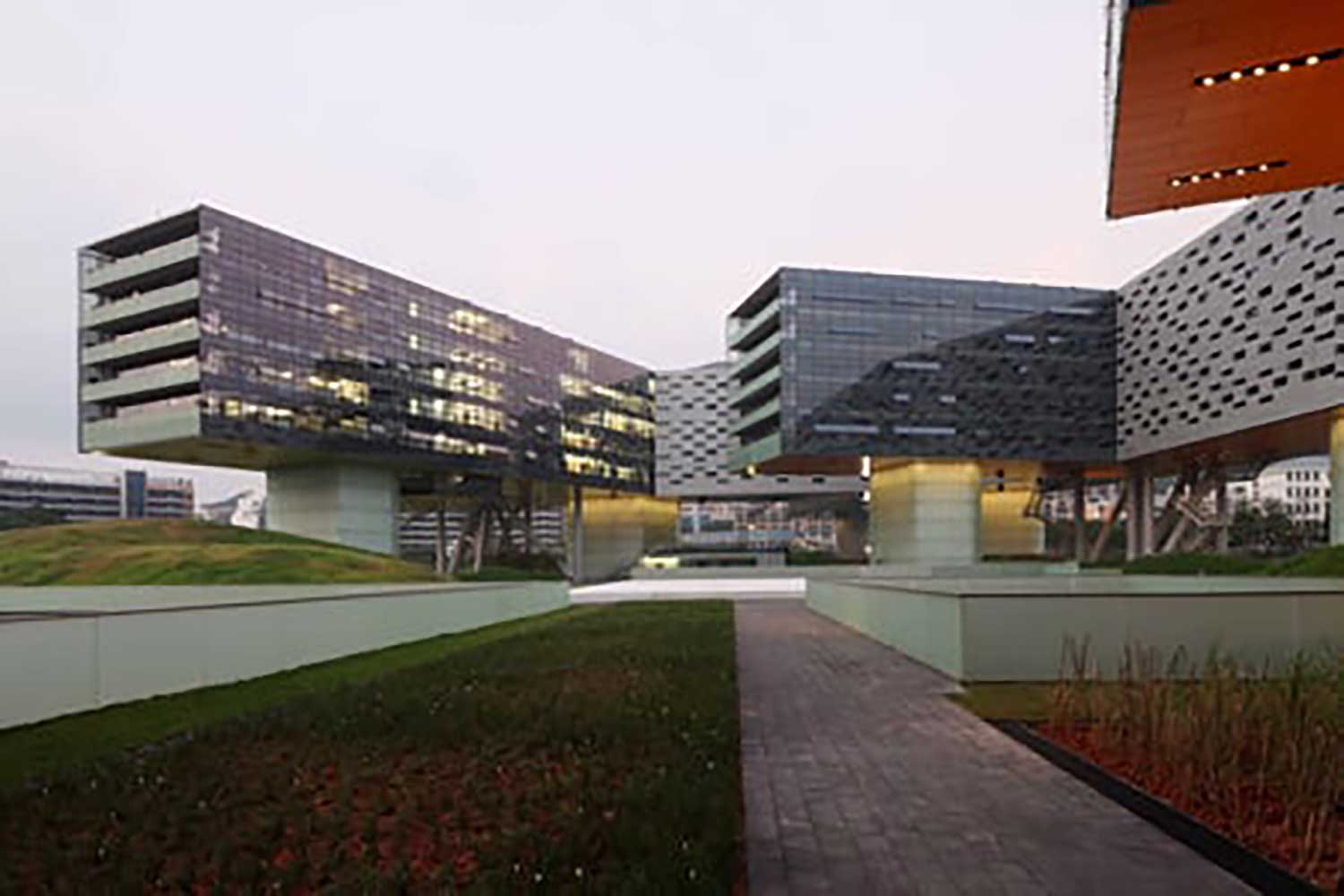
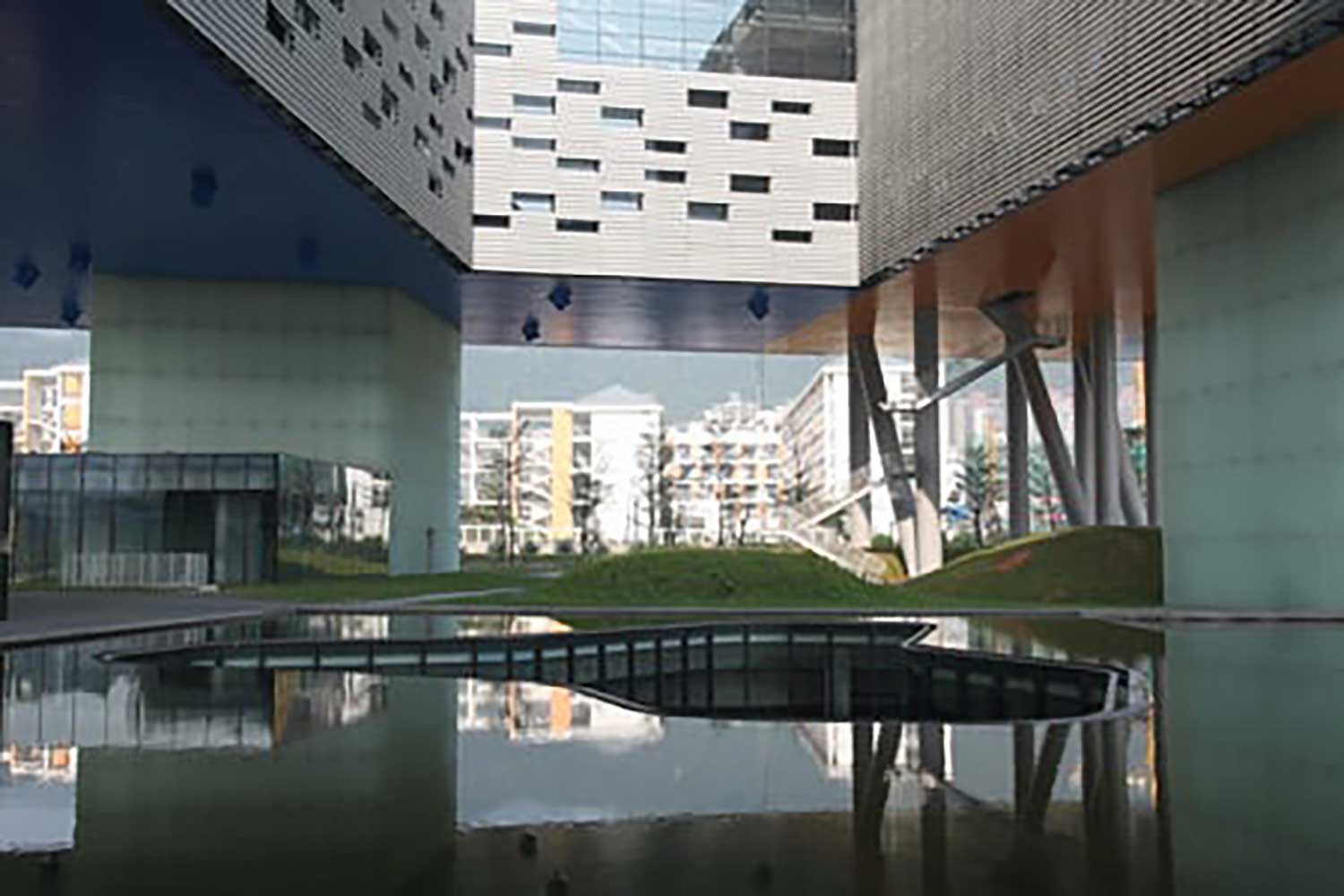
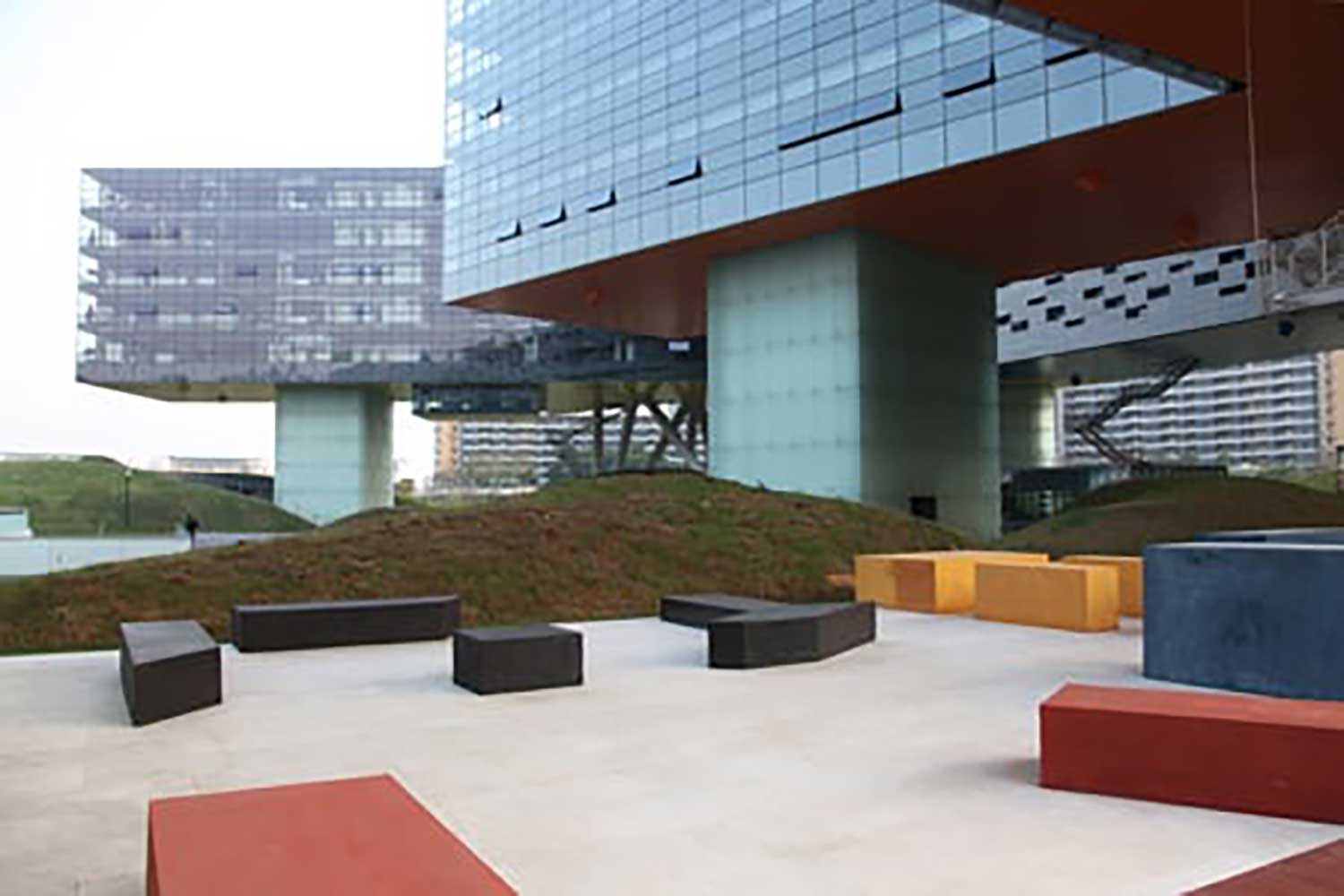
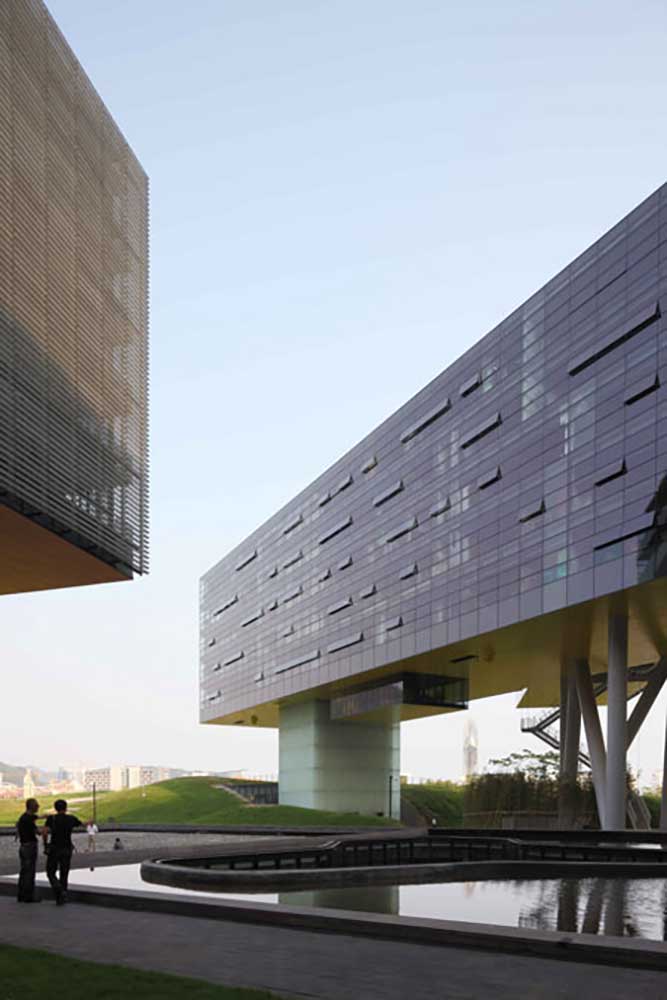
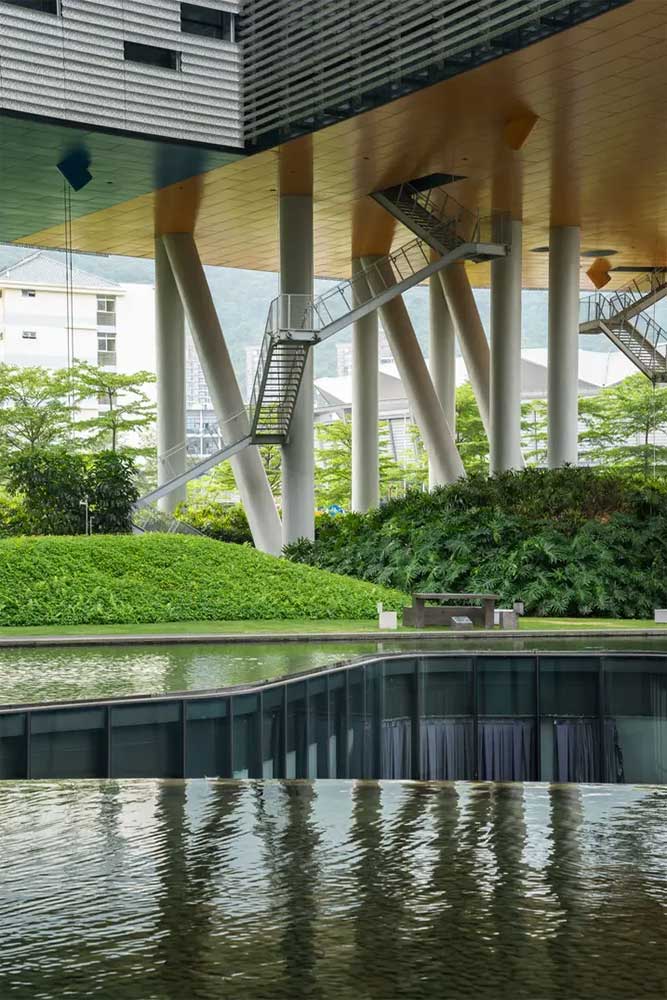
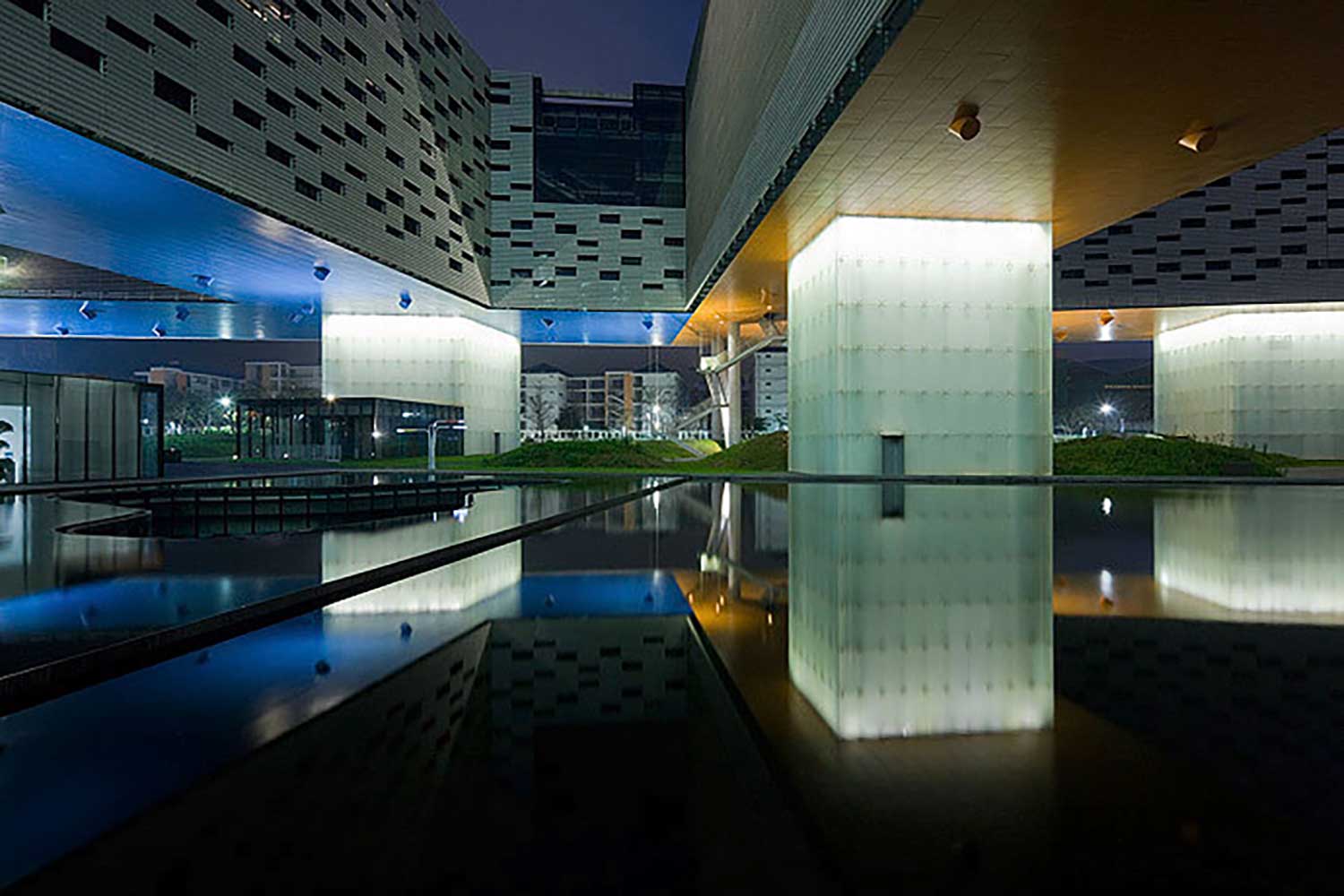
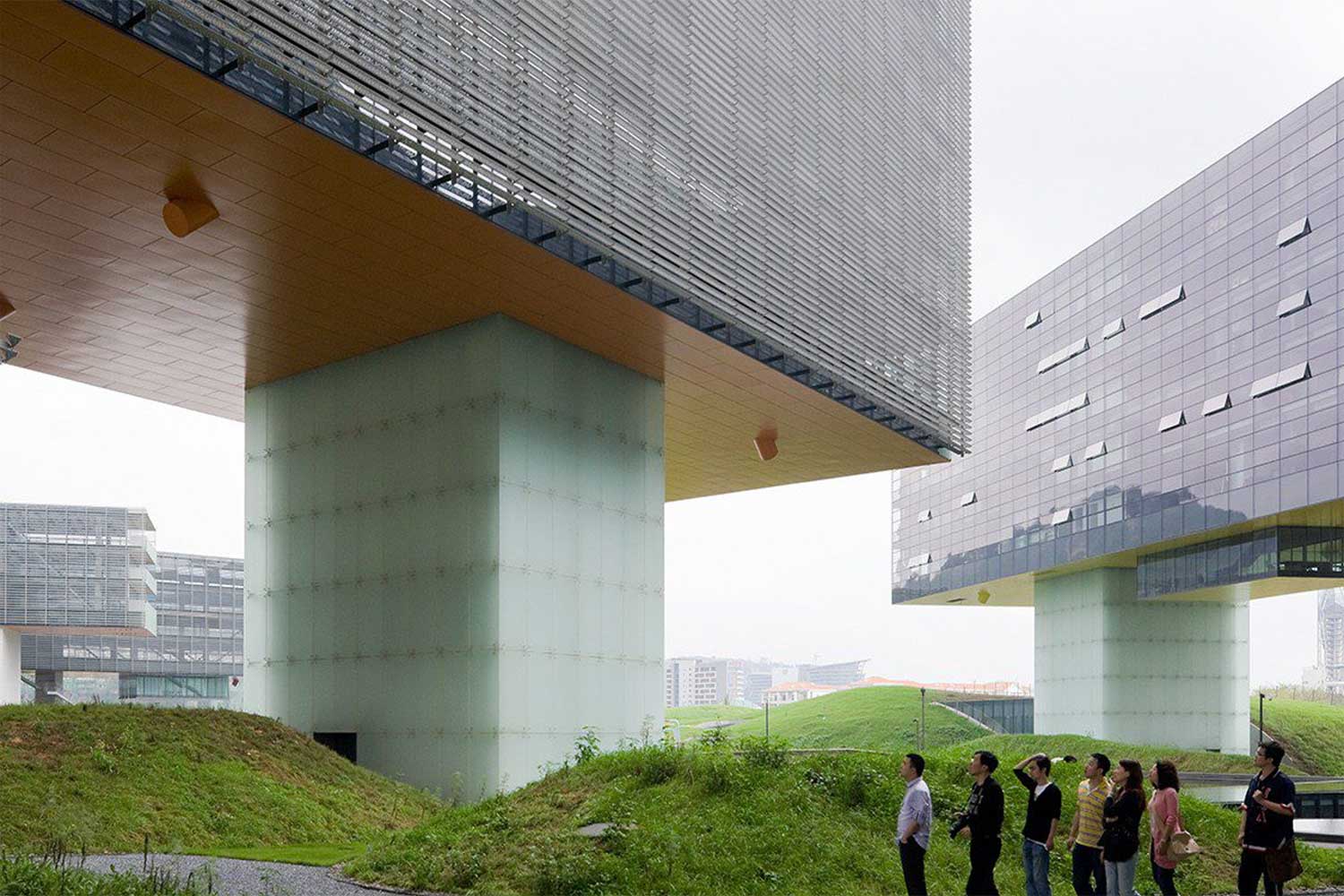
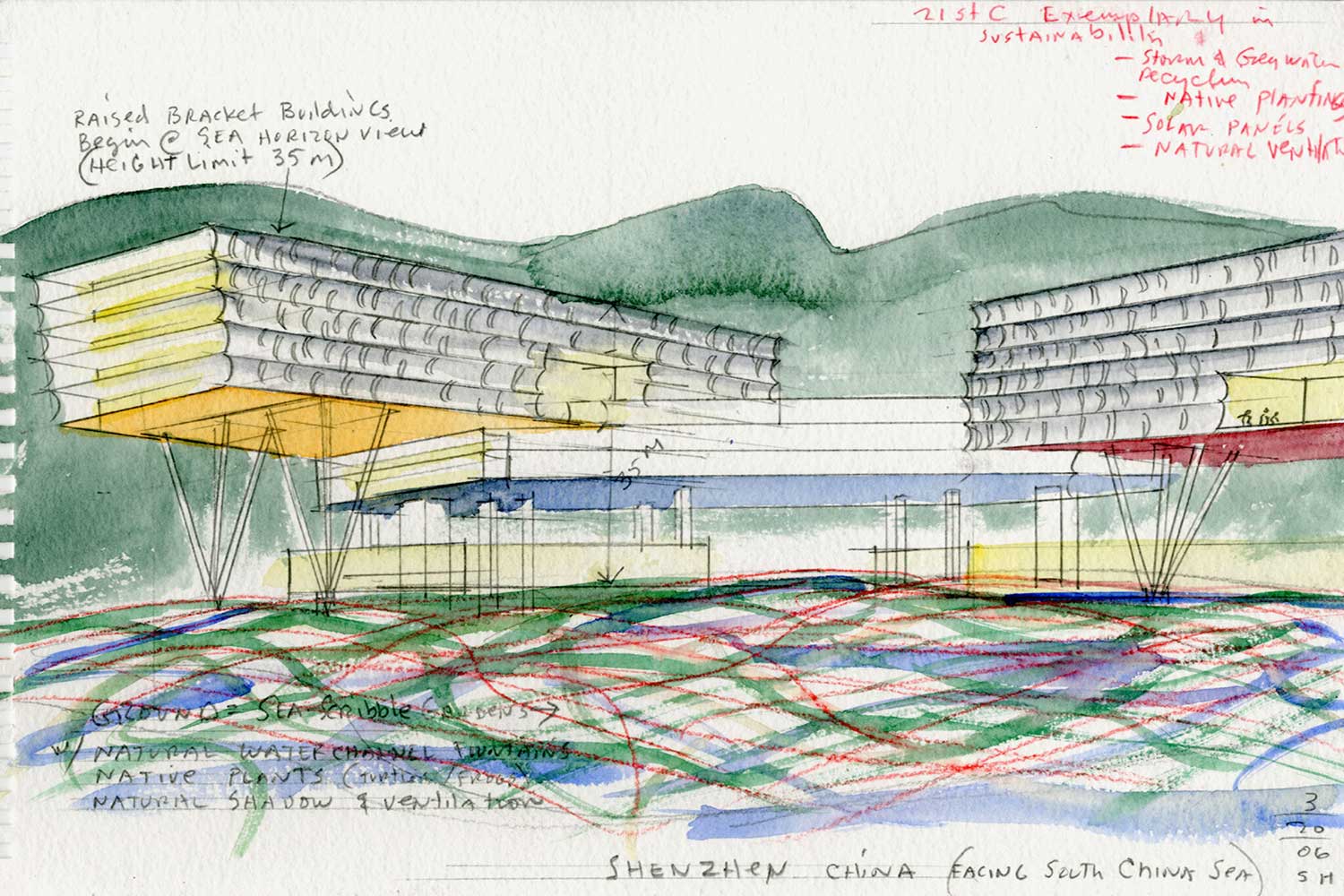
ونکه سنتر با ارتفاع ۱۵ متر از سطح زمین، بر روی هشت پایهی شیشهای نیمهشفاف معلق شده است. فضای زیر آن به پارکی عمومی و سرسبز تبدیل شده و نسیمهای دریای جنوب چین از زیر آن عبور کرده و سازه را خنک میکنند. این ساختمان با ایجاد ریزاقلیمهای معتدل، بهویژه در منطقهای با آبوهوای گرم و مرطوب، رویکردی نوآورانه برای بهرهبرداری اقلیمی ارائه میدهد.
معماری سبز به معنای واقعی
دفتر مرکزی شرکت Vanke یکی از نخستین ساختمانهای دارای گواهینامه LEED Platinum در چین است. ۱۵٬۰۰۰ فوت مربع پنل خورشیدی بر بام آن نصب شده که ۱۲.۵ درصد از برق مورد نیاز مجموعه را تأمین میکند. سیستم لوورها که شامل پرههای ثابت و متحرک با حفرههایی با ابعاد مختلف است، با کمک حسگرها و رایانه، بر اساس زاویه و شدت تابش خورشید تنظیم میشود و ۷۰ درصد از گرمای خورشیدی را کاهش میدهد.
سازه، بدون خرپاهای حجیم
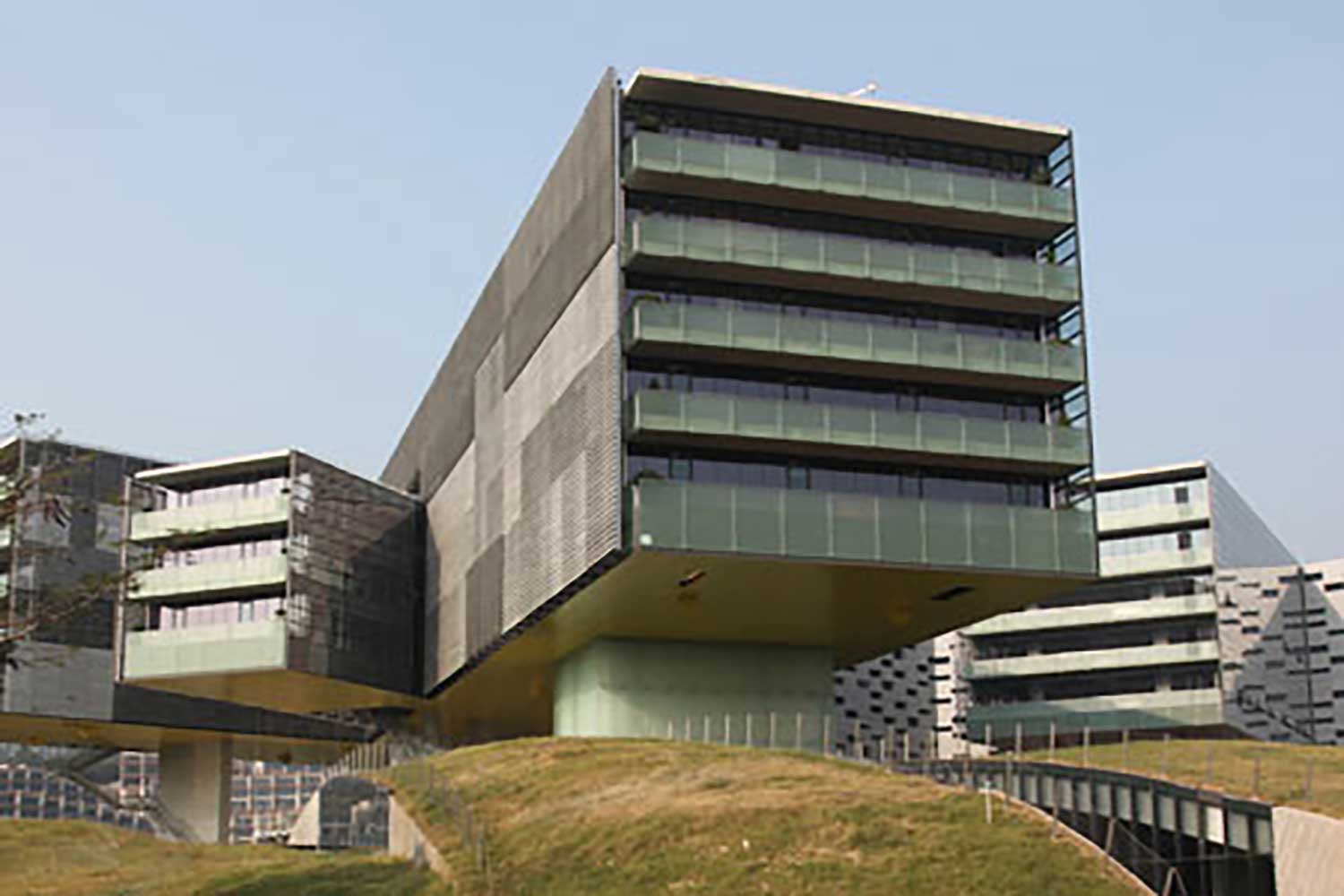
سیستم سازهای این پروژه ترکیبیست از اسکلت بتن مسلح با فناوری کابلهای کششی فولادی، مشابه آنچه در پلها استفاده میشود. این راهکار، نیاز به خرپاهای حجیم را حذف کرده و دید بصری و پیوستگی داخلی را حفظ نموده است. کابلها بار عمودی سازه را به هستههای بتنی و ستونها منتقل میکنند.
تنوع عملکردها در یک بدنهی واحد
Vanke Center عملکردهای اداری، مسکونی و هتلی را در یک ساختمان طولی گرد آورده است: شامل مرکز همایش با ۸۶٬۰۰۰ فوت مربع، فضای هتل با ۲۱۴٬۰۰۰ فوت مربع، و آپارتمانهایی به مساحت ۲۱۱٬۰۰۰ فوت مربع. پارکینگ نیز عمدتاً زیرزمین طراحی شده تا فضاهای روی زمین برای کاربری عمومی آزاد باقی بماند.
منظر بهمثابه ماشین
معماران سامانهای از حیاطهای فرورفته، استخرها و تالابهایی طراحی کردهاند که ضمن تنظیم و بازتوزیع آبهای سطحی، هوا را خنک کرده و آب باران را برای آبیاری فضاهای سبز تصفیه میکنند. لوورها نه تنها سایه ایجاد میکنند، بلکه اثر «پشته همرفتی» بهوجود میآورند که هوای گرم را از بالا خارج و هوای خنک را از پایین وارد میکند.
مصالح پایدار
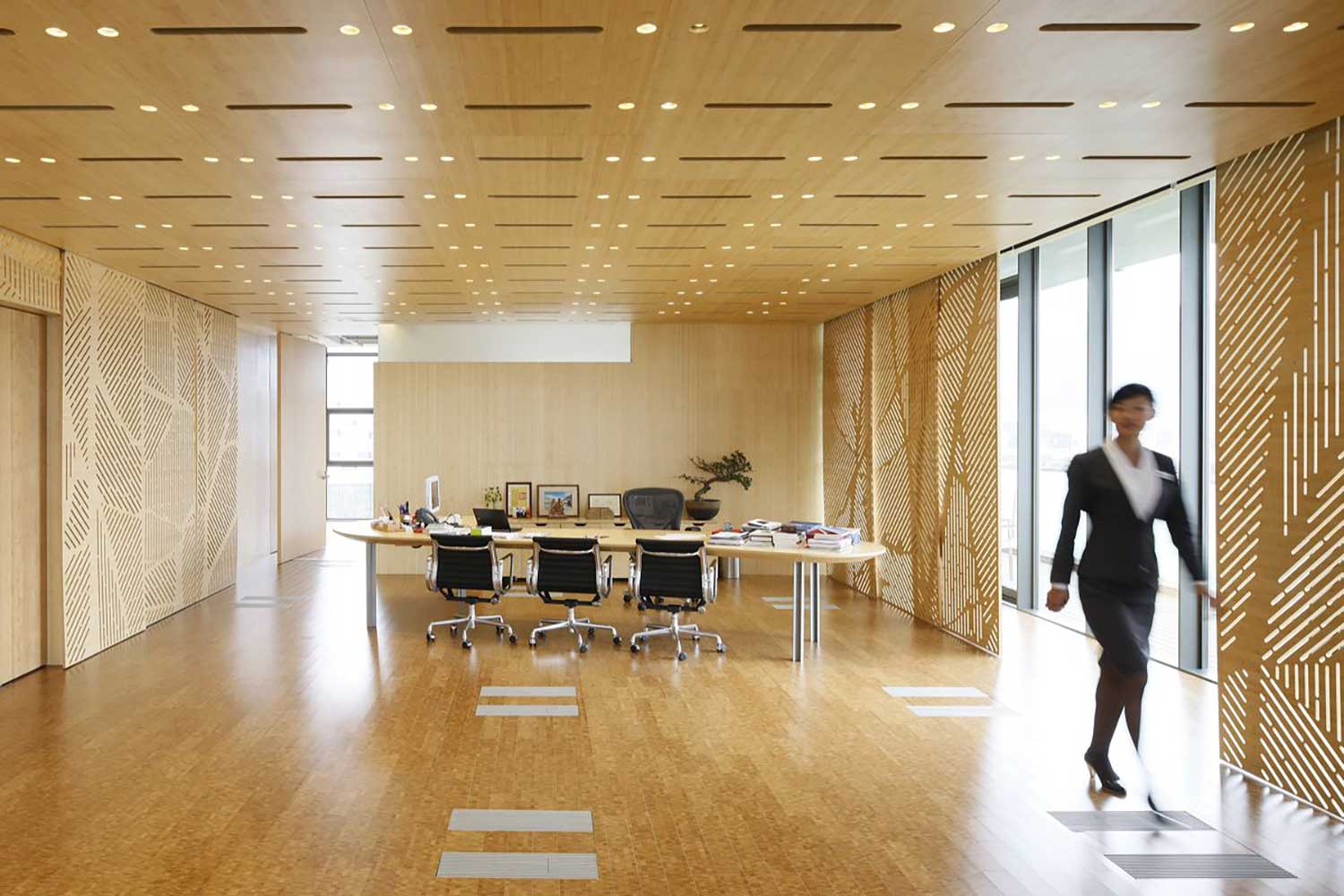
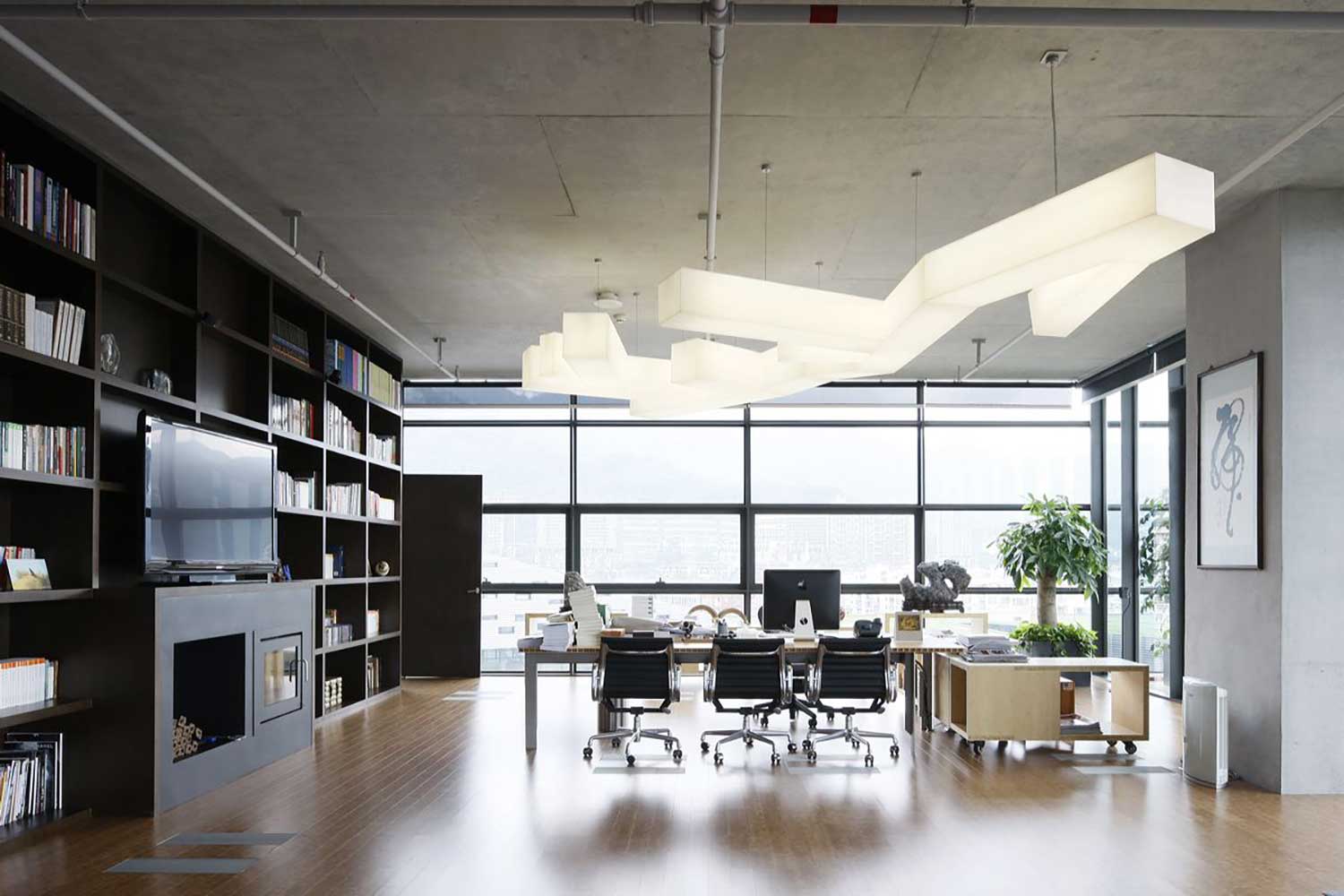
در کل پروژه، از مصالح تجدیدپذیر و بازیافتی استفاده شده است: از چوب بامبو برای کفسازی و مبلمان تا فرشهایی با پشتی وینیلی حاصل از ضایعات صنعتی. رنگها و چسبها یا فاقد VOC هستند یا دارای مقادیر بسیار اندک.
نگاه آیندهنگر کارفرما
استیون هال میگوید تمام مشتریان چینیاش خواهان سبزترین طراحی ممکن بودهاند. در حالیکه در دیگر کشورها، مشتریان اغلب با هزینههای پایداری مقابله میکنند، در چین کارفرمایان به ساختن آینده میاندیشند.
آیا ساختمانهای بلند میتوانند پایدار باشند؟
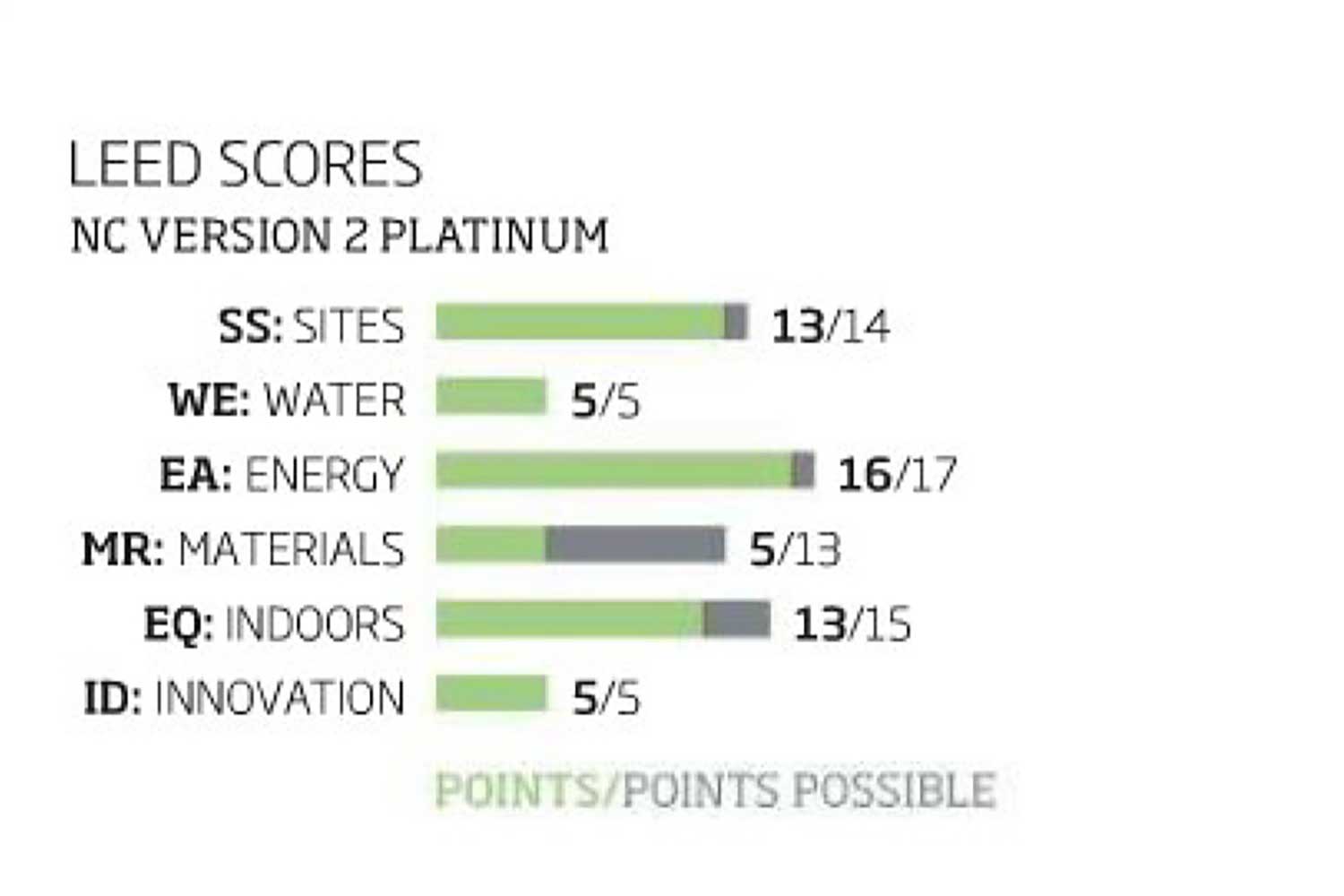
این پرسشی پیچیده است و خوشبختانه، ما در این شماره نیازی به پاسخدادن به آن نداریم. همه پروژههایی که در اینجا معرفی شدهاند، شش طبقه یا کمتر دارند (حد سنتی برای ساختمانها در پاریس). خانهی دوطبقهی “Passive House در حومهی پاریس اصلاً سنتی نیست، هرچند ظاهرش چنین مینماید—معماران برای تأیید طراحی در بررسیهای جامعه محلی بسیار تلاش کردند. آنها از آن زمان پروژههای دیگری را نیز با استاندارد Passive House به اتمام رساندهاند، که نویدبخش کاهش مصرف انرژی در مسکن فرانسه است. حتی تنها آسمانخراشی که ما معرفی کردهایم—”Vanke Center در شنژن، چین—بر پهلو خوابیده است. این ساختمان روی پایههایی قرار دارد، بنابراین برای رسیدن به طبقات بالایی باید اندکی بالا رفت و از پلهها استفاده کرد. بخش اداری این ساختمان دارای گواهینامهی LEED Platinum با امتیازاتی بیشتر از حد نصاب است—دستاوردی چشمگیر برای پروژهای با این مقیاس. با وجود افقیبودنش، Vanke Center از زمین جدا شده و روی پایهها قرار گرفته است. از سوی دیگر، “LOTT Regional Services Center” بهخوبی در خاک و آب ریشه دوانده و برنامهای برای آزمایشگاههای کیفیت آب، دفاتر و فضاهای آموزشی بهعنوان بخشی از تأسیسات تصفیه فاضلاب دارد. در نهایت، “Lofts at Cherokee Studios” واحدهای مسکونی/اداری را با فضاهای خردهفروشی در طبقهی همکف ترکیب میکند تا به محلهی خود خدمت کند. ما در شمارههای آینده دوباره به موضوع ساختمانهای بلند خواهیم پرداخت. اما در حال حاضر، این مجموعه نشان میدهد که ساختمانهای کمارتفاع میتوانند بسیار سبز و پایدار باشند.
—ناداو مالین
سه دهه توسعهی اقتصادی پرشتاب، چین را به یکی از بزرگترین آلایندههای جهان تبدیل کرده، اما اکنون روح تازهای در سرزمین ۱.۳ میلیارد نفری در حال شکلگیری است. نه تنها دولت چین در تلاش است تا انتشار دیاکسید کربن را کاهش داده و تولید انرژیهای جایگزین را ترویج دهد، بلکه شمار فزایندهای از شرکتهای چینی، تعهد جدی خود را به طراحی پایدار نشان میدهند. پیشرو در این حرکت، شرکت چین ونکه (China Vanke) است؛ بزرگترین توسعهدهندهی مسکن در این کشور و شرکتی که معماران نوآور از داخل و خارج چین را برای طراحی پروژههای متعددی به کار گرفته است. بنیانگذار و رئیس این شرکت، وانگ شی (Wang Shi)، تنها بهعنوان یک کارآفرین شناخته نمیشود، بلکه کوهنوردی برجسته (که قلهی اورست را فتح کرده) و فعال محیطزیست متعهدی نیز هست. بنابراین جای تعجب نیست که شرکت ونکه خواسته باشد دفتر مرکزی خود را در شنژن، نماد بالاترین ارزشهای زیستمحیطی قرار دهد. این ساختمان توسط استیون هال آرشیتکتس (Steven Holl Architects) طراحی شده، همان شرکتی که پروژهی مسکونی “Linked Hybrid” را در پکن در سال ۲۰۰۹ به اتمام رساند و هماکنون در حال کار روی پروژههای بزرگ دیگری در چنگدو، هانگژو و نانجینگ است. ساختمان مرکزی شرکت ونکه با مساحتی معادل ۱.۱۴ میلیون فوت مربع، ۵۰ فوت بالاتر از سطح زمین معلق است—یک “آسمانخراش افقی” که اندکی طویلتر است…
- معماران هر یک از ۲۶ نمای ساختمان را به شیوهای متفاوت طراحی کردند تا تعادلی دقیق میان محافظت در برابر تابش خورشید و شفافیت بصری برقرار شود.
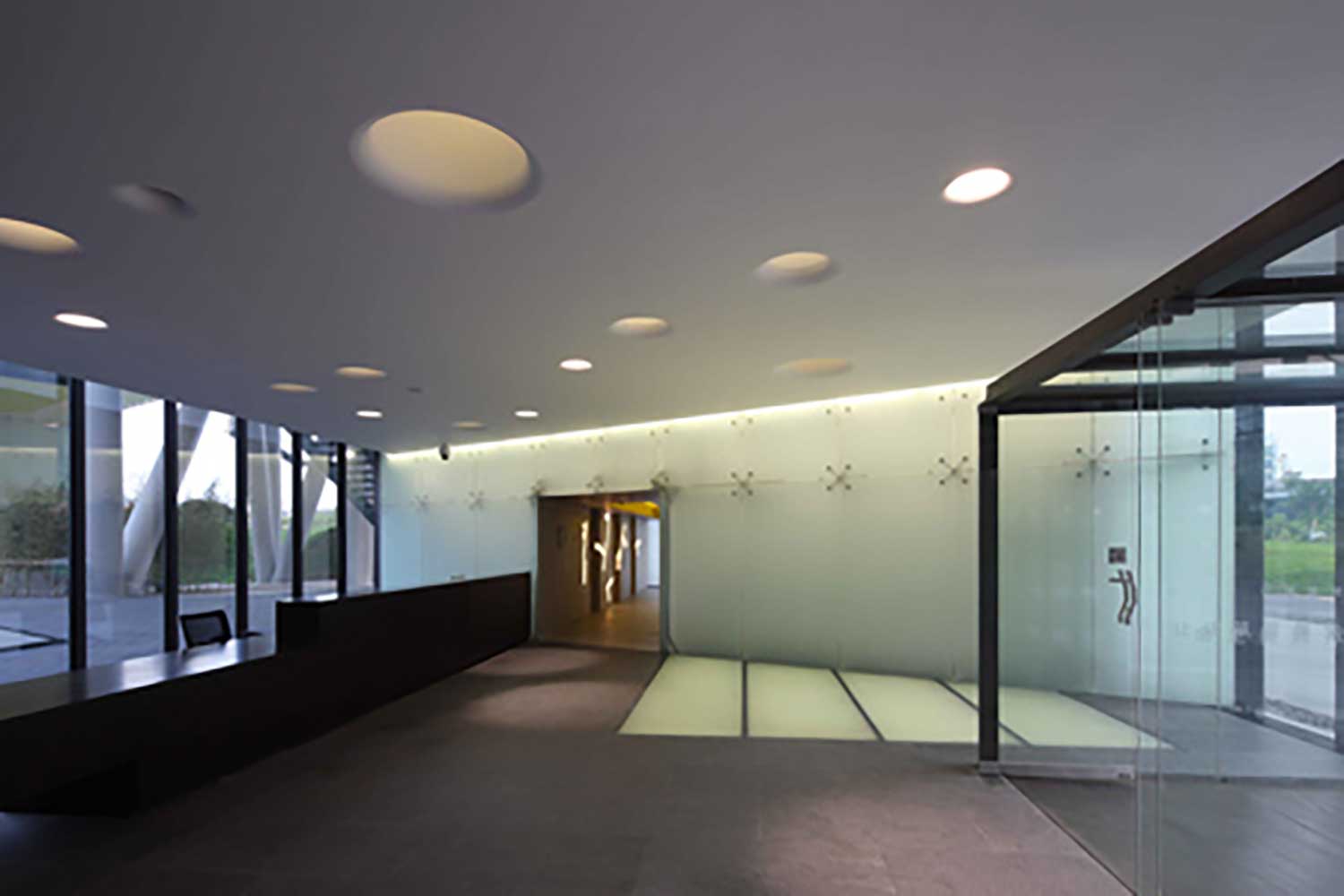
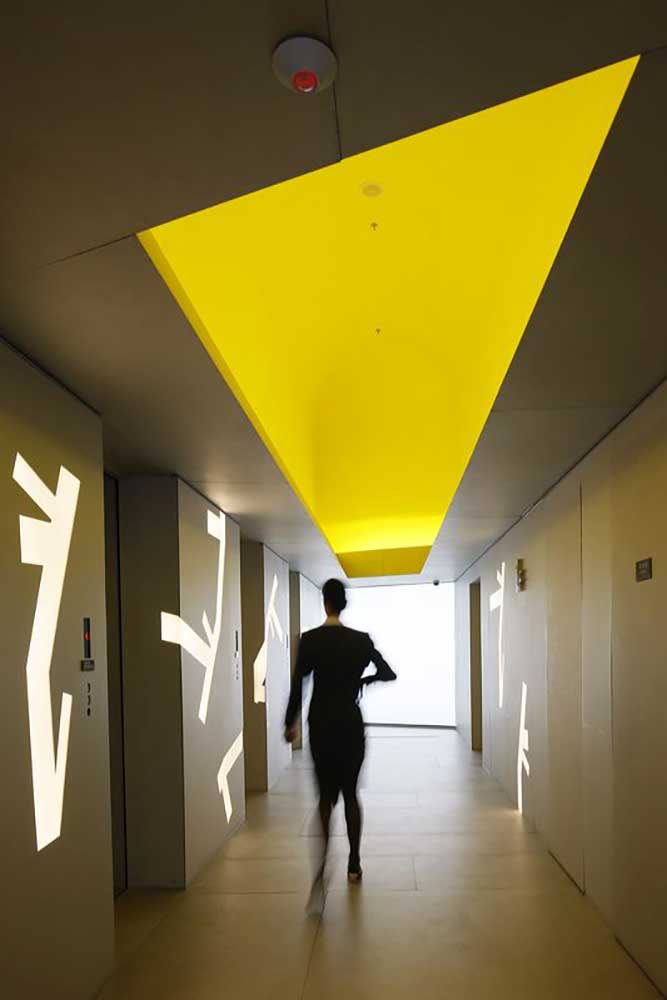
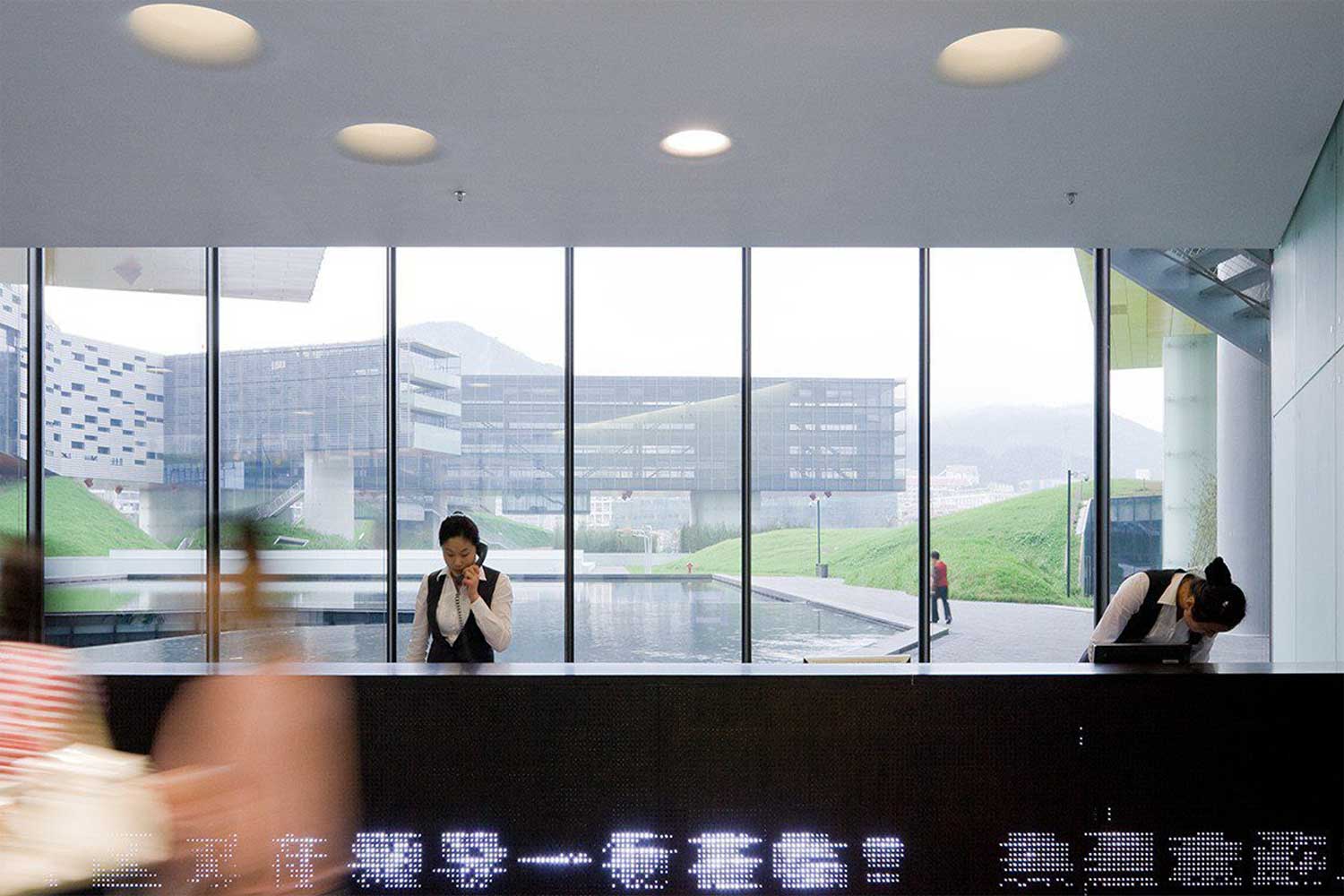
- طرح کف ساختمان تصویری گرافیکی بر دیوار لابی آسانسور دارد که همچون ابزار جهتیابی و راهنما عمل میکند.
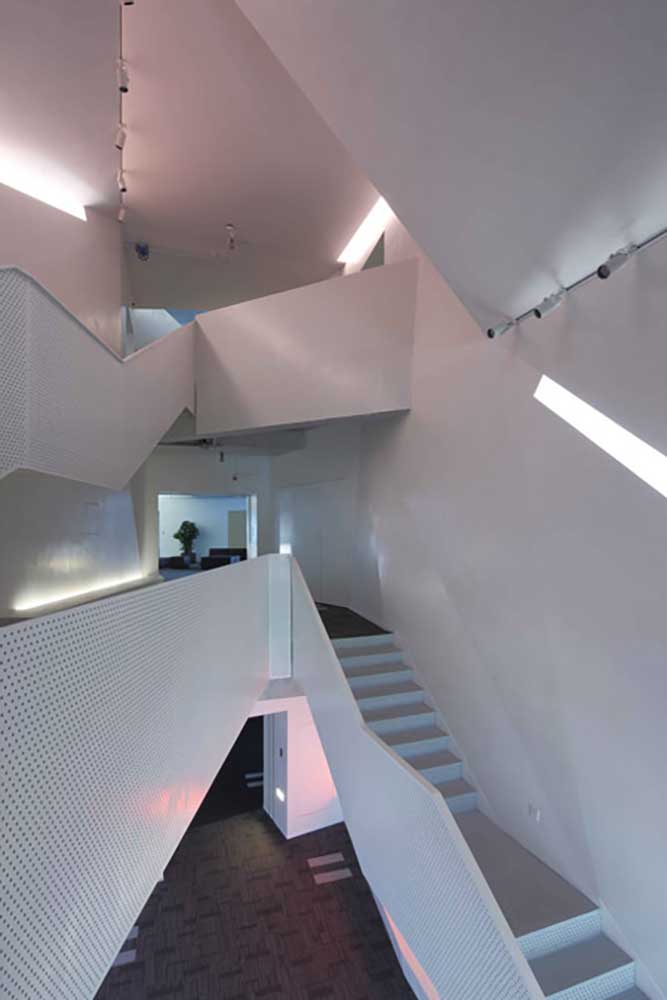
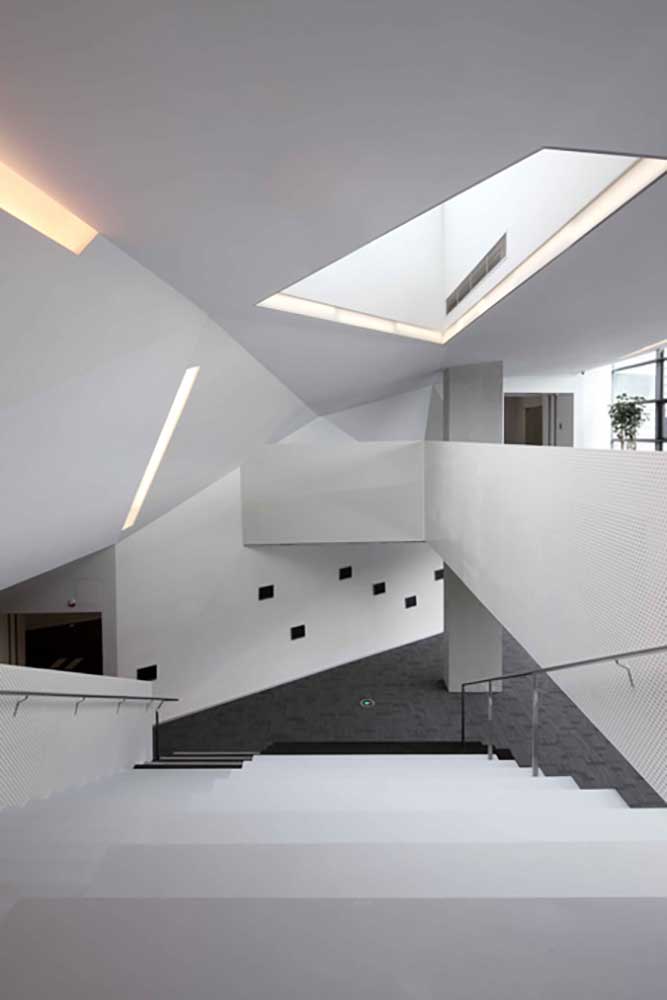
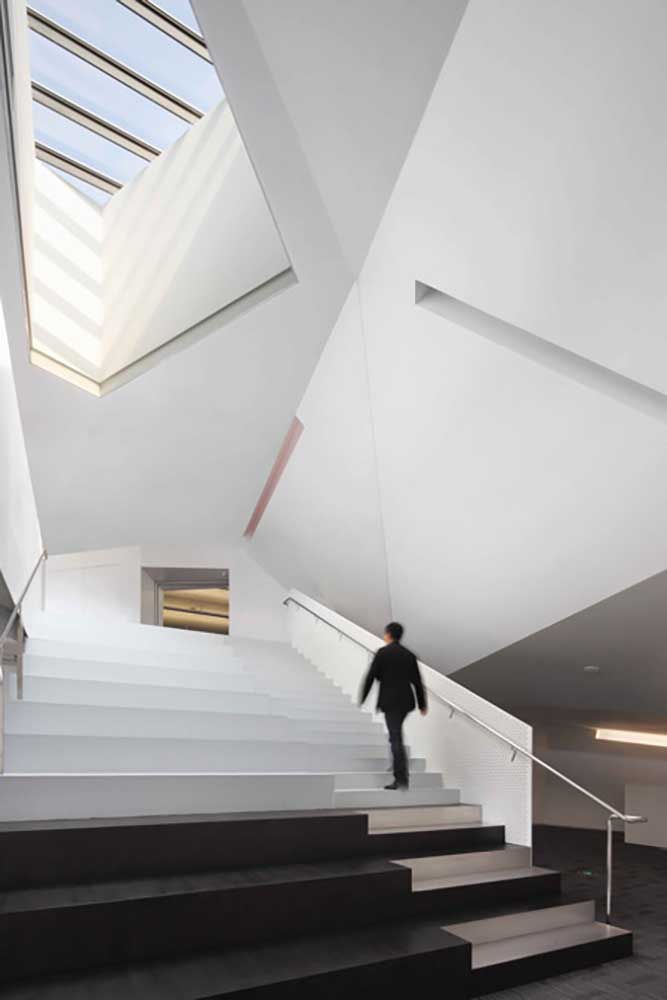
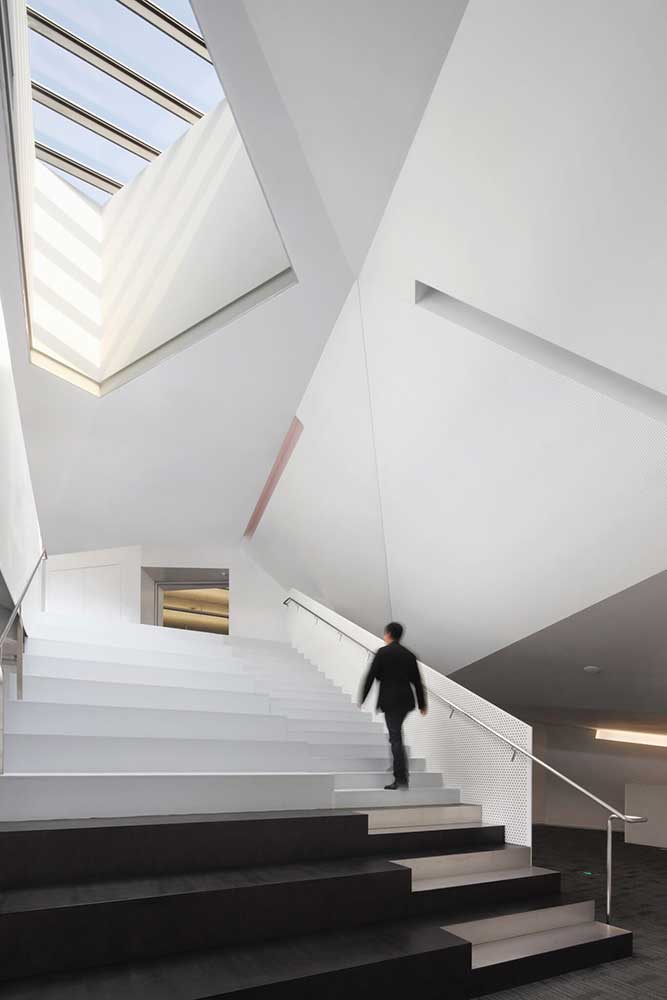
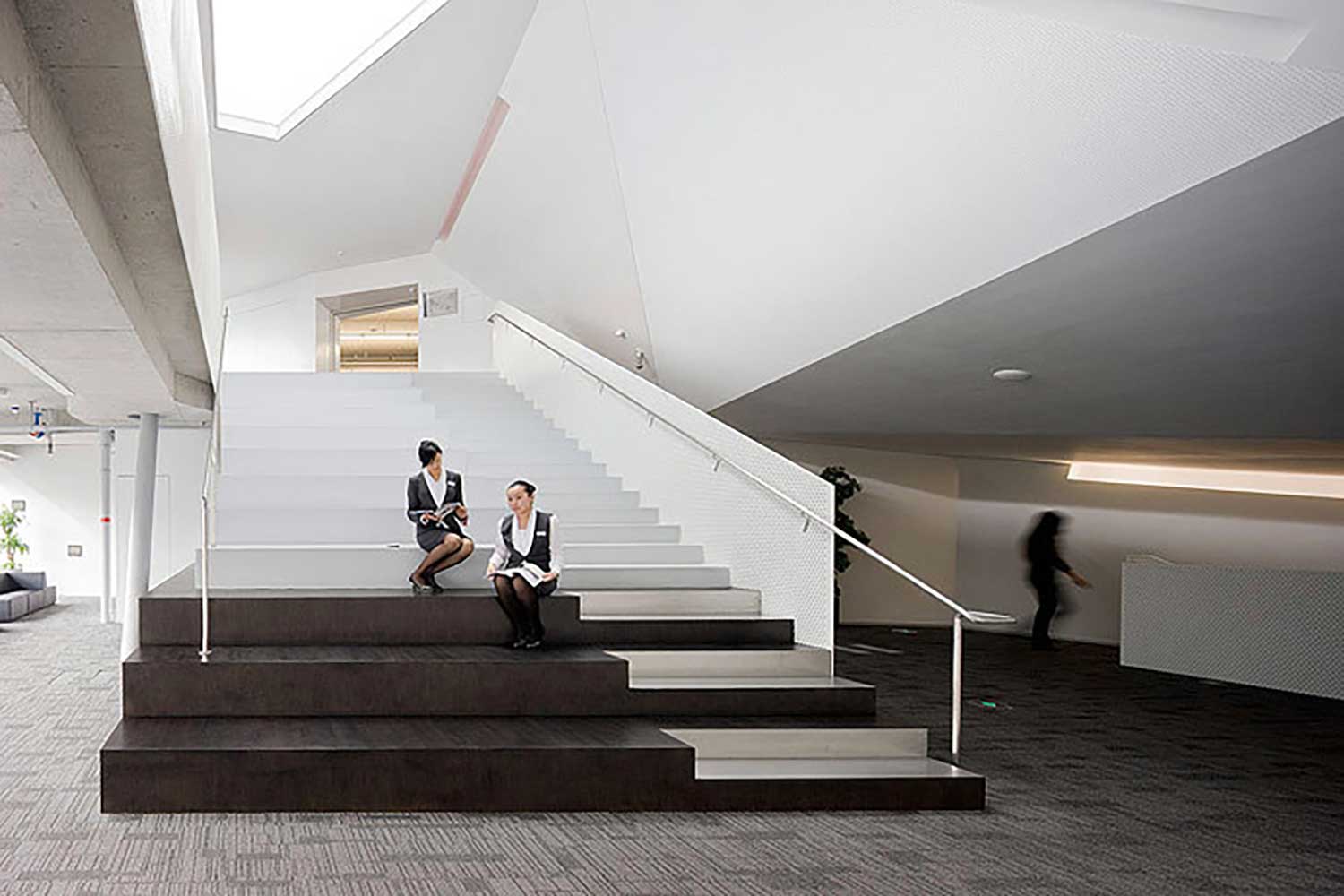
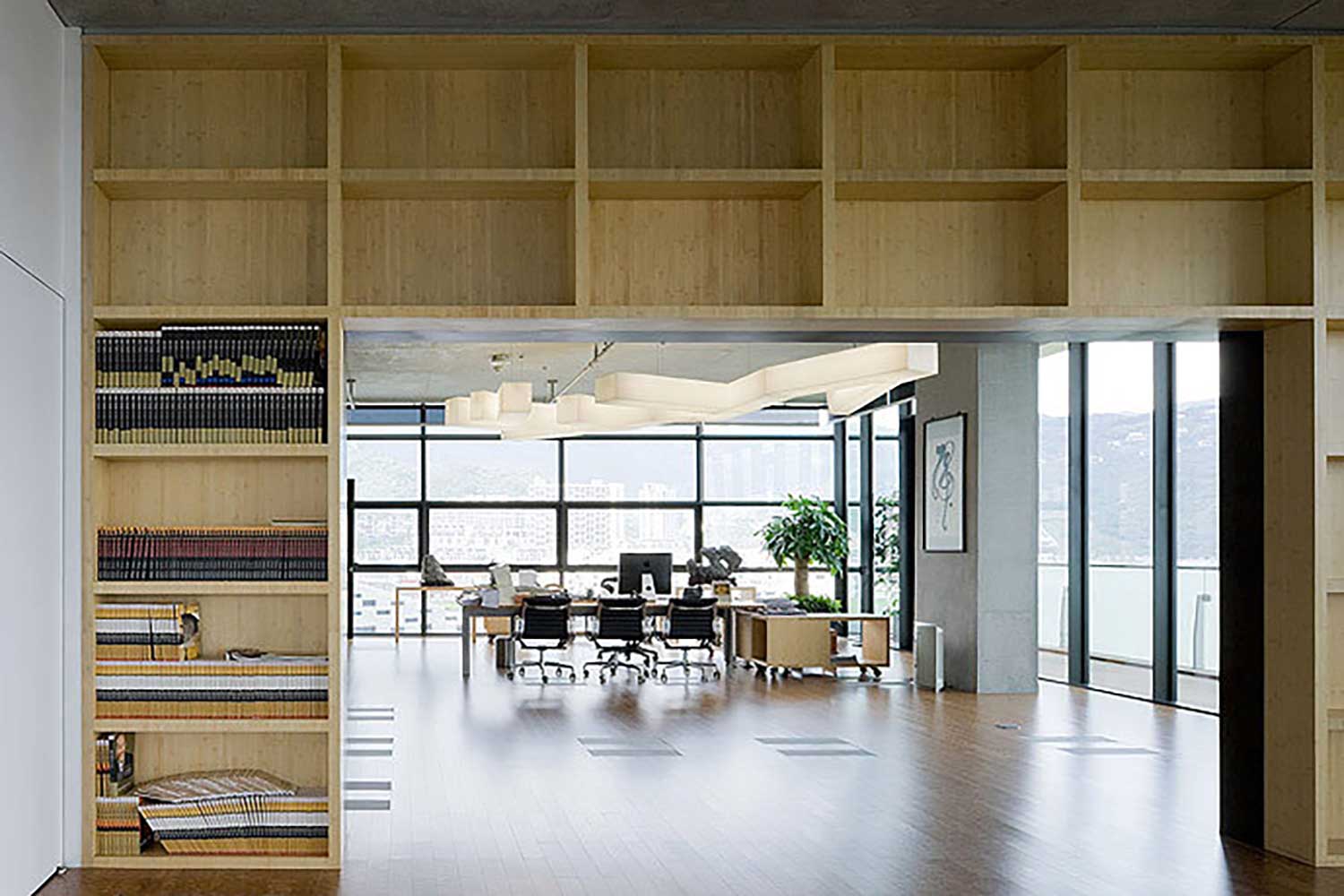
- نور طبیعی از بالا وارد میشود تا پلکان بزرگ مرکزی را روشن سازد و نیاز به نورپردازی مصنوعی را کاهش دهد.
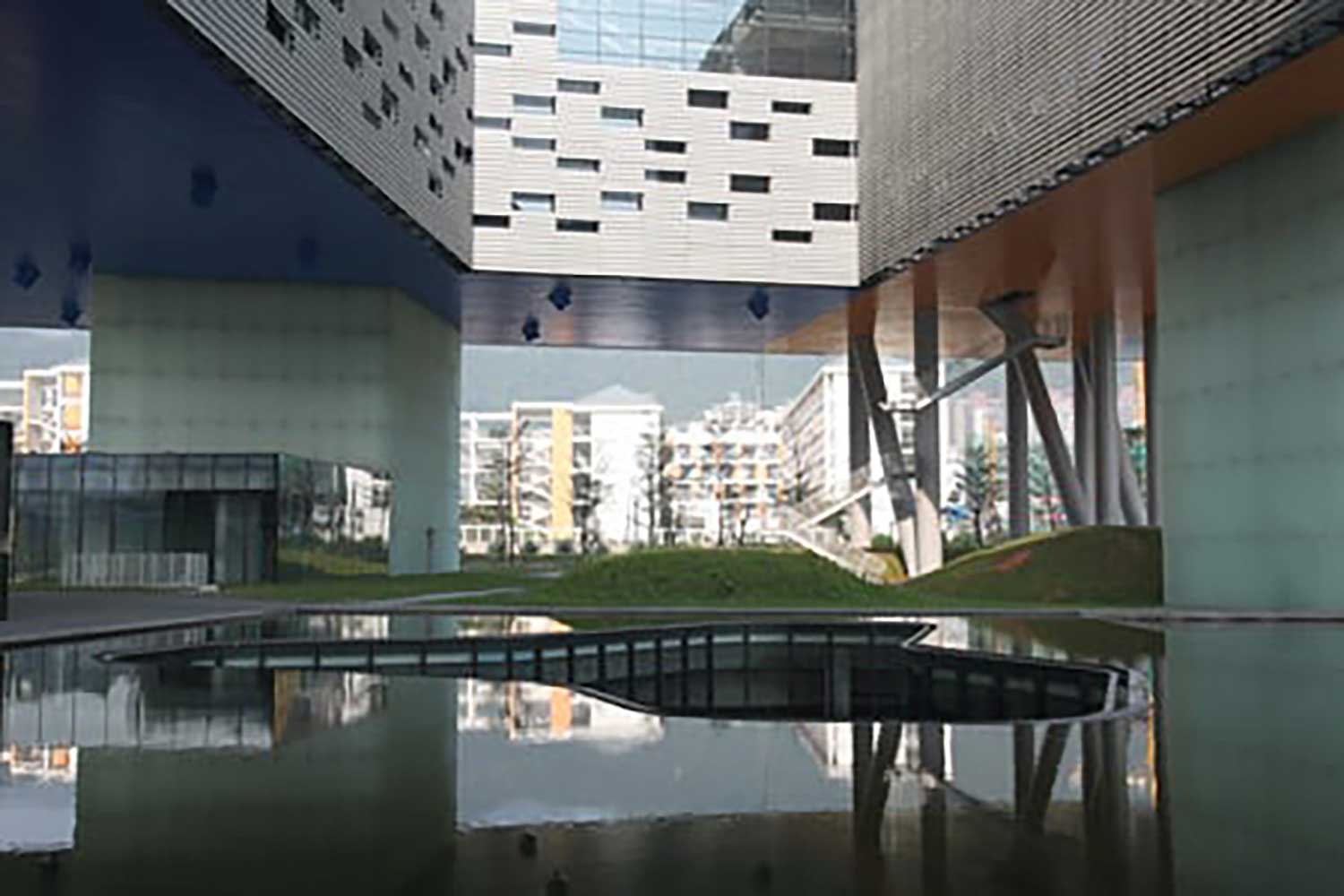
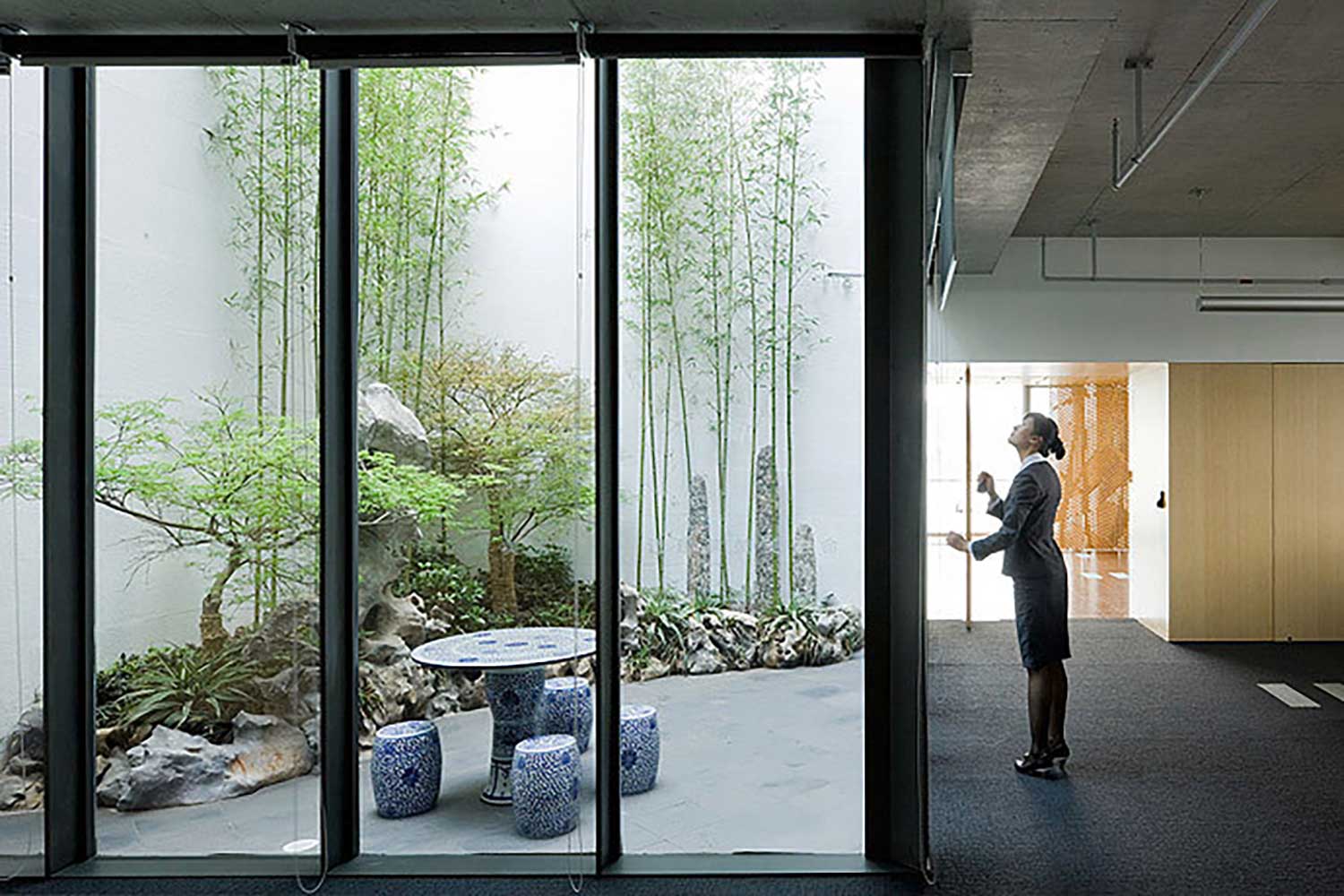
- یک سامانهی پیچیده از حوضچهها، حیاطهای فرورفته و یک تالاب، وظیفهی تصفیهی آب و خنکسازی محوطه را بر عهده دارد.
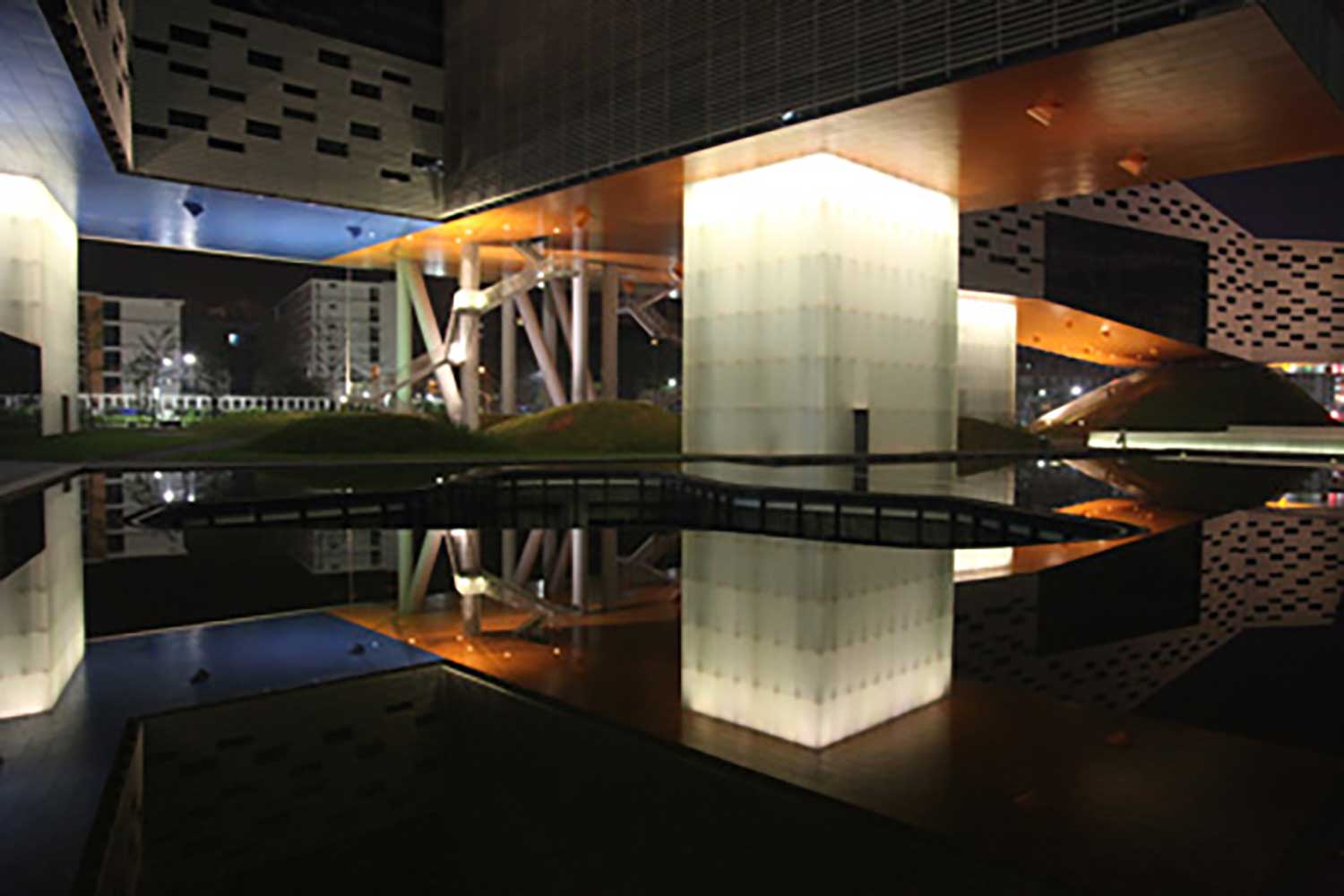
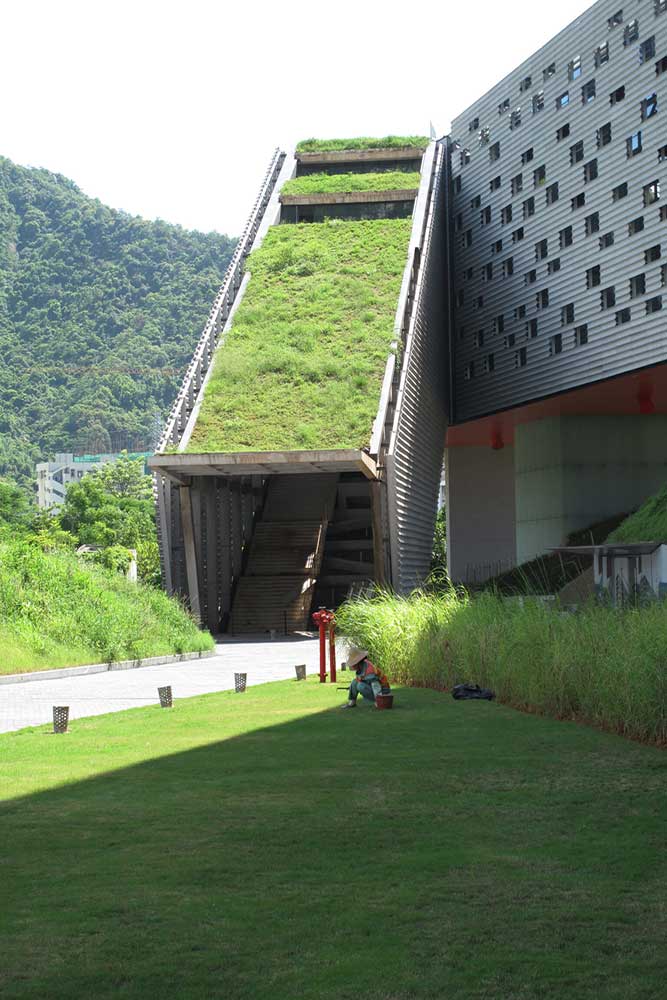
(۱۳۱۰ فوت) بلندتر از ساختمان امپایر استیت است که ارتفاعی برابر با ۱۲۵۰ فوت دارد. با بالا بردن ساختمان از سطح زمین—بر روی هشت ساختار نگهدارنده که با شیشههای نیمهشفاف و نورپردازی داخلی پوشیده شدهاند—معماران توانستند تقریباً تمام محوطه، از جمله فضای زیر ساختمان را، به پارکی عمومی تبدیل کنند. و با کاشت گیاهان بر روی پشتبام، آنها فضایی همان میزان فضای سبز در محل پروژه حفظ شد که پیشتر در آنجا وجود داشت. استیون هال میگوید: «هدف ما این بود که از یک توسعهی خصوصی، پارکی عمومی بسازیم.». هال و شریکش، لی هو (Li Hu) که در پکن مستقر است، این پروژه را که از نخستین ساختمانهای دارای گواهینامهی LEED Platinum در چین بهشمار میرفت، بهعنوان ترکیبی بینقص از معماری و منظر طبیعی طراحی کردند. این مجموعه بر زمینی ساخته شده که از دل سیستم مدیریت آبهای سطحی شهر بازیابی شده است. این مجموعه—که شامل واحدهای مسکونی، یک هتل، مرکز همایش و دفاتر اداری است—بر روی تالابی قرار گرفته که عملکردی همچون یک حوضچهی ذخیرهی آب/تصفیهگر طبیعی (bio-swale) دارد و به جویبارهای اطراف متصل است. معماران طراحیِ دیوار حائل ساحلی پروژه بهصورت یک مصب گیاهی (planted estuary) طراحی شده که بومسازگاری ترمیمی ایجاد میکند و رواناب، فرسایش و آسیبهای زیستمحیطی را به حداقل میرساند. (لازم به ذکر است که گواهی LEED تنها شامل بخش اداری ساختمان میشود، که ابتدا نیز تکمیل شده بود.)
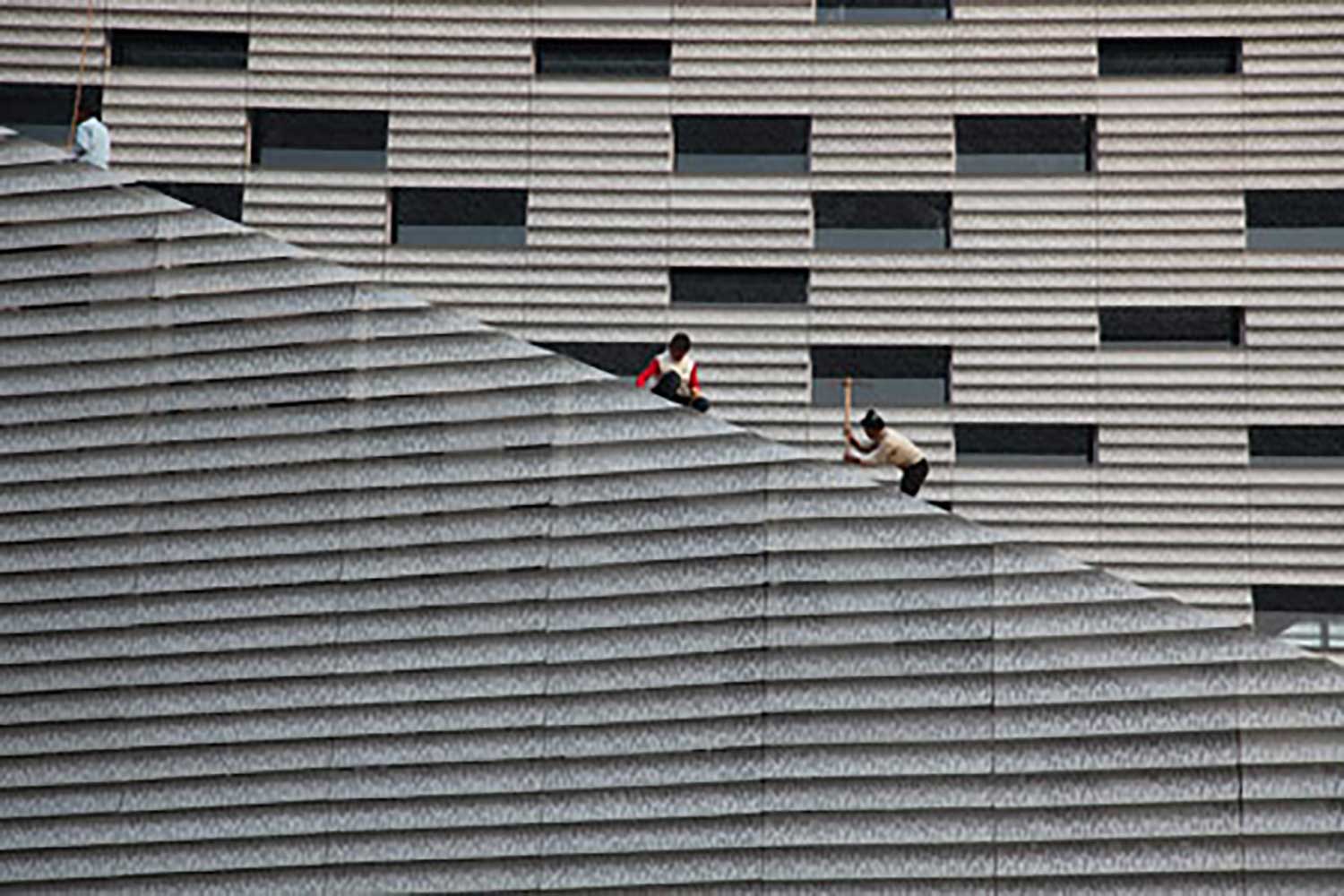
مجموعهای از حیاطها، باغهای فرورفته، حوضچهها و تپههای کاشتهشده، سامانهای گردشپذیر ایجاد میکند که آبهای سطحی را تنظیم کرده و در سراسر سایت بازتوزیع میکند. در مناطقی که نیاز به پوشش سخت بود، معماران مصالحی نفوذپذیر مشخص کردند؛ مانند سنگریزههای محلی، شن، سنگفرشهای باز (open-joint)، بتن چمنی (grass-crete) و کفپوشهای فشردهشدهی ماسهای که قادرند آب را جذب کرده و بهصورت طبیعی تصفیه کنند. «منظر این پروژه در واقع یک ماشین است برای تصفیهی آب و معتدلکردن اقلیم عمل میکند،» استیون هال میگوید. از آنجا که ساختمان بالاتر از سطح زمین قرار گرفته، نسیمهایی که از دریای جنوبی چین میوزند از زیر آن عبور کرده و موجب خنک شدن فضا میشوند. این ساختمان در منطقهای از جهان که به گرما و رطوبت شهرت دارد، ریزاقلیمهایی معتدل ایجاد میکند، هال توضیح میدهد. بالا بردن ساختمان همچنین به فضاهای داخلی دید بهتری از دریا (در جنوب) و کوهها (در شمال) میدهد. صفحهی کف دراز و باریک ساختمان تضمین میکند که کارکنان اداری بتوانند عمدتاً با نور طبیعی کار کنند.پنجرههای بزرگ قابلبازشدن به عرض ۶.۶ فوت، وابستگی به تهویهی مکانیکی را بهویژه درماههای خنکتر سال (نوامبر تا مارس) که در آن تهویهی طبیعی میتواند در بیش از ۶۰٪ مواقع جایگزین سیستم مکانیکی شود—طبق برآورد مهندسان شرکت Transsolar. پنجرههای قابل بازشدن همچنین میتوانند مصرف انرژی الکتریکی را سالانه تا حدود یکچهارم یا ۵ کیلوواتساعت بر مترمربع کاهش دهند. «مواجهه با اقلیم گرم و مرطوب و نوسانات اندک دمای روزانه، بزرگترین چالش ما بود،» میگوید پیتر وویت (Peter Voit)، شریک مسئول در شرکت Transsolar. «اما ما محاسبات دقیقی درباره عملکرد سایهاندازها انجام دادیم و سیستمی از لوورهای ثابت و پنجرههای قابلبازشو طراحی کردیم که در فصل زمستان، شرایطی بسیار راحت با تهویهی طبیعی فراهم میکند.» شیشههای با عملکرد بالا، همراه با دو پوشش Low-E و سیستم طراحیشدهای از لوورهای آلومینیومی سوراخدار، دیوار پردهای (curtain wall) ساختمان را در برابر تابش مستقیم خورشید محافظت میکند. برای دستیابی به بیشترین حفاظت در کنار بیشینهکردن نور روز و دید، معماران برای هر یک از ۲۶ نمای ساختمان ارتفاع متفاوتی طراحی کردند—و میزان لوورهای ثابت و متحرک و اندازهی سوراخهای آنها را بر اساس جهتگیری خورشید تنظیم کردند. سیستمی کنترلشده با رایانه و حسگر، بهصورت خودکار لوورهای قابلتنظیم را بر اساس حرکت و شدت نور خورشید تنظیم میکند.
وقتی لوورها بسته هستند، جذب گرمای خورشیدی را تا ۷۰ درصد کاهش میدهند، در حالی که اجازه عبور ۱۵ درصد نور طبیعی را از میان سوراخها فراهم میکنند. با معلقنگهداشتن لوورها در فاصلهای از سطح شیشهای نمای ساختمان، معماران اثر «پشتهی همرفتی» (convective stack effect) را ایجاد کردند که هوای خنک را از زیر ساختمان به بالا میکشد و همزمان هوای گرم را از بالای آن خارج میکند. برای کاهش وابستگی به منابع متداول انرژی، معماران ۱۵٬۰۰۰ فوت مربع پنل خورشیدی بر روی بام ساختمان نصب کردند. آنها تخمین زدهاند که این سلولهای خورشیدی حدود ۱۲.۵ درصد از نیاز برق ساختمان مرکزی را تأمین خواهند کرد. در سراسر پروژه، تیم استیون هال از محصولات ساختهشده با مواد تجدیدپذیر استفاده کردند. برای مثال، معماران از چوب بامبو برای درها، کفپوشها و مبلمان بهره بردند، و کاشیهای موکتدار را با پشتی وینیلی از موکتهای بازیافتی و ضایعات کارخانهای تولید کردند. تمام رنگها، پرداختها و چسبهای بهکاررفته در ساختمان، یا بدون VOC (ترکیبات آلی فرّار) بودند یا دارای مقادیر بسیار ناچیز. این ساختمان به تجهیزات لولهکشی کممصرف و بسیار کارآمد و همچنین دستشوییهای بدون آب مجهز شده است. افزون بر این، توالتهای دوگانه از آب خاکستری بازیافتی استفاده میکنند. در فضای باز، آب باران که از طریق سامانهی زیستی “bio-swale” تصفیه میشود، برای آبیاری فضای سبز استفاده میگردد. استیون هال با مهندسان «آکادمی تحقیقات ساختمان چین» همکاری کرد تا یک سیستم سازهای نوآورانه طراحی کند که اسکلت بتنی با مقاومت بالا را با فناوری کابلهای کششی فولادی ترکیب میکند—همان سیستمی که معمولاً در ساخت پلها بهکار میرود. این راهحل، نیاز به خرپاهای بزرگ را حذف کرد، خرپاهایی که هم دید بصری از فضاهای اداری را مختل میکردند و هم باعث از بین رفتن پیوستگی داخلی میشدند، بیشتر از کابلهای زاویهداری که اکنون جایگزین شدهاند. این کابلها بار عمودی ساختمان را به عناصر اصلی سازه مانند هستههای بتنآرمه، دیوارها و ستونها منتقل کرده و سپس به فونداسیون منتقل میکنند. مانند پروژهی «Linked Hybrid» استیون هال در پکن، دفتر مرکزی شرکت Vanke نیز عملکردهای گوناگون را در یک مجموعه گردآورده است—یک مرکز همایش به مساحت ۸۶٬۰۰۰ فوت مربع که درون تپههایی با بام سبز جای گرفته، ۲۱۴٬۰۰۰ فوت مربع فضای هتل، و ۲۱۱٬۰۰۰ فوت مربع آپارتمانهای مسکونی.
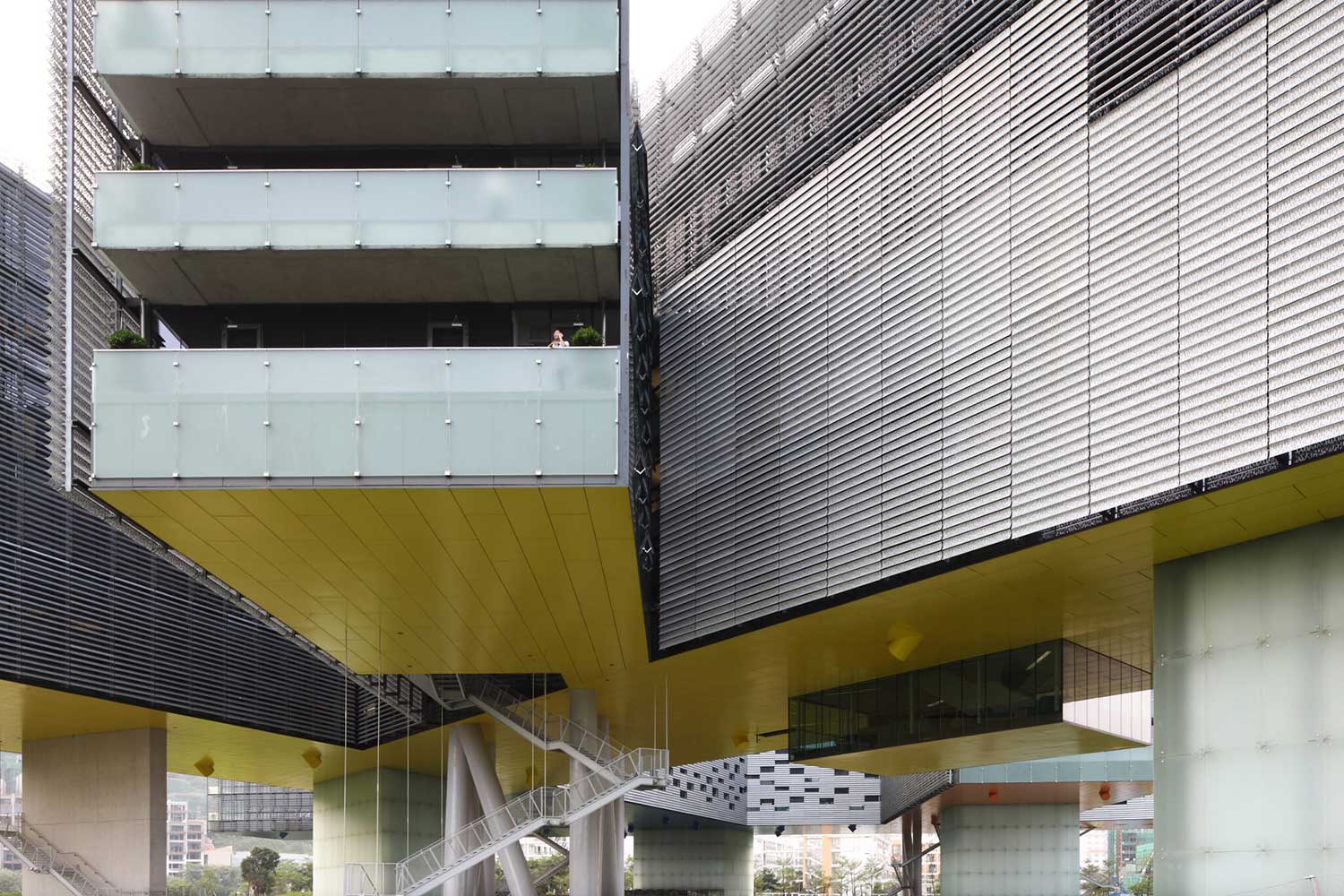
۱. بهجای خرپاهای سنگین، کابلهای کششی فولادی در کنار اسکلت بتنی بهکار گرفته شدهاند تا فضاهای داخلی باز باقی بمانند.
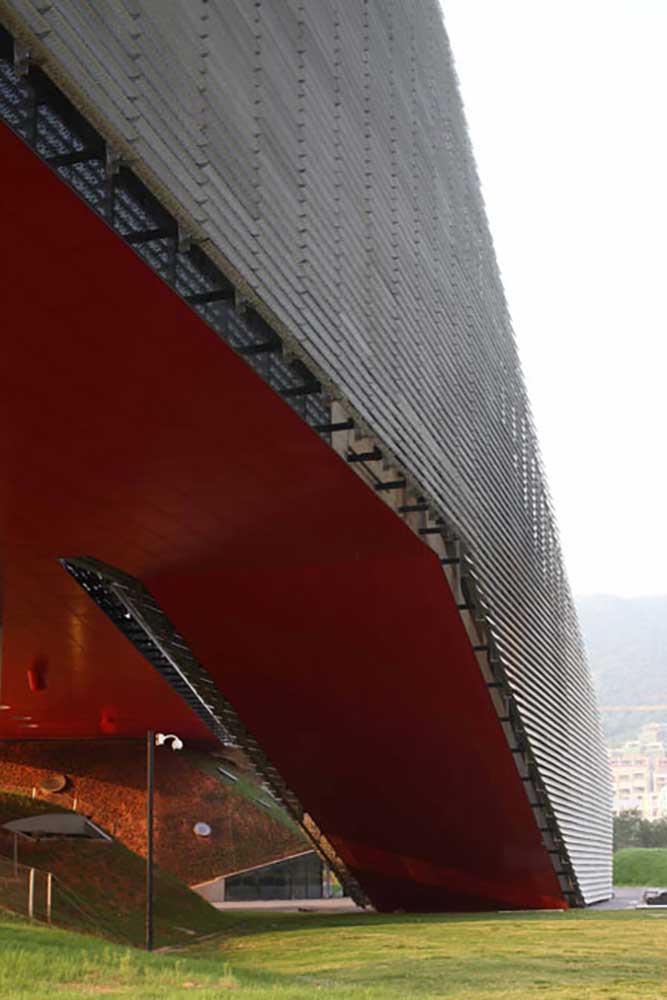
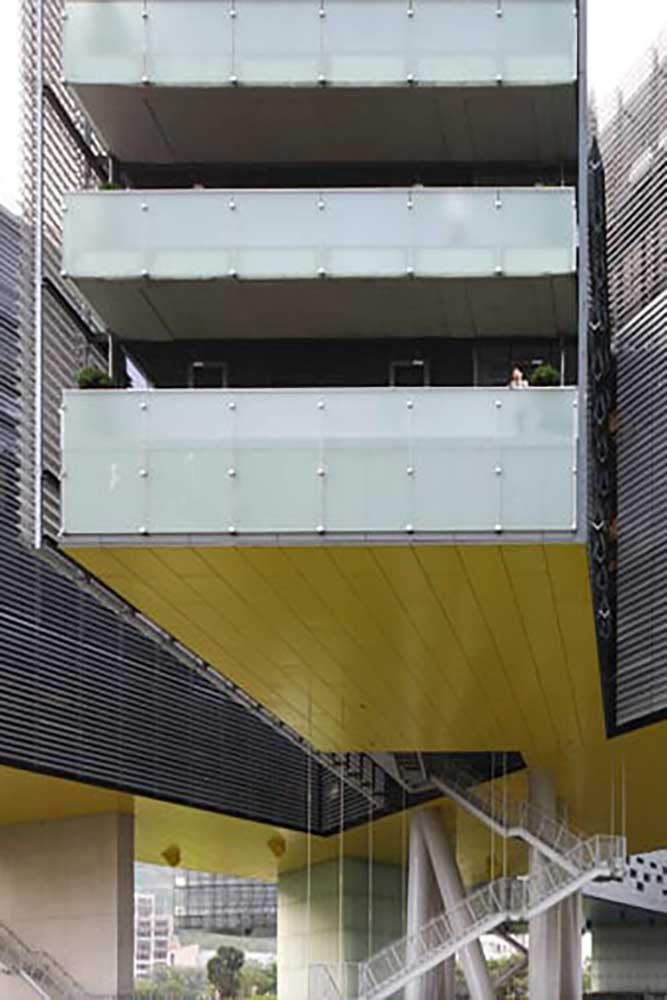
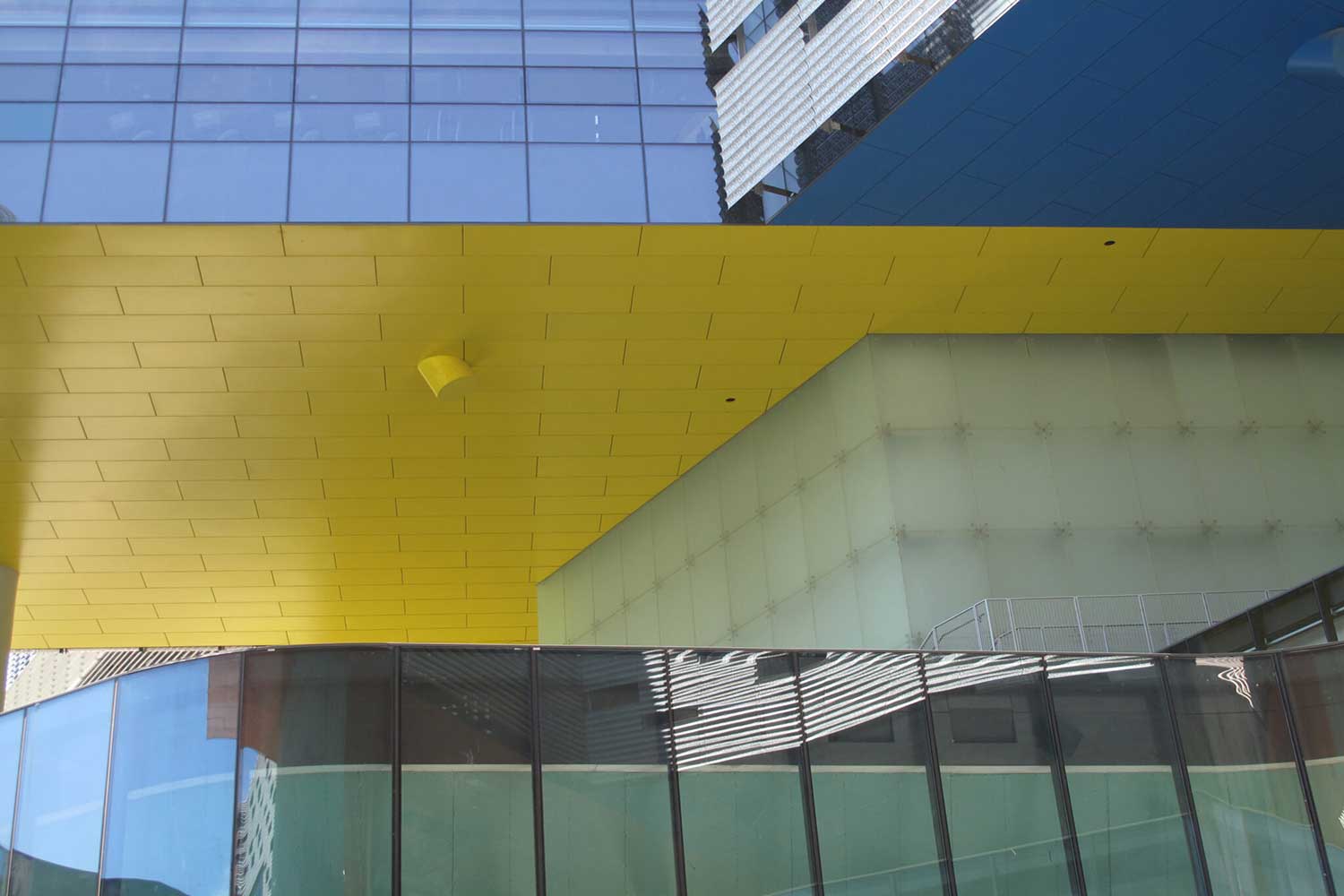
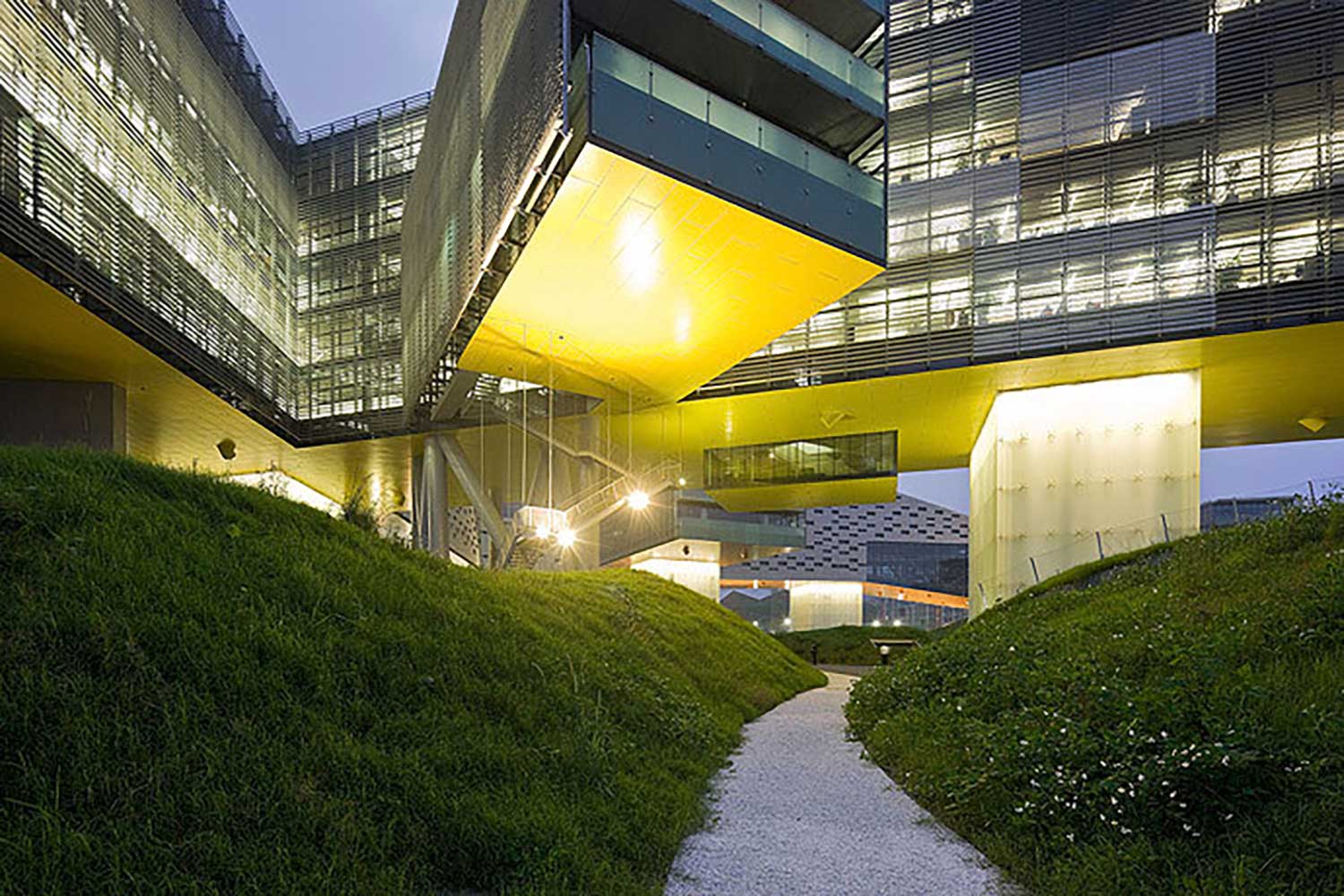
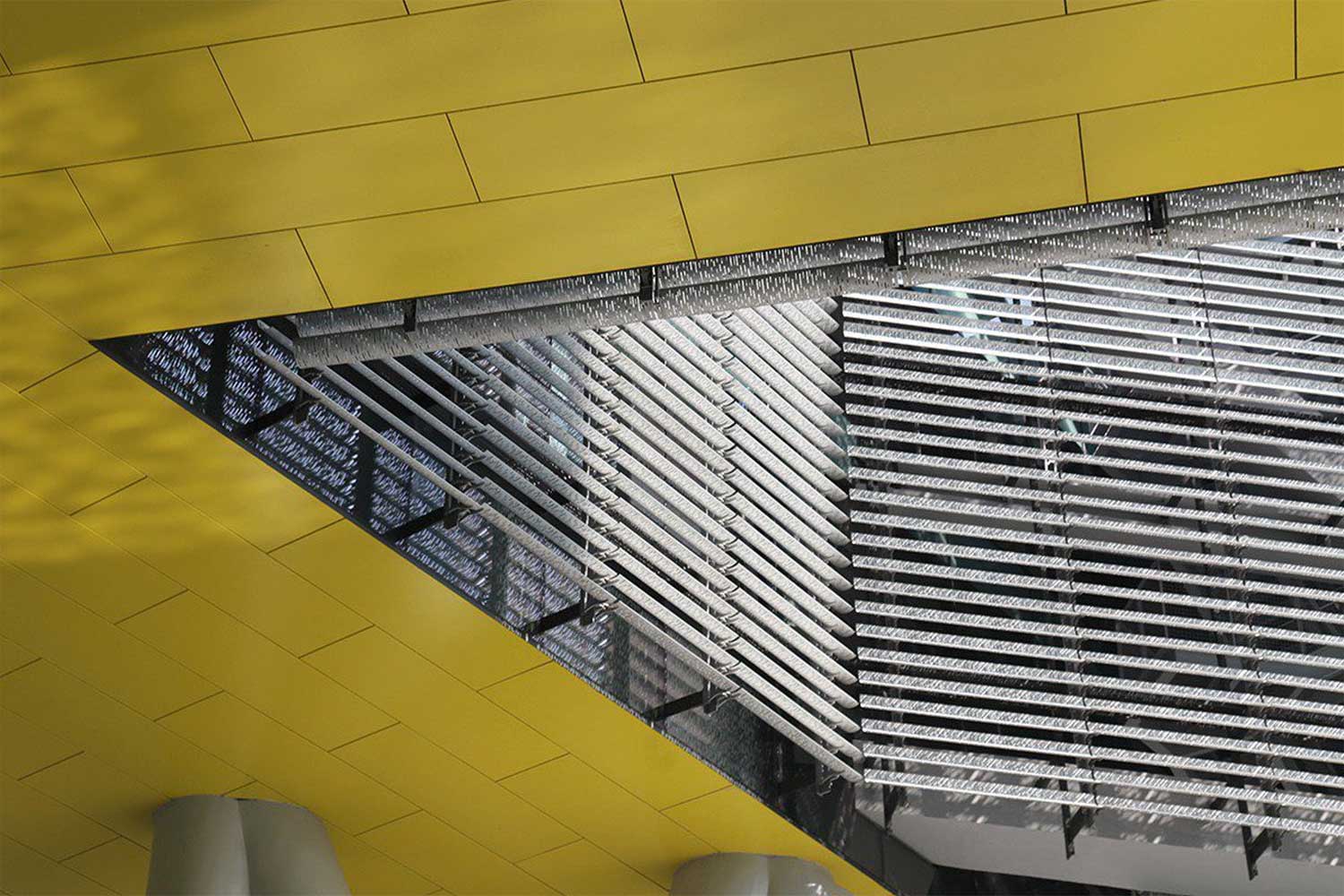
۲. ساختمان که از سطح زمین بالا رفته است، سطح زیرین رنگارنگ خود را بهصورت نمایی افقی به نمایش میگذارد.
۳. لوورهای ثابت و متحرک، همانند نوارهای بامبو خمیدهاند و با سوراخهایی به اندازههای گوناگون مشبک شدهاند.
پارکینگ عمدتاً در زیرزمین قرار دارد. از آنجا که عملکردهای اداری، مسکونی و هتلی همگی در یک ساختمان طولانی جای گرفتهاند، این طرح از نظر میزان فضای اختصاصدادهشده به هر بخش، انعطافپذیری بالایی دارد. در حالی که برخی افراد نسبت به تعهد چین به پایداری تردید دارند، استیون هال میگوید همهی کارفرمایان چینی او خواهان سبزترین ساختمانهای ممکن بودهاند. «در دیگر نقاط جهان، مشتریان مدام دربارهی هزینهها و صرفهجویی در پایداری چانه میزنند،» معمار میگوید. «اما مشتریان چینی اینگونه فکر نمیکنند. آنها در اندیشهی ساختن آینده هستند.»
Envision a skyscraper laid on its side—an elegant leviathan hovering just under the 35 m height limit above a lush tropical stage. This is the Vanke Center, the poetic masterpiece by Steven Holl Architects, completed in Shenzhen in 2009. Often called the “Horizontal Skyscraper,” it unites offices, serviced apartments, a hotel, conference and spa facilities—all suspended above a public park that pulses with life and breeze
Floating Above an Urban Garden
Raised on eight sculptural cores spaced up to 50 m apart, the massive 1.3 million ft² (≈ 120 000 m²) bar floats, naturally framing views to the South China Sea. The space beneath becomes a verdant amphitheater:
Winding landscaped mounds, serene ponds, and cafés, inspired by Robero Burle Marx’s tropical gardens.
Sunken “Shenzhen windows”—glass cubes that offer 360° lookout over the greenery below.
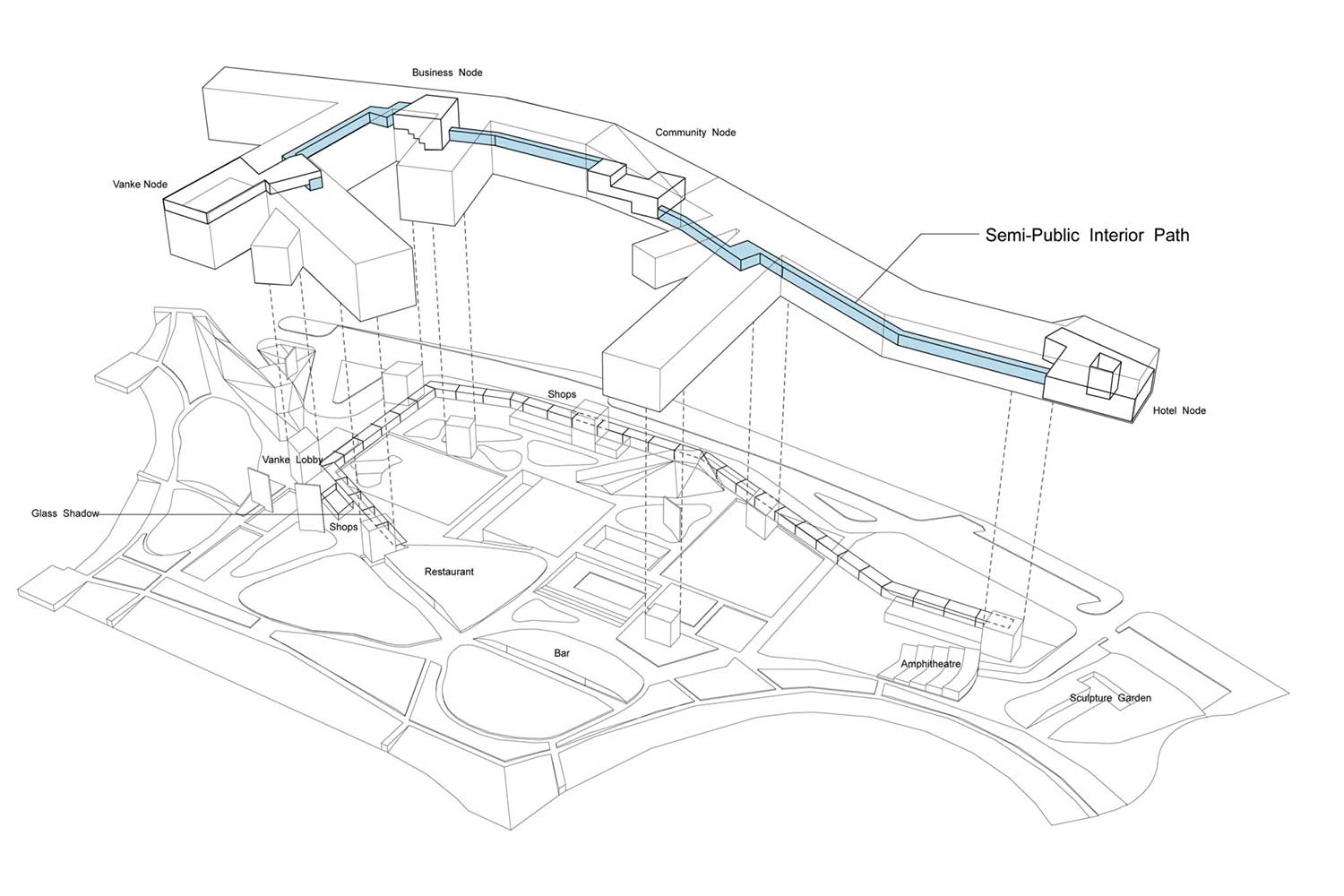
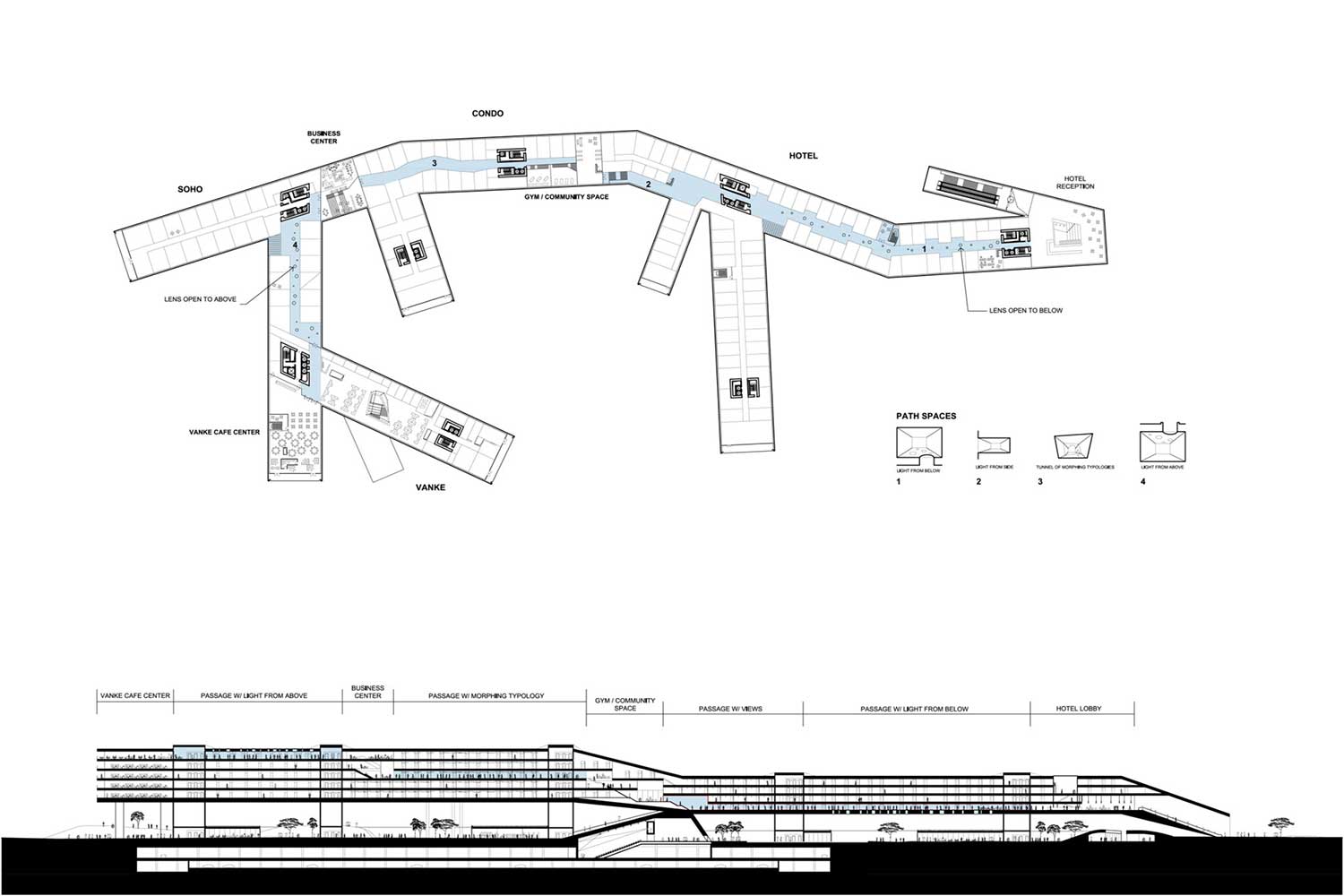
A public promenade running the full length, connecting hotel, apartments and offices in one continuous journey.
Structural & Façade Poetry
The structure marries cable-stay bridge technology with a high-strength concrete frame, an engineering marvel that handles record loads of 3 280 tonnes. Twenty-six façades are optimized for orientation:
Double-skin curtain walls: inner low-E coated glazing for daylight with minimal solar gain.
Outer perforated aluminium louvers—some static, some sensor-operated—reducing solar heat by up to 70% while maintaining \~15% light .
Convective stack-effect in the cavity drives passive cooling; over 90% of interior spaces have direct exterior views.
Micro‑Climate & Sustainability Symphony
The center is celebrated for its sustainable design:
LEED Platinum—one of the first in Southern China
Water management: Site acts as storm‑water retention via ponds and wetlands; greywater recycles for irrigation; waterless urinals and low-flow fixtures drastically reduce potable usage.
Energy systems: 1 400 m² of rooftop PV generates \~12–18% of building energy; natural ventilation can replace mechanical systems up to 60% during cool months.
Material choices: Bamboo furnishings, recycled carpets, locally sourced materials—a sustainable echo in every detail.
Tsunami Resilience & Climatic Integration
Beyond its poetic lift, the building is tsunami-proof—able to let floodwaters pass harmlessly beneath—while its porous design invites sea and land breezes to drift through the public landscape, forging a natural cooling corridor.
Awards & Legacy
AIA NY Honor Award, AIA Institute Honor Award (2011), Green Good Design Award (2010), and more
Its daring concept was published by William Stout (“Horizontal Skyscraper”, 2012).
Vanke Center – A Visionary Architecture Above the Earth / Translated and Adapted from the Words of Steven Holl
On the shores of Shenzhen, a southern Chinese city facing the sea, a structure emerges not to ascend to the sky but to embrace the horizon: the “Vanke Center,” designed by Steven Holl and his Beijing-based partner Li Hu. This horizontal skyscraper is a poetic blend of architecture, landscape, sustainable technology, and environmental foresight.
Horizontality, Beyond Metaphor
Suspended 15 meters above the ground on eight semi-transparent glass piers, the building creates a public green park underneath while breezes from the South China Sea cool the structure naturally. It introduces temperate microclimates to an otherwise hot and humid region—an innovative use of climate-responsive design.
Sustainability in Its Truest Sense
Vanke’s headquarters is among the first buildings in China to achieve LEED Platinum status. 15,000 square feet of photovoltaic panels on its roof provide 12.5% of the building’s total electricity. The louvers system, composed of both fixed and operable panels with perforations of varying sizes, is computer- and sensor-regulated according to solar angles and intensity, reducing solar heat gain by 70%.
A Structure Without Massive Trusses
The building’s structure combines a reinforced concrete frame with steel cable-stay technology typically found in bridge design. This approach eliminates the need for large trusses, preserving interior visual continuity and open spatial experience. Angled cables transfer the vertical load to concrete cores, walls, and columns.
Multi-Functionality in a Singular Form
Vanke Center consolidates office, residential, and hotel programs within a single longitudinal building: including an 86,000-square-foot conference center, 214,000 square feet of hotel space, and 211,000 square feet of condominiums. Most parking is placed underground to maximize surface-level public use.
Landscape as Machine
The architects designed a network of sunken courtyards, pools, and lagoons that regulate and redistribute stormwater, filter rainwater for irrigation, and cool the site through convective stack effects. The louvers both shade and draw in fresh air from below while expelling hot air from above.
Sustainable Materials
Throughout the project, renewable and recycled materials were specified—from bamboo for flooring and furniture to vinyl-backed carpet tiles made from manufacturing waste. All paints, adhesives, and finishes are either low-VOC or VOC-free.
Forward-Thinking Clients
Steven Holl notes that all his Chinese clients demand the greenest possible designs. While clients elsewhere often resist sustainable investments, Chinese developers—he says—are focused on building the future.
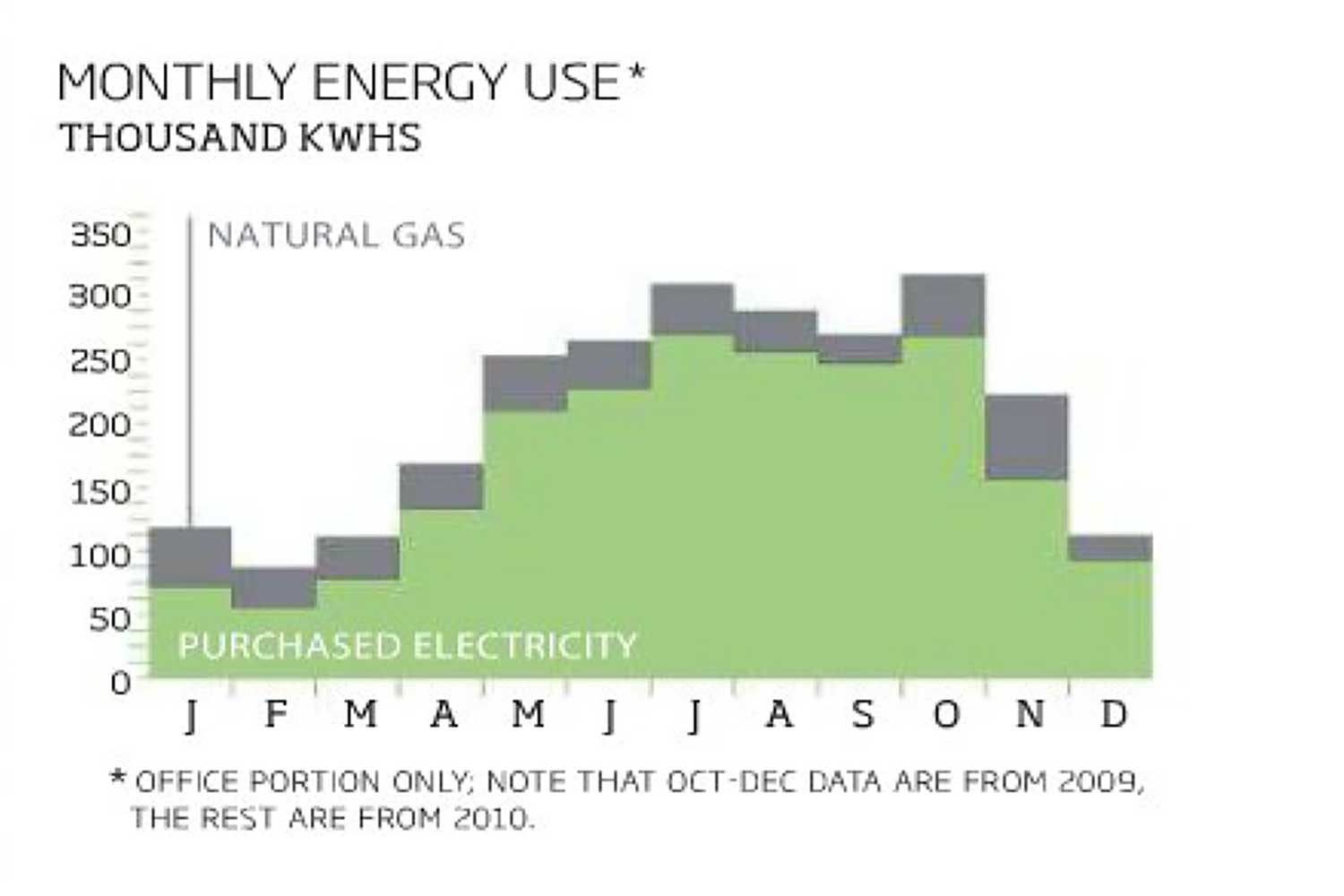
Can tall buildings be sustainable? That’s a complicated question, and one that, fortunately, we don’t have to answer for this issue. All the projects featured here are six stories or less (the traditional limit for buildings in Paris). The two-story Passive House on the outskirts of Paris is anything but traditional, however—the architects worked hard to get it through their community’s design review. They’ve since completed other projects to the Passive House standard, which bodes well for reducing energy use in French housing. Even the one skyscraper we’re featuring—Vanke Center in Shenzhen, China -is lying on its side. It’s propped up on pedestals, however, so it would take a bit of a climb to get to the upper floors using stairs. The office portion in this building is LEED Platinum with points to spare—an impressive achievement for a project of this scale. In spite of its horizontality, Vanke Center is separated from the earth on its pedestals. *LOTT Regional Services Center , on the other hand, is firmly rooted in both soil and water, reflecting its program of water quality labs, offices, and educational space, as part of a wastewater treatment facility. Finally, the Lofts at Cherokee Studios combines live work units with ground floor retail space to serve its neighborhood. We’ll get back to tall buildings in a future issue. In the meantime, it’s clear from this array that low-rise buildings can be very green. –Nadav Malin
Three decades of breakneck economic development have made China one of the world’s great polluters, but a new green ethos is beginning to take root in the Land of 1.3 Billion People. Not only is the Chinese government moving to reduce carbon dioxide emissions and encourage alternative energy production, but a growing number of Chinese companies are demonstrating a strong commitment to sustainable design. A leader of this movement is China Vanke, the country’s largest residential developer and a company that has hired innovative architects from China and abroad to design a number of projects. Its founder and chairman, Wang Shi, has made a name for himself not only as an entrepreneur, but as a mountain climber (he has reached the summit of Mt. Everest twice) and dedicated environmentalist. So it is not surprising that Vanke wanted its headquarters in Shenzhen to embody the highest green values. Designed by Steven Holl Architects, which completed its Linked Hybrid residential complex in Beijing in 2009 and is busy working on large-scale projects in Chengdu, Hangzhou, and Nanjing, the 1.14-million-square-foot Vanke headquarters hovers 50 feet above the ground—a “horizontal skyscraper” that is a bit longer…
- The architects treated each of the building’s 26 facades differently to strike the right balance between solar protection and transparency.
- The building’s floor plan adorns an elevator lobby, serving as a graphic and orientation device.
- Daylight comes in from above to enliven a grand staircase and reduce the need for electric light.
- An elaborate system of pools, sunken courtyards, and a lagoon filters water and cools the site.
(1,310 feet) than the Empire State Building is tall (1,250 feet). By raising the building off the land (on eight supporting structures clad in back-lit, translucent glass), the architects were able to turn almost the entire site, including the area under the building, into a park open to the public. And by planting the roof, they created about the same amount of green space on the site as had been there before. “Our aim was to use a private development to create a public park,” states Steven Holl. Holl and his Beijing-based partner Li Hu approached the project, which was one of the first LEED Platinum buildings in China, as a seamless combination of architecture and landscape. Built on reclaimed land that forms part of the city’s stormwater management system, the complex—which includes condos, a hotel, and a conference center, in addition to offices—sits on a lagoon that functions as a bio-swale/retention pond connected to adjacent creeks. The architects redesigned a waterfront retaining wall as a planted estuary, establishing a restorative ecology that minimizes run-off, erosion, and environmental damage. (The LEED status applies only to the office portion, which was completed first.) A series of courtyards, sunken gardens, ponds, and planted mounds creates a circulatory system that regulates and redistributes stormwater throughout the site. In areas where pavement was required, the architects specified permeable materials such as local river stones, gravel, open-joint stone pavers, grass-crete, and compressed sand pavers to absorb water and naturally filter it. “The landscape is really a machine for cleaning the water and tempering the climate,” states Holl. Because the building sits above the ground, breezes from the nearby South China Sea flow underneath it and cool it. The building creates temperate micro-climates in a part of the world known for hot, moist weather, explains Holl. Raising the structure also gives the spaces inside better views of the sea (to the south) and mountains (to the north). The building’s long, narrow floor plate ensures that office workers inside can rely mostly on daylight for illumination. Large operable windows 6.6 feet wide reduce dependence on mechanical ventilation, especially during cooler months (November to March) when natural ventilation can take over 60 percent of the time, estimate engineers at Transsolar. Operable windows can also cut electrical energy consumption annually by about one-quarter or 5 kWh per square meter. “Dealing with the hot and humid climate and the small daily temperature variation was the biggest challenge for us,” states Peter Voit, the partner in charge for Transsolar. “But we did detailed calculations of shading performance and devised a system of fixed louvers and operable windows that achieves very comfortable conditions with natural ventilation during the winter season,” explains Voit. High-performance glass, with two low-e coatings and a custom-designed system of perforated aluminum louvers, protects the curtainwall from the full impact of the sun. To get the most protection while maximizing daylight and views, the architects designed a different elevation for each of the building’s 26 faces—adjusting the amount of fixed and operable louvers and the size of the perforations in the louvers to the orientation of the sun. computer-and-sensor-controlled system automatically tunes the operable louvers to the movement and intensity of the sun. When closed, the louvers reduce solar heat gain by 70 percent, while allowing 15 percent of daylight to filter through the perforations. By suspending the louvers beyond the glass face of the building, the architects created a convective stack effect that draws cool air from the underside of the structure while pulling hot air out from the top.
To reduce dependence on conventional energy sources, the architects installed 15,000 square feet of photovoltaic panels on the building’s roof. They estimate that these solar cells will provide 12.5 percent of the headquarters’ total electricity needs. Throughout the project, Holl’s team specified products made from renewable materials. For example, the architects used bamboo for doors, floors, and furniture, and carpet tiles with vinyl backing made from recycled carpet and manufacturing waste. All paints, finishes, and adhesives in the building have either few or no VOCs. To conserve potable water, the building is equipped with low-flow, highly efficient plumbing fixtures and waterless urinals. In addition, dual-flush toilets use recycled graywater. Outdoors, rainwater filtered by the bio-swale system is used to irrigate the grounds. Holl worked with engineers at the China Academy of Building Research to design an innovative structural system that combines a high-strength concrete frame with the kind of steel cable-stay technology most often used on bridges. The solution eliminated the need for large trusses that would have impaired views from office areas and disrupted interiors more than the angled cables that were used. These cables transmit the building’s vertical load to key structural elements such as reinforced-concrete cores, walls, and columns and then to the foundation. Like Holl’s Linked Hybrid in Beijing, the Vanke headquarters combines different functions in one complex—an 86,000-square-foot conference center tucked into green-roofed mounds at its base, 214,000 square feet of hotel space, and 211,000 square feet of condominium apartments.
- In place of heavy trusses, steel cable stays work with a concrete frame to keep interiors open.
- Raised above the ground, the colorful underside of the building serves as a horizontal facade.
- Curved like bamboo strips, fixed and operable louvers are perforated with holes of various sizes.
Parking is mostly underground. Because the office, condo, and hotel functions all occupy one long building, the scheme offers flexibility in terms of the amount of space allocated to each segment. While some people question China’s commitment to sustainability, Holl says all of his Chinese clients have asked for the greenest buildings possible. “In other parts of the world, clients want to nickel-and-dime sustainability, questioning every expenditure,” states the architect. “Chinese clients aren’t thinking that way. They’re thinking of building the future.”
مدارک فنی
مطالب مرتبط